Zipline Raises $1.5 Billion at $21.5 Billion Valuation as Walmart Expands Drone Delivery to 300 More Sites
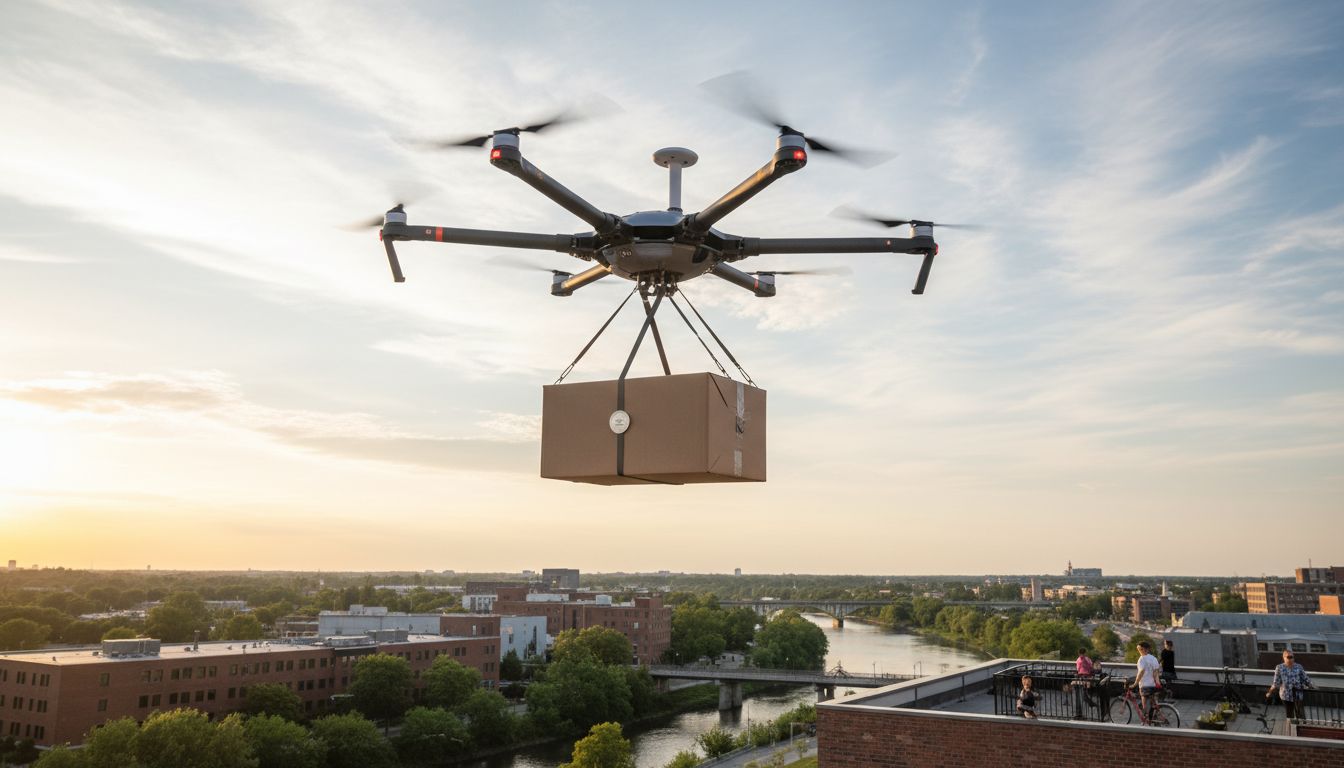
Autonomous drone delivery company Zipline has raised $1.5 billion in new funding at a $21.5 billion valuation, according to reporting from Bloomberg, Reuters, and the Wall Street Journal. The announcement arrives alongside news that Walmart will expand its drone delivery partnership with Zipline by adding 300 new delivery sites across the United States.
Zipline Secures $1.5 Billion in Funding at $21.5 Billion Valuation
The new funding round values Zipline at roughly three times its estimated valuation from January, when the company was reportedly worth between $7.6 billion and $7.85 billion. Observers note that this rapid climb reflects surging investor interest in drone logistics infrastructure as the sector moves from pilot programs toward wider commercial deployment.
It's worth noting that the specific valuation figures circulating in coverage stem from financial reporting by Bloomberg, Reuters, and the Journal rather than from direct disclosure by Zipline itself. As with many private funding rounds, the precise terms and investor list have not been independently confirmed by all outlets.
Walmart Expands Drone Delivery Partnership by 300 Sites
Walmart has agreed to expand its existing drone delivery collaboration with Zipline by 300 additional sites, building on a partnership the companies have steadily grown in recent years. The expansion is widely framed as part of Walmart's broader push to extend same-day and near-instant delivery options to more of its customer base.
A recurring theme in coverage is that this move significantly increases the potential coverage area for drone-based delivery, though the exact rollout timeline and which specific markets will receive service first remain unclear from available reporting.
Operational Metrics Driving Investor Confidence
Zipline has pointed to several operational figures as evidence of its platform's scale and reliability. The company states it has completed more than 1 million deliveries in the Dallas-Fort Worth area so far this year, with a median delivery time in October of 19 minutes. Zipline has also said its manufacturing facility can now produce up to 20,000 aircraft annually.
These figures are presented by the company and cited widely in press coverage, but they appear to originate from Zipline's own disclosures rather than independent audits. Readers should treat them as company-reported metrics rather than third-party-verified statistics.
Safety Claims and Open Regulatory Questions
Zipline has publicized a safety record of 150 million autonomous commercial miles flown without an incident. This is a notable figure, but it has not been independently verified by regulators or outside auditors in the sources reviewed for this article. A recurring consumer concern raised in broader discussions of drone delivery involves noise levels and safety near residential areas, and these concerns do not appear to be fully resolved as the Walmart-Zipline expansion moves forward.
Regulatory approval processes for expanded drone operations are also still unfolding in many of the markets under consideration. Until formal approvals and independent safety audits are publicly available, claims about Zipline's safety performance should be understood as company-sourced rather than confirmed by regulatory bodies.
Competitive Landscape and Future Ambitions
Zipline's funding and expansion come amid a broader competitive push in drone delivery, with Amazon, Alphabet's Wing, DoorDash, and Manna all pursuing similar services. Many industry watchers frame the current moment as an inflection point for the sector, as companies move from limited trials toward larger-scale commercial networks.
Looking further ahead, Zipline and Uber have described a goal of reaching 1 million drone deliveries per day by 2029 through their partnership. This target is a long-term projection rather than a current operational reality, and it remains to be seen how regulatory, technical, and logistical hurdles will shape progress toward that goal.