What’s Confirmed About NVIDIA Vera Rubin and HBM4 Supplier Readiness
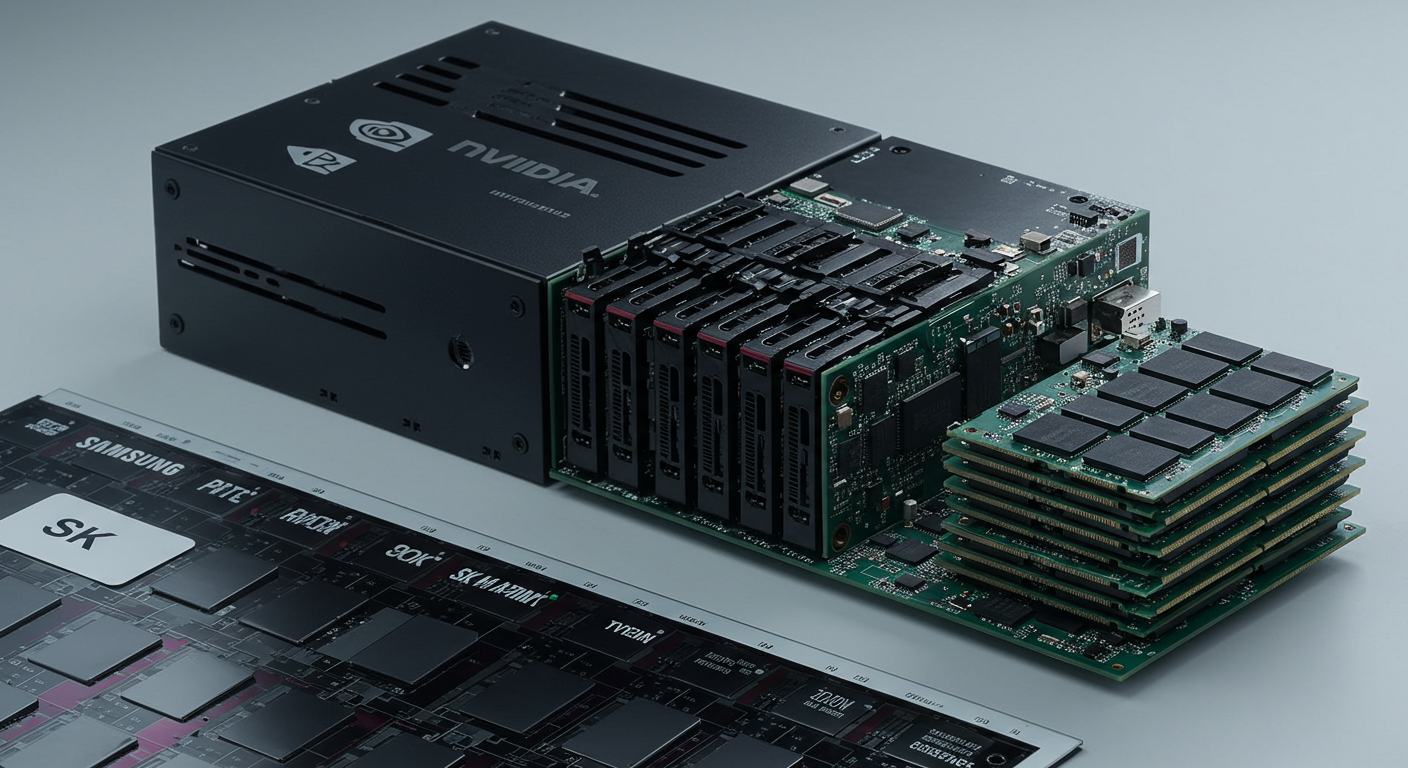
NVIDIA’s Vera Rubin platform is one of the company’s most closely watched future AI launches, and it is already shaping discussion across the semiconductor supply chain. But the headline claim that Rubin has entered full production with Samsung, SK hynix, and Micron all qualified as HBM4 suppliers goes further than the currently confirmed public record appears to support.
Based on the available sources, the cautious reading is this: NVIDIA has publicly outlined Rubin as a successor platform in its AI roadmap, and major memory makers are all discussing HBM4 development and readiness. What is less clear from broad public materials is whether Rubin is already in full production and whether all three memory companies have been formally qualified for Rubin-specific HBM4 supply on the same timeline and under the same definition of qualification.
What NVIDIA has officially said about Vera Rubin
NVIDIA has publicly presented Vera Rubin as the next step in its AI infrastructure roadmap, following the current Hopper and Blackwell generations. That matters because a roadmap disclosure is not the same as mass production. A company can announce architectural direction, expected deployment windows, and ecosystem plans well before volume manufacturing is underway.
For readers tracking the chip industry, that distinction matters. Terms such as announced, sampling, customer validation, production ramp, and full production describe different stages. Unless NVIDIA explicitly uses language that indicates volume manufacturing or broad commercial availability, stronger phrasing should be treated as interpretation rather than established fact.
In practical terms, Rubin’s place in the lineup shows where NVIDIA wants its AI platform to go next: higher compute density, greater system-level memory demands, and tighter coordination among GPU design, advanced packaging, and high-bandwidth memory. But roadmap visibility alone does not confirm that the platform has reached full production status.
Why HBM4 is central to the Rubin story
HBM4 matters because next-generation AI accelerators increasingly depend on memory bandwidth and power efficiency as much as raw compute. As AI models grow, memory subsystems become a major bottleneck. That means Rubin’s real-world timing and availability are closely tied to whether HBM4 is mature enough for packaging, yields, thermals, and large-scale deployment.
That is why supplier qualification is a meaningful milestone. It is not a minor component detail. If a memory vendor is qualified for a next-generation accelerator platform, that can imply technical validation, stack compatibility, package integration readiness, and a path to commercial shipment. Even so, qualification can still be narrow. It may apply to a specific configuration, customer program, or time window rather than broad, open-ended supply.
In short, HBM4 readiness is central to the Rubin narrative, but any claim about who is qualified and at what level needs to be tied to clear sourcing.
What is confirmed about Samsung, SK hynix, and Micron
Samsung, SK hynix, and Micron have all publicly discussed advanced HBM development and their ambitions in AI memory. That supports the broader industry view that all three want to compete aggressively for next-generation accelerator design wins. However, the more specific claim that all three are already qualified HBM4 suppliers for Rubin requires narrower wording unless it is directly confirmed in company statements or NVIDIA materials.
SK hynix has been especially visible in the HBM market and is widely seen as a leading supplier in current AI memory deployments. That industry position strengthens the case that it will play a central role in future HBM4 transitions, but leadership in HBM today should not automatically be translated into formal Rubin-specific qualification unless explicitly stated.
Samsung has also been working to strengthen its position in high-bandwidth memory and advanced packaging competitiveness. Yet involvement in HBM4 development, or even customer testing, is not the same as final qualification for a specific NVIDIA platform.
Micron has likewise highlighted progress in AI memory and advanced HBM offerings through investor and corporate communications. That supports the view that Micron is preparing for next-generation opportunities, but not necessarily that it has already been fully qualified for Rubin HBM4 supply unless that language appears in official material.
The safest fact pattern is that all three companies are major HBM contenders with public signs of next-generation memory progress, while Rubin-specific qualification status should remain attributed and carefully framed.
How to interpret the “all qualified” claim carefully
The phrase all qualified sounds precise, but in semiconductor supply chains it can mean several different things. It may refer to technical validation in a lab environment. It may refer to interoperability within a packaging flow. It may refer to an approved vendor list for a future product generation. Or it may mean readiness for volume commercial shipments.
Those are not interchangeable.
A vendor could be qualified for one package design but not another, or approved for one customer deployment wave but not yet for broad volume supply. There can also be differences among memory die readiness, stack readiness, package integration, and end-platform acceptance.
That is why it is risky to compress multiple stages into a single headline. Unless an official source clearly says that Samsung, SK hynix, and Micron have all been qualified as HBM4 suppliers for Vera Rubin, the more accurate formulation is that the companies are publicly advancing HBM4 and are widely expected to play roles in the next-generation AI memory ecosystem.
What full production would mean for Rubin and its ecosystem
If Rubin were truly in full production, that would be a major signal for the broader AI infrastructure market. It would suggest that key upstream dependencies are moving into place: foundry output, advanced packaging capacity, HBM supply, server design readiness, and customer deployment planning.
That would also have implications far beyond NVIDIA itself. Memory makers would gain better visibility into demand and mix. System builders could lock in more concrete schedules. Hyperscalers and enterprise AI buyers would have a firmer basis for planning capacity expansion. Competitors across accelerators, networking, and servers would also treat that as a meaningful timing marker in the next phase of AI infrastructure competition.
But because production status is such a consequential signal, it requires especially solid sourcing. A roadmap milestone or broad partner momentum should not be described as full production without direct support.
What remains unconfirmed or needs stronger sourcing
The biggest unsupported leap in the original claim is the phrase entered full production. Public roadmap positioning for Vera Rubin is not the same as a clearly documented mass-production announcement unless NVIDIA has said so directly in a specific release or presentation.
The second area needing stronger sourcing is the blanket statement that Samsung, SK hynix, and Micron are all qualified as HBM4 suppliers for Rubin. That may prove directionally correct, or partially correct on different timelines, but it should be stated only with direct attribution from NVIDIA or the suppliers themselves.
The most responsible summary is this: NVIDIA has clearly signaled Vera Rubin as a major future AI platform, and HBM4 will be central to its performance and rollout. Samsung, SK hynix, and Micron are all active contenders in next-generation HBM. What still needs clearer confirmation is whether Rubin has already reached full production and whether all three companies have formal, Rubin-specific HBM4 qualification at the same commercial stage.