The Technology Powering Hypersonic Flight: Engineering the Future of Ultra-High-Speed Travel
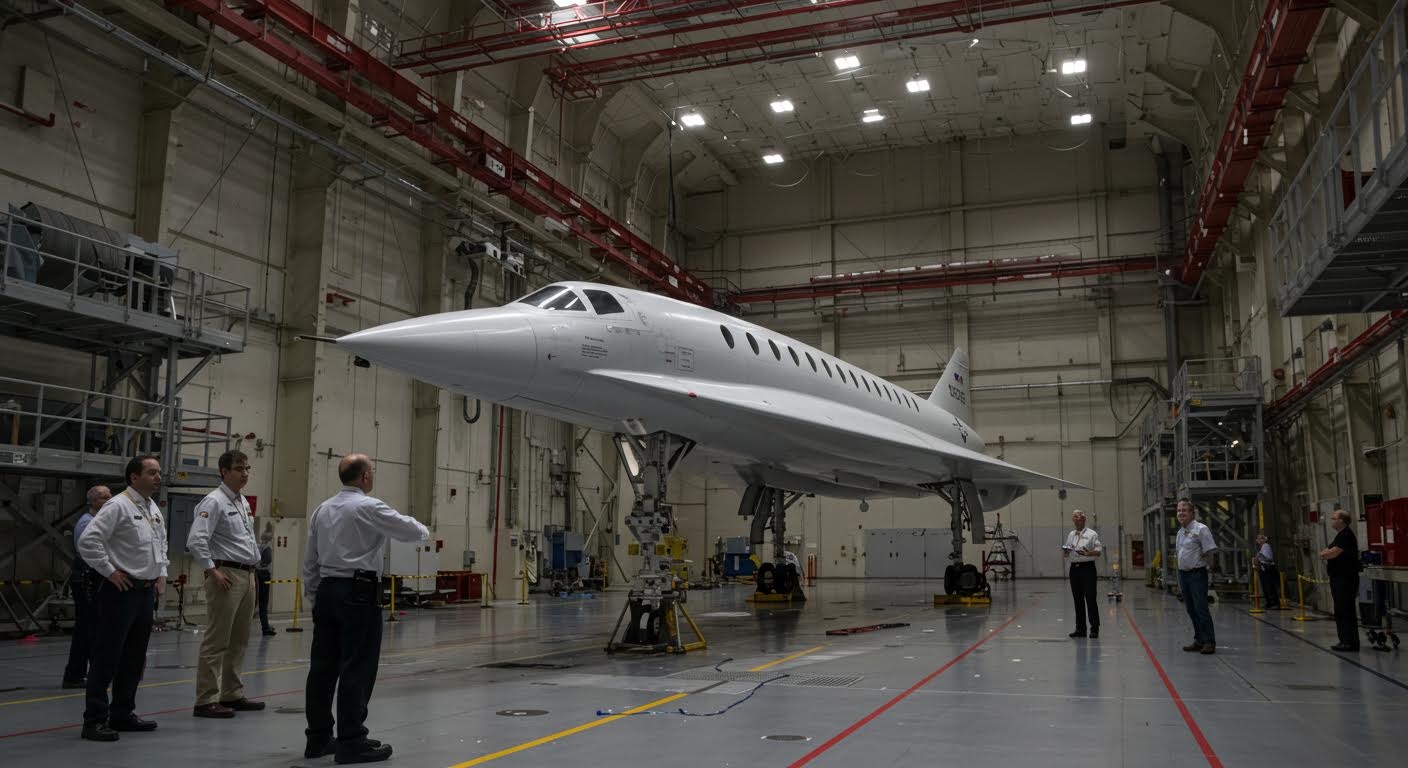
Hypersonic flight—sustained flight at speeds exceeding Mach 5, or five times the speed of sound—represents one of aerospace engineering's most ambitious frontiers. At these extreme velocities, aircraft encounter unprecedented physical challenges that push the boundaries of current technology and materials science.
The significance of hypersonic capability extends far beyond speed records. These technologies promise to revolutionize both military applications and civilian transportation, potentially reducing intercontinental flight times from hours to minutes while opening new possibilities for space access and defense systems.
Leading organizations including the National Aeronautics and Space Administration, the Defense Advanced Research Projects Agency, Boeing, and Lockheed Martin are investing heavily in hypersonic research, each tackling different aspects of the complex technological puzzle. The challenges are formidable: vehicles must withstand temperatures exceeding 2000°F, maintain control in extreme aerodynamic conditions, and integrate multiple advanced systems that can operate reliably at the edge of what physics allows.
Propulsion Systems: The Heart of Hypersonic Flight
The propulsion challenge at hypersonic speeds requires entirely new approaches to engine design. Traditional jet engines become ineffective at these velocities, necessitating air-breathing propulsion systems that can function in the extreme conditions of hypersonic flight.
Scramjet (supersonic combustion ramjet) technology forms the cornerstone of hypersonic propulsion. Unlike conventional engines, scramjets have no moving parts and rely on the vehicle's extreme speed to compress incoming air. The challenge lies in achieving combustion when air and fuel are mixing at supersonic speeds—a process often compared to "lighting a match in a hurricane."
The operational principles involve capturing air at the vehicle's leading edge, compressing it through carefully designed inlet geometries, injecting fuel into the supersonic airstream, and achieving stable combustion before expelling exhaust to generate thrust. Current testing programs have demonstrated scramjet operation for brief periods, with researchers working to extend operational duration and improve efficiency.
Ramjet engines serve as an intermediate step, operating effectively at speeds from Mach 2 to Mach 5, potentially working in combination with scramjets to provide propulsion across the full speed range. The trade-offs between air-breathing engines and rocket propulsion involve efficiency, operational complexity, and fuel requirements, with air-breathing systems offering superior efficiency but greater technical complexity.
Materials Engineering: Surviving Extreme Conditions
Hypersonic flight subjects vehicles to thermal environments that would destroy conventional aircraft materials within seconds. The kinetic energy of air molecules at these speeds generates temperatures that exceed those found in many industrial furnaces, requiring revolutionary approaches to materials science.
Ultra-high temperature ceramics represent one critical material category, capable of maintaining structural integrity at temperatures above 2000°C. These materials, including hafnium carbide and tantalum carbide, offer exceptional thermal resistance but present significant manufacturing and integration challenges.
Refractory metals such as tungsten and rhenium provide alternatives for specific applications, though their weight and cost present design trade-offs. Carbon-carbon composites, originally developed for Space Shuttle applications, offer excellent thermal properties combined with relatively low weight, making them attractive for leading edges and other high-heat areas.
The choice between ablative and reusable thermal protection strategies depends on mission requirements. Ablative systems sacrifice material during flight to carry away heat, suitable for single-use applications, while reusable systems must maintain integrity through multiple thermal cycles—essential for operational hypersonic vehicles.
Manufacturing these advanced materials at the scale and precision required for hypersonic applications presents ongoing challenges, with researchers developing new processing techniques and quality control methods to ensure reliability under extreme conditions.
Guidance and Control: Navigation at Mach 5+
Controlling a hypersonic vehicle requires solving navigation and stability challenges that don't exist at lower speeds. The extreme velocities compress reaction times while introducing unique physical phenomena that can disrupt conventional control systems.
One of the most significant challenges is the plasma sheath effect. At hypersonic speeds, the intense heat ionizes air around the vehicle, creating a plasma field that can block radio communications and interfere with GPS signals. This "blackout" period requires vehicles to rely on inertial navigation systems and pre-programmed flight paths.
Flight control algorithms must account for the dramatically different aerodynamic environment at hypersonic speeds. Control surfaces that work effectively at subsonic speeds may become ineffective or even destructive at Mach 5+, requiring new approaches to vehicle stability and maneuverability.
Inertial navigation systems require exceptional accuracy and reliability, as vehicles may be unable to receive external guidance updates for extended periods. The development of quantum-enhanced sensors and advanced computational systems aims to provide the precision necessary for hypersonic navigation.
The balance between ground-based control and autonomous systems becomes critical, as communication delays and blackout periods may require vehicles to make critical decisions independently during portions of their flight.
Thermal Management: Keeping Systems Operational
While thermal protection focuses on structural survival, thermal management ensures that sensitive electronics, sensors, and other systems continue functioning in the extreme thermal environment of hypersonic flight.
Active cooling systems represent one approach, using the vehicle's fuel as a coolant before combustion. This dual-use strategy helps manage component temperatures while preheating fuel for more efficient combustion, though it requires sophisticated heat exchanger designs and careful system integration.
Thermal barrier coatings provide localized protection for critical components, using advanced ceramic layers to insulate sensitive electronics from external heat. These coatings must maintain their protective properties while withstanding thermal cycling and mechanical stresses.
Heat exchanger designs for hypersonic applications must operate effectively in extreme temperature gradients while maintaining minimal weight and maximum reliability. Recent developments include microchannel cooling systems and advanced heat pipe technologies adapted for hypersonic conditions.
The integration of thermal management with vehicle structure and propulsion systems requires careful coordination to ensure that cooling systems don't compromise other vehicle functions while maintaining adequate thermal protection throughout the flight profile.
System Integration: Making It All Work Together
Perhaps the greatest challenge in hypersonic technology lies not in individual systems but in their integration. Propulsion, materials, control systems, and thermal management must work together seamlessly under conditions that push each system to its operational limits.
Vehicle design considerations involve balancing aerodynamic efficiency, structural integrity, and system integration requirements. The extreme conditions mean that traditional design approaches often don't apply, requiring new methodologies for hypersonic vehicle architecture.
Ground testing capabilities, while extensive, cannot fully replicate the conditions of hypersonic flight. Wind tunnels can achieve the necessary speeds for brief periods, but the combination of speed, duration, and thermal conditions remains challenging to reproduce, making flight testing essential but extremely expensive.
The choice between modular and integrated system architectures involves trade-offs between maintainability and performance optimization. Modular systems offer easier ground maintenance and component replacement, while integrated designs can achieve better performance through optimized interfaces between systems.
Reliability and redundancy requirements are particularly stringent given the extreme operating environment and the difficulty of in-flight repairs. Systems must be designed with multiple failure modes in mind while maintaining the weight and performance characteristics necessary for hypersonic operation.
Current Programs and Future Outlook
Recent achievements in hypersonic technology have demonstrated the feasibility of sustained hypersonic flight while revealing the challenges that remain. NASA's X-43 program achieved the first successful scramjet-powered flight, reaching Mach 9.6 and proving that air-breathing hypersonic propulsion is possible.
The X-51 Waverider program extended these achievements, demonstrating longer-duration scramjet operation and advancing understanding of hypersonic vehicle integration challenges. These programs provided crucial data on thermal management, control systems, and propulsion integration.
DARPA's current hypersonic weapons development initiatives focus on operational military applications, emphasizing reliability, manufacturability, and cost-effectiveness alongside performance. These programs are driving advances in materials, propulsion, and guidance systems with near-term deployment goals.
Commercial hypersonic transportation prospects remain longer-term, with significant challenges in passenger safety, operational economics, and regulatory frameworks. However, the potential for dramatically reduced flight times continues to drive research and investment in civilian applications.
International competition and collaboration in hypersonic technology involve complex dynamics between technological advancement, national security considerations, and scientific cooperation. Multiple nations are pursuing hypersonic capabilities, creating both competitive pressure and opportunities for collaborative research.
Current timelines suggest that limited operational hypersonic systems may emerge within the next decade, primarily in military applications. Broader deployment, including civilian transportation, likely requires additional decades of development to address safety, cost, and infrastructure challenges.
The convergence of these technologies represents a fundamental advancement in aerospace capability, with implications extending from defense applications to space access and global transportation. As research continues and testing programs mature, hypersonic flight may transition from experimental achievement to operational reality, opening new possibilities for human mobility and technological capability.