The Technology Powering Hypersonic Flight: Engineering Beyond Mach 5
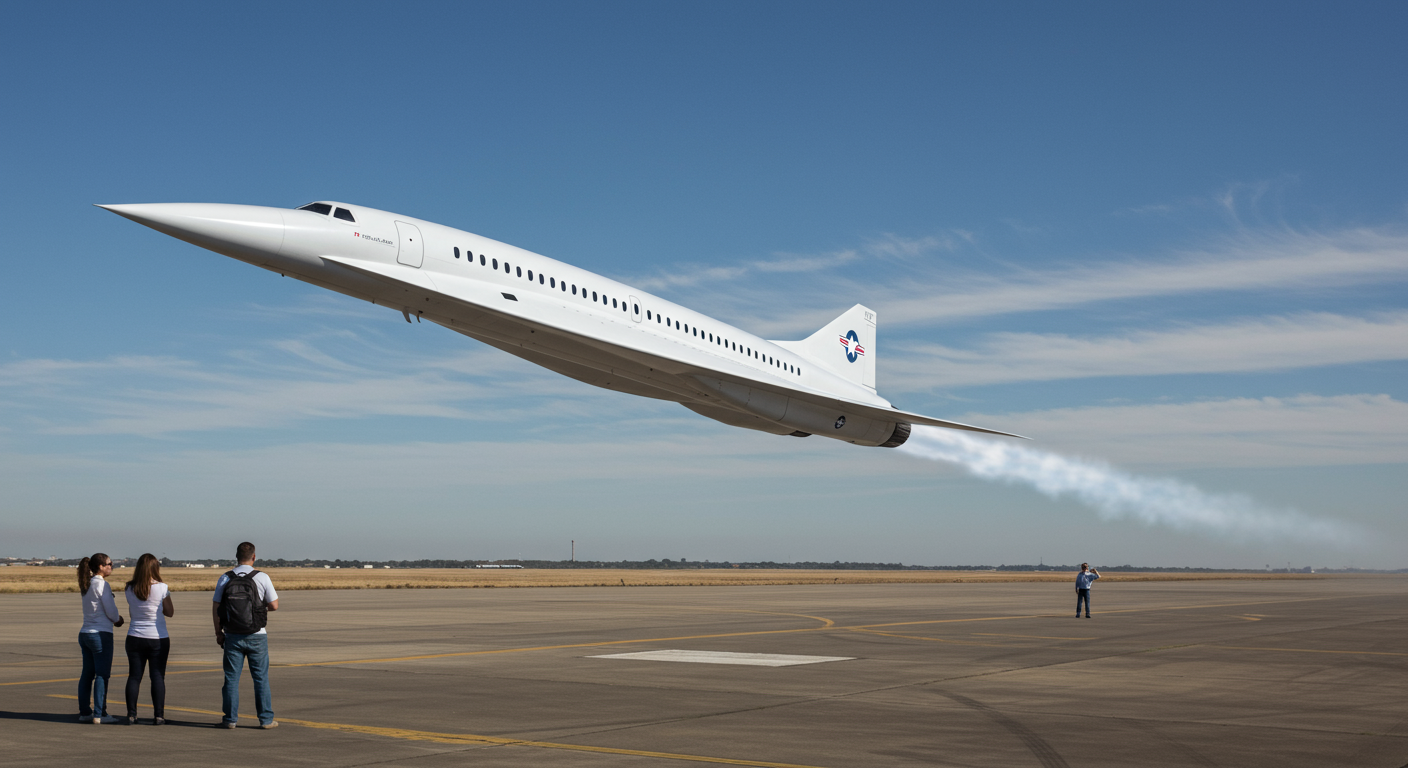
Hypersonic flight represents one of aerospace engineering's most formidable challenges, pushing the boundaries of what's possible when vehicles travel at speeds exceeding Mach 5—five times the speed of sound. At these extreme velocities, conventional aviation technologies break down, requiring revolutionary approaches to propulsion, materials, and vehicle design.
Understanding Hypersonic Flight: Beyond Mach 5
The hypersonic flight regime begins at Mach 5, approximately 3,800 miles per hour at sea level, where the physics of flight fundamentally change. Unlike supersonic flight, which occurs between Mach 1 and Mach 5, hypersonic speeds create unique aerodynamic phenomena that challenge traditional engineering approaches.
At these extreme velocities, the air around the vehicle becomes superheated, sometimes reaching temperatures of thousands of degrees Fahrenheit. This creates a plasma field that can interfere with communications and navigation systems. The shock waves generated are more intense and complex than those encountered at lower supersonic speeds, requiring entirely new approaches to aerodynamic design.
The journey to hypersonic flight began with early supersonic research in the 1940s and 1950s. NASA's X-15 rocket plane program provided crucial data about high-speed flight, reaching speeds of Mach 6.7 and laying the groundwork for today's hypersonic research.
Propulsion Systems: The Heart of Hypersonic Technology
The most critical component of hypersonic vehicles is their propulsion system. Traditional jet engines cannot operate at hypersonic speeds due to the extreme conditions, necessitating specialized technologies.
Scramjet engines, or supersonic combustion ramjets, represent the pinnacle of air-breathing hypersonic propulsion. Unlike conventional jet engines, scramjets have no moving parts. Instead, they rely on the vehicle's forward motion to compress incoming air at supersonic speeds. Fuel is then injected into this compressed airstream and ignited, creating thrust while maintaining supersonic airflow throughout the engine.
Ramjet technology serves as a stepping stone to scramjet operation, working effectively at lower hypersonic speeds. Many hypersonic vehicles use a combined cycle approach, transitioning from rocket propulsion for initial acceleration to ramjet operation at intermediate speeds, and finally to scramjet mode at full hypersonic velocity.
Fuel selection presents unique challenges at hypersonic speeds. Hydrogen offers the highest energy-to-weight ratio but requires complex storage systems. Hydrocarbon fuels are easier to handle but provide less energy and can break down under extreme temperatures. The combustion process itself must occur in milliseconds as fuel and air race through the engine at incredible speeds.
Materials and Thermal Protection: Surviving the Heat
Perhaps no aspect of hypersonic flight is more challenging than thermal management. At Mach 5 and beyond, aerodynamic heating can raise surface temperatures to over 3,000 degrees Fahrenheit—hot enough to melt most metals.
Ultra-high temperature ceramics (UHTCs) represent the cutting edge of hypersonic materials science. These materials, including compounds like hafnium carbide and tantalum carbide, can maintain their structural integrity at temperatures exceeding 4,000 degrees Fahrenheit. However, they're often brittle and difficult to manufacture in complex shapes.
Refractory metals like tungsten and rhenium offer excellent high-temperature properties but come with weight penalties that can affect vehicle performance. Engineers often use these materials selectively in the hottest areas while employing lighter materials elsewhere.
Thermal barrier coatings provide an additional layer of protection, creating insulating layers that reduce heat transfer to underlying structures. These coatings must not only withstand extreme temperatures but also thermal cycling as vehicles accelerate and decelerate.
Active cooling systems represent another approach to thermal management. These systems circulate coolant through channels in the vehicle structure or use the fuel itself as a coolant before it's burned, providing both thermal protection and fuel preheating.
Aerodynamics and Vehicle Design
Hypersonic vehicle design requires a complete rethinking of aerodynamic principles. Traditional aircraft shapes become inefficient or even dangerous at these speeds, leading to innovative configurations optimized for the hypersonic flight regime.
Waverider designs represent one of the most promising approaches to hypersonic aerodynamics. These vehicles are shaped to ride on their own shock waves, using the pressure generated by these waves to create lift. The entire vehicle becomes an integrated lifting surface, maximizing efficiency at hypersonic speeds.
Managing shock waves becomes critical at these speeds. Unlike subsonic flight where air flows smoothly around the aircraft, hypersonic flight creates complex shock wave patterns that must be carefully controlled. Engineers use computational fluid dynamics to model these interactions and optimize vehicle shapes.
The integration of propulsion and airframe presents unique challenges. In many hypersonic designs, the vehicle's underside serves as part of the engine inlet and nozzle, creating a highly integrated system where aerodynamic and propulsion considerations are inseparable.
Guidance, Navigation, and Control Systems
Controlling a hypersonic vehicle presents challenges unlike any other flight regime. At these speeds, traditional control surfaces may lose effectiveness or face structural limitations due to extreme heating and loads.
One of the most significant challenges is the communication blackout that occurs when the vehicle becomes surrounded by superheated plasma. This ionized air can block radio communications, making it impossible to receive guidance updates or transmit telemetry data during critical flight phases.
Precision guidance at hypersonic speeds requires systems capable of making split-second decisions. At Mach 5, a vehicle covers more than a mile every second, leaving no room for delayed responses. Autonomous flight systems must be capable of real-time decision making without human intervention.
Alternative control methods become necessary when traditional control surfaces prove inadequate. These include reaction control systems using small thrusters, differential engine thrust for steering, and even manipulating shock wave patterns to create steering forces.
Current Players and Development Programs
The development of hypersonic technology involves a complex ecosystem of government agencies, private companies, and international partnerships. The National Aeronautics and Space Administration leads civilian hypersonic research with programs focused on both scientific understanding and practical applications like space access vehicles.
The Defense Advanced Research Projects Agency spearheads military hypersonic development through programs like the Hypersonic Air-breathing Weapon Concepts initiative. These efforts focus on developing weapons systems and understanding the strategic implications of hypersonic technology.
Private aerospace companies are increasingly involved in hypersonic development. Boeing, Lockheed Martin, and newer companies like Hermeus are developing both military and civilian hypersonic vehicles, bringing commercial efficiency and innovation to the field.
International competition in hypersonic technology has intensified, with countries like China, Russia, and India developing their own programs. This has led to both increased investment and concerns about an emerging hypersonic arms race.
Applications and Future Prospects
The applications for hypersonic technology span both military and civilian domains, each with distinct requirements and timelines for development.
Military applications currently drive much of the development, with hypersonic weapons systems offering the ability to strike targets anywhere in the world within minutes. These systems present new strategic challenges due to their speed and the difficulty of defending against them.
Civilian applications hold tremendous long-term potential. Hypersonic passenger aircraft could revolutionize long-distance travel, reducing flight times from New York to Tokyo from 14 hours to just 2-3 hours. However, the technical challenges and costs make this application more distant than military uses.
Space access represents another promising application. Hypersonic vehicles could serve as the first stage of space launch systems, reducing costs and increasing flexibility compared to traditional rockets. This application could make space more accessible for both scientific research and commercial activities.
The timeline for practical deployment varies significantly by application. Military systems are likely to achieve operational status first, with some already in testing phases. Commercial hypersonic flight remains decades away, requiring solutions to cost, safety, and environmental challenges that don't constrain military applications.
The economic implications of hypersonic technology are substantial. Research from organizations like the RAND Corporation indicates the global hypersonic technology market is projected to grow dramatically over the next decade, driven by both military spending and eventual civilian applications. However, the high development costs and technical risks mean that only the largest aerospace companies and government agencies can currently participate in this field.
As hypersonic technology continues to mature, it promises to reshape both military strategy and civilian transportation. The engineering challenges are immense, but the potential benefits—from enhanced security capabilities to revolutionary transportation systems—continue to drive significant investment and research in this cutting-edge field.