The Technology Powering Hypersonic Flight
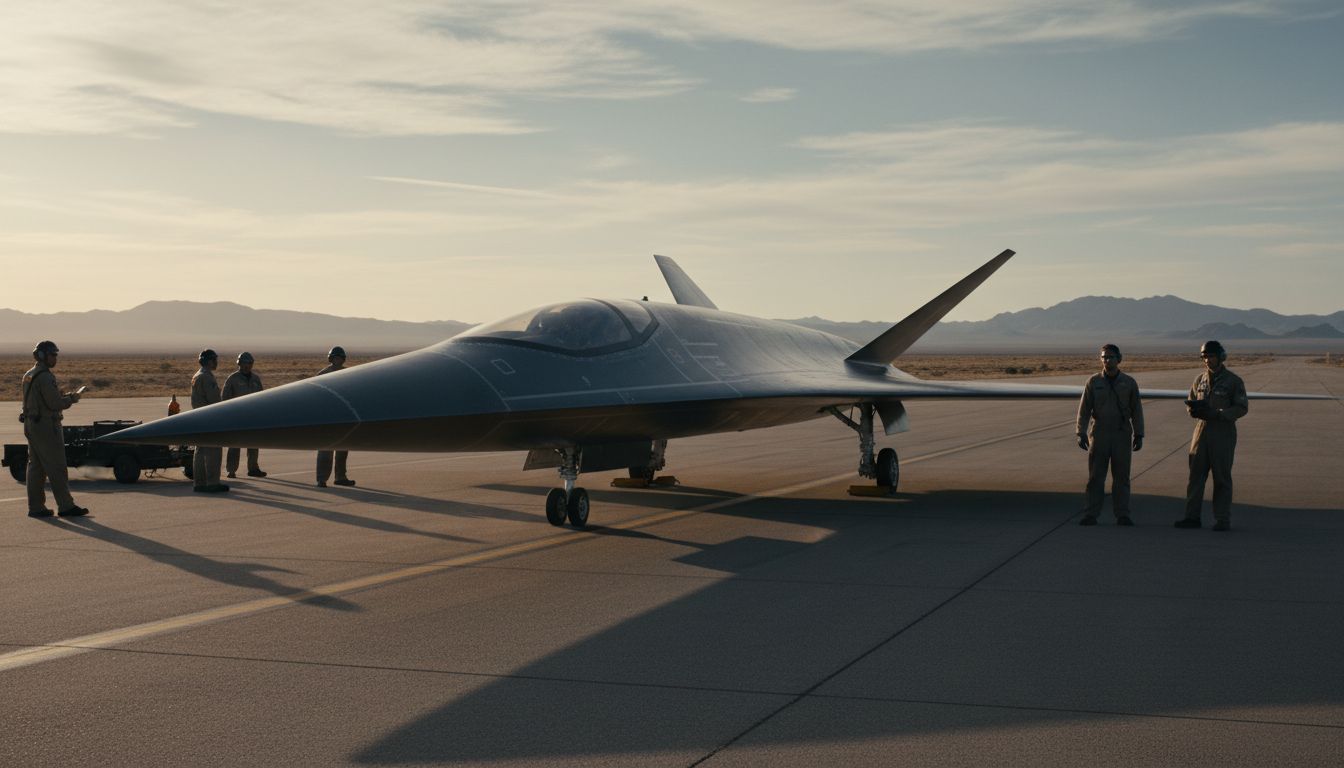
Hypersonic flight represents one of the most demanding frontiers in modern aerospace engineering, requiring vehicles to survive conditions that push materials, propulsion, and control systems to their limits. Achieving sustained flight at these speeds has become a focal point for both scientific research and national defense strategy.
What Makes Flight 'Hypersonic'
Hypersonic speed is generally defined as Mach 5 or greater—roughly 3,800 miles per hour or faster. This distinguishes it from supersonic flight, which covers speeds from Mach 1 to Mach 5. While supersonic aircraft like fighter jets have been operational for decades, the hypersonic regime introduces an entirely different set of physical challenges.
At these velocities, air molecules compress and heat so intensely that they can ionize, forming plasma around parts of the vehicle. Shockwave behavior becomes far more complex, and the extreme heat generated by air friction can threaten structural integrity within seconds. Traditional aerodynamic models and guidance algorithms, built for slower flight regimes, often break down entirely under these conditions, requiring new approaches to vehicle design and control.
Scramjet Propulsion: Breathing Air at Extreme Speed
One of the key technologies enabling sustained hypersonic flight is the scramjet, or supersonic combustion ramjet. Unlike conventional jet engines, which rely on rotating compressor blades, or rockets, which carry their own oxidizer, scramjets compress incoming air using the vehicle's forward speed alone and burn fuel within an airstream that remains supersonic throughout combustion.
This air-breathing design offers a significant advantage: by drawing oxygen from the atmosphere rather than carrying heavy onboard oxidizer tanks, scramjet-powered vehicles can be lighter and potentially achieve longer ranges than rocket-propelled alternatives. The Defense Advanced Research Projects Agency's Hypersonic Air-breathing Weapon Concept, known as HAWC, has served as a prominent test program for this approach, demonstrating the feasibility of air-breathing propulsion at sustained hypersonic speeds.
Surviving the Heat: Materials and Thermal Protection
Flying at Mach 5 or beyond generates intense aerodynamic heating as air molecules collide with the vehicle's surface. Temperatures can rise high enough to degrade or melt conventional aerospace materials, making thermal protection one of the central engineering challenges of hypersonic flight.
Researchers have made advances in heat-resistant composites, ablative coatings, and novel structural materials designed to withstand these extreme thermal loads while maintaining aerodynamic performance. NASA's Hypersonic Technology Project has contributed foundational research in this area, studying materials science and thermal management techniques that inform both civilian and defense-related development.
Guidance, Navigation, and Control in a Chaotic Regime
Maintaining precise control during hypersonic flight is complicated by the same phenomena that make the speed regime so punishing: plasma formation can interfere with communication and sensor systems, while shockwave interactions around the vehicle can be unpredictable and difficult to model in real time.
Different vehicle types face distinct control challenges. Boost-glide vehicles, which are launched to high altitude and then glide unpowered through the atmosphere at hypersonic speeds, require different guidance strategies than air-breathing craft that sustain powered flight throughout their trajectory. DARPA's Falcon program has served as a notable example of research into boost-glide vehicle control, exploring how these craft can maintain stability and accuracy despite the turbulent aerodynamic environment.
From Research Labs to the Battlefield
The path from foundational hypersonic research to operational military systems typically involves a division of labor between research agencies and defense branches. NASA has largely focused on foundational science—materials, aerodynamics, and propulsion research—while the U.S. Air Force has pursued applied systems intended for defense use.
The AGM-183A Air-launched Rapid Response Weapon, known as ARRW, stands as an example of this applied development, representing an effort to field an operational hypersonic weapon system. Defense contractor Lockheed Martin has played a central role as a primary builder of hypersonic platforms, working on vehicle development under both public and classified programs.
The Global Hypersonic Race
Hypersonic technology has become a focal point of strategic competition among major world powers. The United States, China, and Russia have all pursued hypersonic weapons programs, with each nation seeking to establish an edge in this emerging area of military capability.
Reuters and the BBC have tracked a series of test milestones and setbacks across these programs, reflecting both the technical difficulty of the field and its geopolitical significance. This competitive dynamic has contributed to accelerated government investment in hypersonic research within the United States, as officials weigh the strategic implications of falling behind in the field.
Beyond Weapons: Dual-Use Potential
While much of the attention on hypersonic technology centers on military applications, the underlying research carries potential civilian applications as well. Some researchers and companies have floated the possibility of future high-speed commercial transport that could dramatically cut travel times between distant cities.
However, the timeline and feasibility for civilian hypersonic travel differ substantially from military deployment. Passenger transport introduces additional requirements around safety certification, cost, and comfort that are not primary concerns for weapons systems. Even so, the dual-use nature of hypersonic research shapes how funding is allocated and encourages collaboration between public agencies and private industry, as advances in one domain often inform progress in the other.