The Technology Powering Hypersonic Flight
The Technology Powering Hypersonic Flight
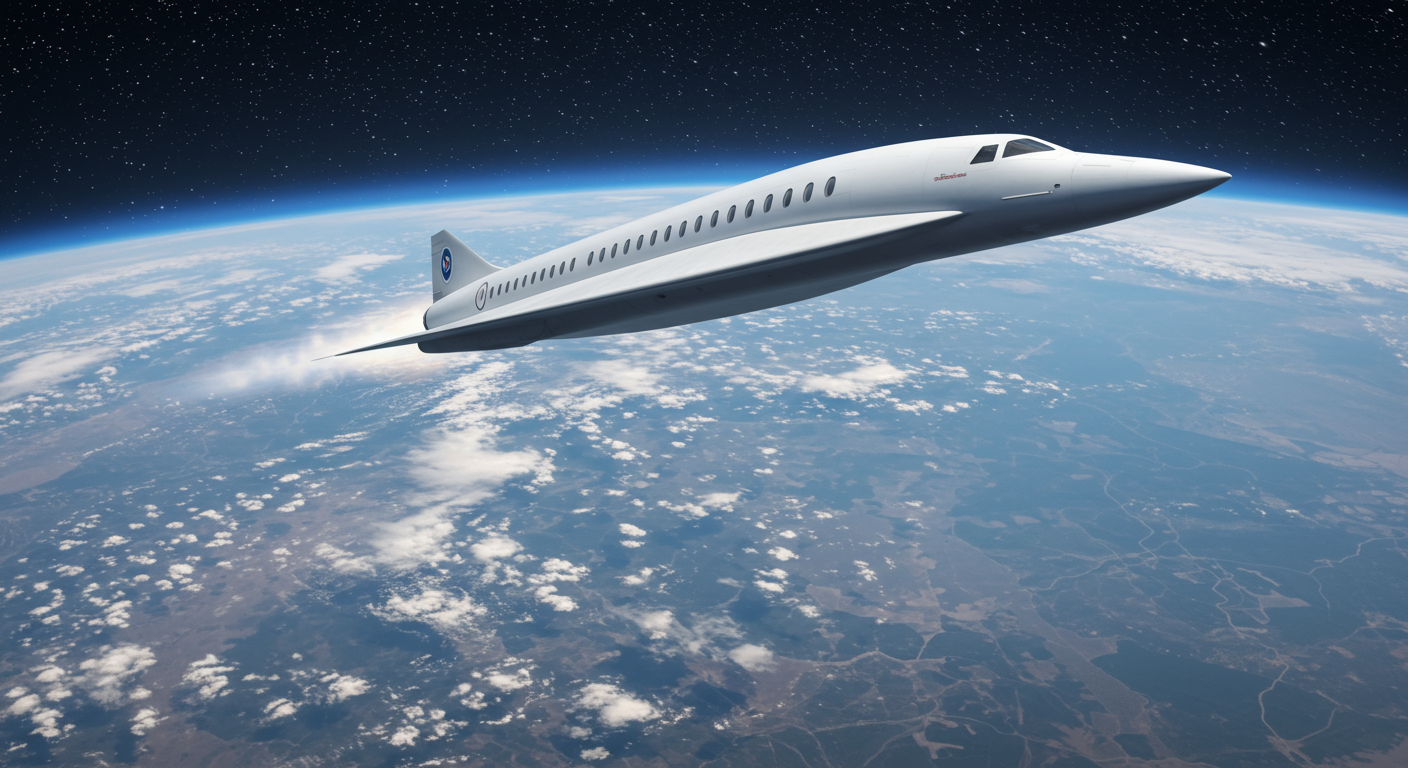
Hypersonic flight represents one of the most challenging frontiers in aerospace engineering, pushing the boundaries of physics, materials science, and propulsion technology. Defined as flight at speeds exceeding Mach 5—five times the speed of sound—hypersonic vehicles must overcome extreme technical challenges that have long relegated such capabilities to the realm of theoretical possibility.
Today, a global race is underway to develop operational hypersonic systems, with applications ranging from rapid civilian transportation and space access to advanced military tactical capabilities. The technological breakthroughs required span multiple disciplines, from revolutionary propulsion systems to materials that can withstand temperatures exceeding 2,000°F while maintaining structural integrity.
Scramjet Propulsion: The Heart of Hypersonic Flight
At the core of sustained hypersonic flight lies the scramjet—a supersonic combustion ramjet that represents a fundamental departure from conventional propulsion systems. Unlike traditional jet engines that slow incoming air to subsonic speeds for combustion, scramjets maintain supersonic airflow throughout the entire engine, enabling operation at extreme velocities.
The basic principle involves capturing incoming air at hypersonic speeds, compressing it through the vehicle's geometry, injecting fuel into the supersonic airstream, and achieving combustion while maintaining supersonic flow conditions. This process requires extraordinary precision in fuel injection timing and mixing, as the entire combustion process must occur within milliseconds as the air-fuel mixture travels through the combustion chamber.
NASA's X-43A program demonstrated the viability of scramjet technology, achieving sustained flight at Mach 9.6. These tests validated computational models and provided crucial data on combustion efficiency, thrust generation, and thermal management under real-world hypersonic conditions.
The advantages of scramjet propulsion over traditional rocket systems become apparent in sustained flight scenarios. While rockets must carry both fuel and oxidizer, scramjets utilize atmospheric oxygen, significantly reducing vehicle weight and enabling longer-duration flights. This characteristic makes scramjets particularly attractive for applications requiring extended hypersonic cruise phases.
Thermal Protection: Surviving Extreme Heat
Perhaps no challenge in hypersonic flight is more daunting than thermal management. At Mach 5 and above, aerodynamic heating generates surface temperatures that can exceed 2,000°F, creating conditions that would destroy conventional aircraft materials within seconds.
Advanced ceramic matrix composites have emerged as leading solutions for hypersonic thermal protection. These materials combine the high-temperature resistance of ceramics with the toughness and damage tolerance of fiber reinforcement. Carbon-carbon composites, similar to those used on Space Shuttle leading edges, offer exceptional thermal performance but require protective coatings to prevent oxidation in atmospheric flight.
Thermal barrier coatings represent another critical technology, creating insulating layers that protect underlying structural materials. These coatings often employ rare earth elements and specialized crystal structures that minimize heat conduction while maintaining adherence under extreme thermal cycling.
Heat dissipation strategies extend beyond materials selection to include active cooling systems, where fuel or dedicated coolants circulate through vehicle structures to manage thermal loads. The integration of these cooling systems with vehicle structures and propulsion components represents a significant engineering challenge, requiring careful balance between cooling effectiveness and system complexity.
Boost-Glide Vehicle Technology
An alternative approach to sustained hypersonic flight involves boost-glide vehicles, which use conventional rocket boosters to accelerate to hypersonic speeds before gliding to their destination. The Defense Advanced Research Projects Agency's Tactical Boost Glide program exemplifies this approach, developing vehicles capable of precise maneuvering during the glide phase.
The boost phase relies on proven rocket technology to rapidly accelerate the vehicle above the atmosphere, where traditional aerodynamic limitations don't apply. Once the desired velocity and altitude are achieved, the vehicle separates from its booster and begins a controlled glide back through the atmosphere.
During the glide phase, the vehicle's aerodynamic design enables maneuvering capabilities that distinguish hypersonic gliders from traditional ballistic missiles. Specialized control surfaces and body geometry allow for trajectory modifications, making flight paths unpredictable and enhancing tactical utility.
Trajectory optimization algorithms play a crucial role in boost-glide systems, calculating optimal flight paths that balance speed, range, and maneuverability requirements while managing thermal loads and structural stresses throughout the flight profile.
Navigation and Control Systems
Hypersonic flight creates unique challenges for navigation and control systems. At extreme speeds, the vehicle's passage through the atmosphere generates a plasma sheath—a layer of ionized gases that can interfere with radio communications and GPS signals. This phenomenon, known as communications blackout, requires alternative navigation approaches.
Inertial navigation systems become critical in hypersonic applications, utilizing accelerometers and gyroscopes to track vehicle position and orientation without relying on external signals. These systems must maintain extraordinary accuracy over flight durations that can span thousands of miles.
Autonomous flight control systems must respond to changing flight conditions within milliseconds, as the extreme speeds involved leave no time for human intervention. Advanced algorithms continuously monitor vehicle status, atmospheric conditions, and flight path requirements, making real-time adjustments to control surfaces and propulsion systems.
Specialized guidance systems designed for hypersonic environments often incorporate multiple redundant sensors and navigation methods, ensuring mission success even when individual systems experience interference or failure.
Design and Testing Challenges
The extreme conditions of hypersonic flight push computational modeling and testing capabilities to their limits. Computational fluid dynamics simulations must account for complex phenomena including shock wave interactions, chemical reactions in high-temperature gases, and turbulent mixing processes that occur at unprecedented scales and speeds.
Ground-based testing presents significant challenges, as few facilities can replicate true hypersonic flight conditions. Hypersonic wind tunnels capable of generating Mach 5+ flow conditions are rare and expensive to operate, often providing test durations measured in milliseconds rather than the sustained conditions experienced in actual flight.
The integration challenges between propulsion systems and airframe design require unprecedented coordination between multiple engineering disciplines. The vehicle's shape must simultaneously optimize aerodynamic performance, accommodate propulsion system requirements, manage thermal loads, and provide structural integrity—often with competing requirements that demand innovative compromises.
Flight testing remains the ultimate validation method, but the extreme speeds and brief flight durations of hypersonic vehicles limit data collection opportunities. Each test flight represents a significant investment and provides only brief windows for gathering critical performance data.
Applications and Future Outlook
The successful development of hypersonic technology promises to revolutionize both civilian and military transportation. In civilian applications, hypersonic aircraft could enable point-to-point travel anywhere on Earth within hours, fundamentally changing global commerce and travel patterns. Space access applications could dramatically reduce the cost and complexity of reaching orbit, opening new possibilities for space exploration and commercial space activities.
Military applications focus on the tactical advantages provided by hypersonic speed and maneuverability. The combination of rapid response times, unpredictable flight paths, and reduced vulnerability to existing defense systems creates new strategic capabilities that are reshaping military planning and international security considerations.
Current industry players include established aerospace giants like Lockheed Martin, Boeing, and Raytheon, alongside government agencies such as NASA, the Defense Advanced Research Projects Agency, and the Air Force Research Laboratory. International competitors in Russia, China, and other nations are pursuing parallel development programs, creating a global technology race with significant geopolitical implications.
Timeline projections for operational hypersonic systems vary by application and technical approach. Military boost-glide systems may achieve operational status within the current decade, while sustained hypersonic cruise vehicles and civilian applications likely require additional years of development to address remaining technical challenges and safety requirements.
The convergence of advances in materials science, propulsion technology, and computational capabilities suggests that the age of practical hypersonic flight is approaching. The technologies being developed today will likely define aerospace capabilities for decades to come, representing one of the most significant advances in flight technology since the advent of jet propulsion.