The Technology Behind Long-Term Human Survival in Space
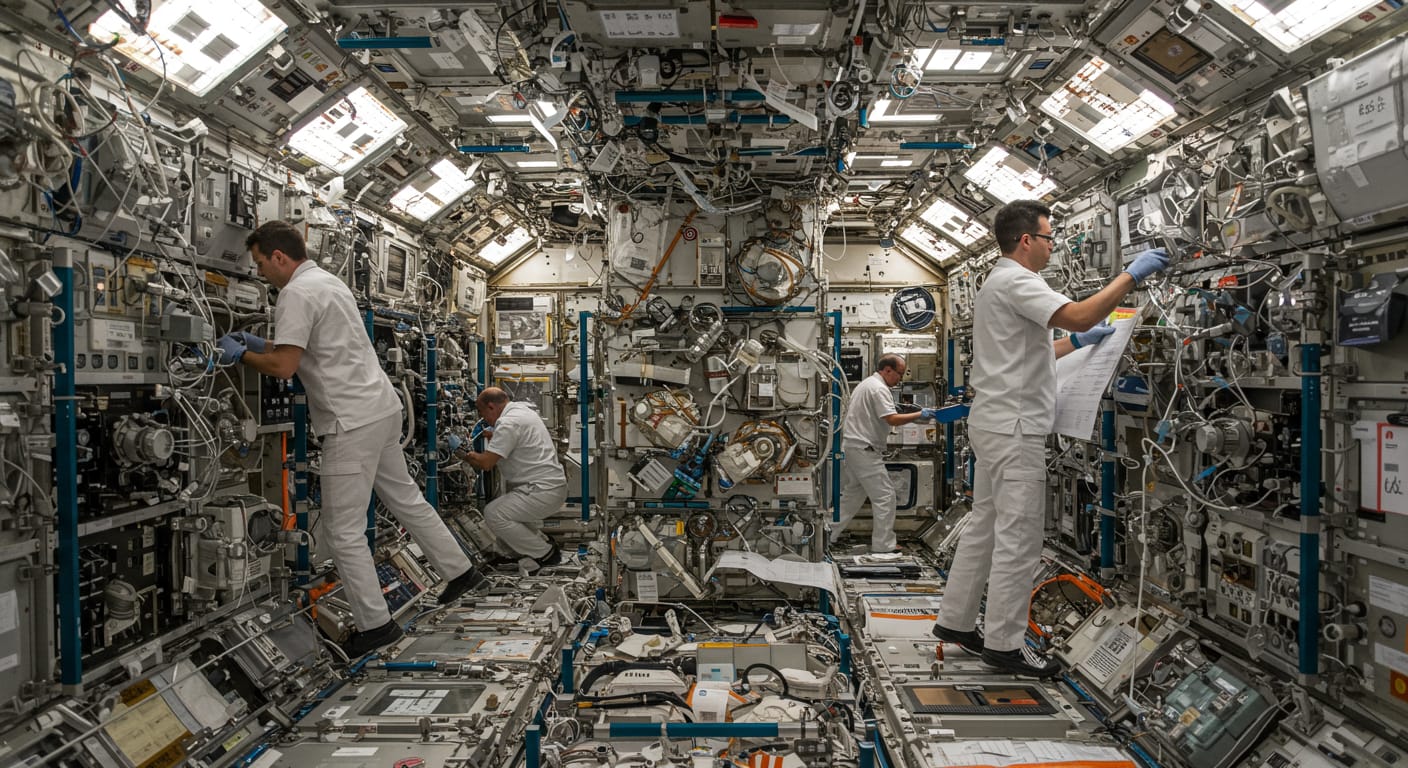
As humanity prepares for ambitious missions to Mars and beyond, keeping humans alive and healthy in space's harsh environment becomes increasingly complex. Long-term space survival demands revolutionary technologies that recreate Earth-like conditions while operating autonomously for years.
Life Support: Creating Earth-like Conditions in the Void
The foundation of long-term space survival lies in sophisticated Environmental Control and Life Support Systems (ECLSS). These closed-loop systems continuously purify air by removing carbon dioxide and regenerating oxygen through advanced chemical and biological processes. Modern ECLSS designs incorporate redundant systems to ensure reliability during multi-year missions.
Water recycling technology has advanced to recover nearly 95% of all water used aboard spacecraft, including humidity condensation and urine processing. These systems use multiple filtration stages, including reverse osmosis and ion exchange, to produce drinking water that exceeds Earth-based purity standards.
Advanced waste management systems serve dual purposes: safely containing human waste while converting organic materials into useful resources. Composting and thermal processing can transform waste into fertilizer for food production or recover water and nutrients for the closed-loop system.
Radiation Protection: Shielding Humans from Cosmic Threats
Space radiation poses one of the most significant challenges to long-term human survival beyond Earth's protective magnetosphere. Advanced composite materials, including hydrogen-rich polymers and specialized metals, provide passive shielding against cosmic rays and solar particle events.
Emerging electromagnetic shielding technologies use magnetic fields to deflect charged particles away from inhabited areas. These systems require significant power but offer dynamic protection that adjusts based on radiation levels and mission phases.
Habitat design incorporates radiation-safe zones where crews can shelter during solar storms, while personal dosimeters provide continuous monitoring and early warning systems to prevent dangerous exposure levels.
Food Security: Growing Sustenance Beyond Earth
Long-term space missions require sustainable food production systems that operate independently of Earth-based resupply. Hydroponic and aeroponic systems allow crops to grow without soil, using precisely controlled nutrient solutions and maximizing growing efficiency in limited space.
Bioregenerative life support systems integrate food production with atmosphere and water recycling, creating closed ecological loops. Plants consume carbon dioxide and produce oxygen while generating fresh food, contributing to both nutrition and life support.
Researchers are developing genetically optimized crops specifically designed for space environments, including varieties that grow efficiently under LED lighting and in controlled atmospheric conditions. These crops maximize nutritional density while minimizing resource requirements.
Resource Independence: Mining and Manufacturing in Space
In-Situ Resource Utilization (ISRU) technology enables space missions to extract essential resources from their destination environments. On Mars, ISRU systems can extract water from subsurface ice, generate oxygen from atmospheric carbon dioxide, and produce rocket fuel for return journeys.
3D printing and additive manufacturing capabilities allow crews to produce tools, spare parts, and even habitat components using locally sourced materials. This technology reduces dependence on Earth-based supplies and enables rapid response to equipment failures.
Automated mining and processing systems can extract and refine minerals for construction materials, potentially enabling the construction of larger habitats and infrastructure without requiring massive material shipments from Earth.
Physical Health: Combating the Effects of Microgravity
Extended exposure to microgravity causes significant physiological changes, including bone density loss, muscle atrophy, and cardiovascular deconditioning. Artificial gravity systems using rotating habitats or centrifuge modules can mitigate these effects by providing regular exposure to simulated gravity.
Advanced exercise equipment designed for space environments helps maintain muscle mass and cardiovascular fitness. These systems use vacuum cylinders, flywheel technology, and electromagnetic resistance to provide effective workouts in weightless conditions.
Pharmaceutical interventions and specialized nutrition protocols help preserve bone density and support overall health during long-duration missions. Real-time monitoring systems track physiological changes and adjust countermeasures accordingly.
Medical Care: Autonomous Healthcare for Isolated Crews
Medical emergencies during deep space missions require autonomous treatment capabilities since communication delays with Earth can exceed 20 minutes. AI-powered diagnostic systems can analyze symptoms, recommend treatments, and guide crew members through complex medical procedures.
Robotic surgery systems and telemedicine platforms enable remote medical care with minimal human oversight. These systems can perform routine procedures and provide emergency interventions when traditional medical care is unavailable.
On-demand pharmaceutical production allows missions to manufacture medications as needed rather than carrying large inventories that may degrade over time. 3D printing technology can produce pills and medical devices using raw chemical compounds.
Mental Health: Preserving Human Psychology in Isolation
The psychological challenges of long-term space missions include isolation, confinement, and separation from Earth. Habitat design incorporates private spaces, recreational areas, and social gathering zones to support crew mental health and maintain group dynamics.
Virtual reality systems provide psychological relief by simulating Earth environments and enabling immersive entertainment experiences. These systems also facilitate virtual communication with family and friends on Earth, maintaining important social connections.
Circadian rhythm management through programmable lighting systems helps maintain healthy sleep cycles despite the absence of natural day-night cycles. Specialized crew selection and ongoing psychological support protocols ensure mission success.
Power and Propulsion: Energy for the Long Journey
Long-term space missions require reliable power sources that can operate for years without maintenance. Nuclear power systems provide consistent energy output regardless of distance from the Sun, making them ideal for outer planet missions and Mars surface operations.
Advanced solar panel technology with high-efficiency cells and automated cleaning systems maximizes energy collection while minimizing degradation over time. Large-scale energy storage systems ensure power availability during equipment-intensive operations.
Next-generation propulsion systems, including nuclear thermal and electric propulsion, enable faster transit times and greater payload capacity for human missions. According to the National Aeronautics and Space Administration's Artemis program, in-space fuel production capabilities allow missions to refuel for return journeys without Earth-based supply missions.
The integration of these technologies represents humanity's next great leap into the cosmos, enabling sustainable human presence throughout the solar system and laying the groundwork for eventual interstellar exploration.