The Technology Behind Long-Term Human Survival in Space
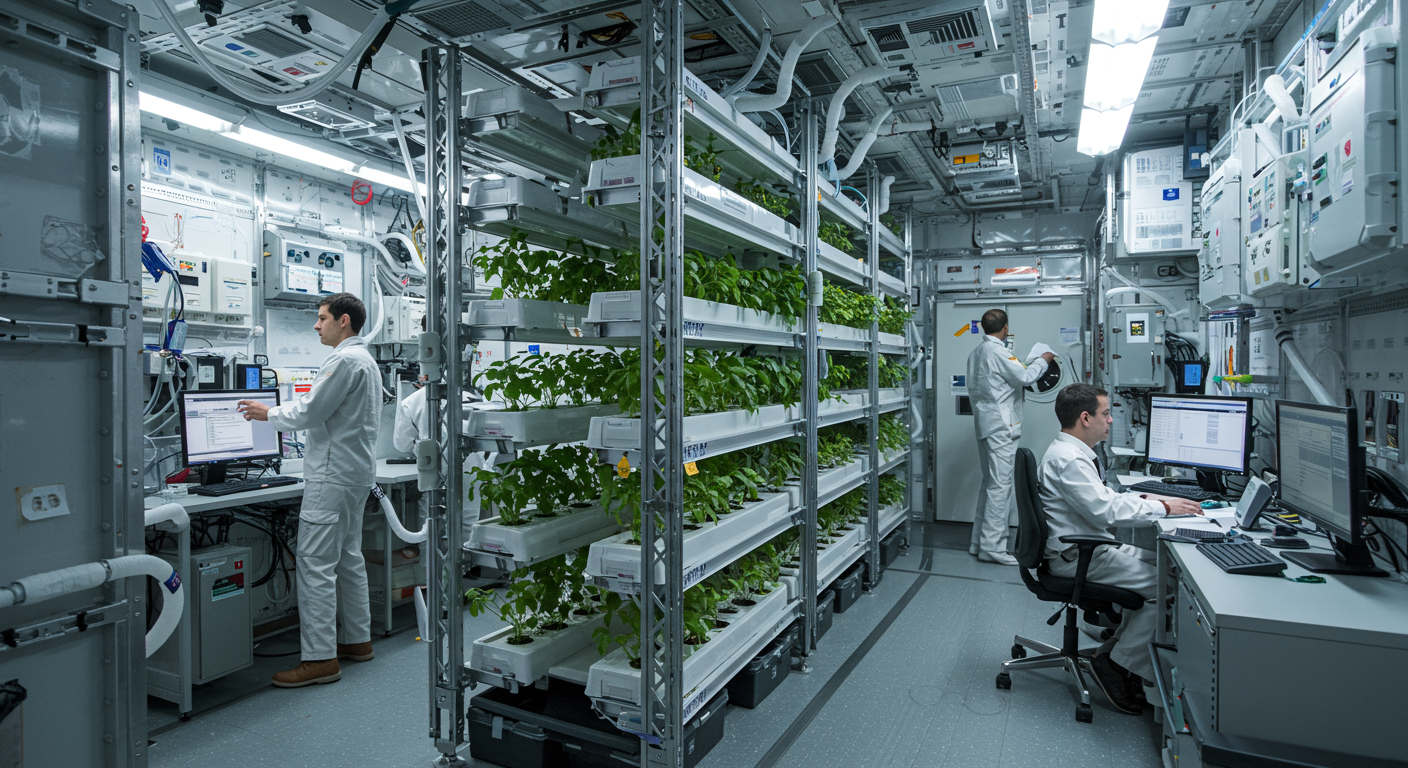
Long-term human survival in space is not about a single revolutionary spacecraft or one miracle invention. It is a systems problem. The farther people travel from Earth and the longer they stay away, the less they can rely on frequent resupply, immediate repairs from mission control, or quick evacuation when something goes wrong.
That changes the engineering challenge dramatically. A short mission in low Earth orbit can depend more heavily on cargo deliveries, rapid communications, and proven operating routines. A mission to the Moon, Mars, or beyond has to work more like a self-contained ecosystem. Air, water, power, shelter, food, medical support, and maintenance become part of one tightly linked survival stack.
In practical terms, long-term space survival depends on seven major technology areas working together: life support, radiation protection, habitat design, power systems, human health tools, food systems, and onboard autonomy. None of them can fail for long, and each affects the others.
Why long-term survival in space is a systems problem
Space agencies have spent decades learning that surviving off Earth is less about reaching space than about staying there safely and productively. Distance matters because every additional mile makes resupply slower and more expensive. Mission duration matters because small inefficiencies become major liabilities over months or years. Communication delays matter because a crew cannot always wait for step-by-step instructions from Earth.
That is why long-duration mission planning focuses on infrastructure. Engineers must design environments that can keep people alive in isolation while managing limited mass, volume, energy, and spare parts. A habitat is not just a place to sleep. It is also a machine for maintaining pressure, temperature, air quality, sanitation, health, and operational stability.
The core challenge is integration. Power supports life support. Habitat layout affects maintenance and crew stress. Waste processing influences water recovery. Medical monitoring helps determine exercise and nutrition needs. In space, survival technologies are deeply interdependent.
Closed-loop life support is the foundation
If there is one cornerstone of long-term survival, it is closed-loop life support. The goal is simple in theory and difficult in practice: recycle as much air and water as possible so crews need far less material shipped from Earth.
That requires a coordinated set of systems. Oxygen must be generated or replenished. Carbon dioxide must be removed before it reaches dangerous levels. Humidity has to be controlled so condensation does not create microbial or equipment problems. Water from breathing, hygiene, and waste streams has to be captured, purified, and returned to use.
Monitoring is just as important as recycling. Sensors are needed to track contaminants, pressure, temperature, humidity, and the chemical quality of air and water. In a sealed environment, even a small leak, filter failure, or contamination event can cascade into a serious threat if it is not detected early.
Waste handling is part of the same loop. Solid and liquid waste affect sanitation, crew health, and resource recovery. For deep-space missions, future systems will need to get better at turning waste from a disposal problem into a usable input for water recovery, agricultural support, or other closed-cycle processes.
The closer a mission gets to true recycling, the more independent it becomes. That does not eliminate resupply entirely, but it does reduce one of the biggest constraints on long-duration exploration.
Radiation protection shapes deep-space mission design
Radiation is one of the biggest differences between operating in low Earth orbit and venturing deeper into space. Earth’s magnetic field offers significant protection to astronauts in orbit, although exposure is still a concern. Missions to the Moon, Mars, or deep space face a harsher radiation environment with fewer natural defenses.
That makes shielding a fundamental design issue, not just a medical one. Spacecraft and habitats must incorporate materials and layouts that reduce exposure over time. Mission planners also consider operational tactics, such as protected storm shelters for solar particle events and mission profiles that limit unnecessary exposure during high-risk periods.
Material choice matters because some substances perform better than others at limiting secondary radiation effects. Habitat geometry matters because the placement of supplies, water, and equipment can influence which areas offer the most protection. Even trajectory planning can help manage cumulative radiation dose.
Radiation concerns affect daily life as well as mission architecture. They influence where crews sleep, where emergency shelter is located, how vehicles are configured, and how long a mission can reasonably last without unacceptable health tradeoffs. In deep-space design, radiation is always part of the equation.
Habitats must function like resilient mini-environments
A long-duration habitat has to do far more than keep out the vacuum of space. It must operate as a resilient, repairable, tightly controlled mini-environment. That means maintaining pressure, managing temperature, filtering air, preventing fire hazards, and constantly monitoring internal conditions.
Resilience starts with fault tolerance. Critical systems need backups, and failures should be isolated before they spread. A habitat also has to be maintainable by the crew using the tools and spare parts available on site. On a mission far from Earth, equipment cannot be treated as disposable.
That is why maintainability is becoming a central design principle. Components that can be swapped, repaired, or diagnosed onboard are far more valuable than systems that work well but require specialized support from the ground. Reliability matters, but so does graceful degradation: when a system starts to fail, the habitat should buy the crew time rather than trigger an immediate crisis.
Psychological livability matters too. People living in confined, isolated environments for months need private space, stable lighting cycles, manageable noise levels, and layouts that support routine, rest, and teamwork. A technically safe habitat that erodes sleep, morale, or social stability can still undermine mission survival.
Power keeps every other survival system running
Reliable power is the backbone of every long-term space mission. Life support, thermal regulation, communications, onboard computing, medical equipment, science operations, and mobility systems all depend on it. Without dependable energy, every other survival technology becomes fragile.
For many current and near-term mission concepts, solar generation remains essential. But producing electricity is only part of the challenge. Missions also need energy storage to cover eclipses, peak power demands, and periods when environmental conditions reduce generation. On the Moon or Mars, local conditions can make those gaps mission-critical.
Power resilience matters as much as raw output. Systems have to handle faults, sudden load changes, and emergency conditions without shutting down vital functions. That often means prioritizing critical loads, distributing power intelligently, and building in redundancy so one failure does not cripple the entire mission.
As missions become more ambitious, the link between power architecture and survival will only grow tighter. More recycling, more autonomy, more science capability, and more habitability all require more robust energy planning.
Human health technology must counter space’s effects on the body
Space is not a neutral environment for the human body. Microgravity and partial gravity can affect bone density, muscle mass, cardiovascular performance, balance, sleep, and vision. Over long periods, these changes can reduce both crew health and mission capability.
That is why health technology is not a secondary support system. It is part of survival infrastructure. Crews need continuous or regular monitoring to track physical changes before they become serious problems. They also need exercise systems designed to help preserve muscle and bone function during long missions.
Sleep management is another major factor. Lighting schedules, workload timing, and environmental control all affect circadian rhythm and cognitive performance. In a high-risk setting, fatigue can quickly become a safety issue.
Medical support in space also has to move toward greater autonomy. Long missions cannot rely on immediate evacuation or instant specialist intervention from Earth. That increases the importance of onboard diagnostics, decision-support tools, compact medical equipment, and crew training for a wider range of health scenarios.
Behavioral health is equally important. Isolation, confinement, communication delays, and interpersonal tension can all affect performance. Team cohesion, mental resilience, and well-designed routines are not soft extras. They are mission-critical technologies in operational form.
Food systems have to balance storage, nutrition, and partial self-sufficiency
Food in space is more than calories. It is a logistics problem, a health issue, and a quality-of-life factor. Long missions cannot rely only on sending fresh supplies from Earth, especially as travel times stretch and resupply windows narrow.
Stored food therefore has to be engineered for shelf life, packaging efficiency, safety, and nutritional stability. Over time, nutrients can degrade, and menu fatigue can affect morale and appetite. That means long-duration food systems must be designed to preserve both physical health and day-to-day function.
Controlled-environment agriculture is often discussed as part of the answer. Growing some food in space or on another world could supplement stored supplies, improve diet variety, and contribute to air and water cycling. But near-term cultivation systems are more likely to complement packaged food than replace it entirely.
The challenge is balance. Agricultural systems consume power, water, crew attention, and habitat space. They may offer important benefits, but they must justify their cost within the larger mission architecture. In the long run, partial self-sufficiency is likely to matter more than total independence.
Autonomy and onboard maintenance grow more important farther from Earth
The farther a crew gets from Earth, the less practical real-time troubleshooting becomes. Communication delays make constant ground intervention harder, and unexpected failures may require immediate action before outside help can respond.
That is why autonomy is becoming a central requirement for long-term survival. Spacecraft and habitats need onboard diagnostics that can detect faults early, identify likely causes, and help crews choose the best response. Predictive maintenance can reduce risk by spotting wear or failure trends before a breakdown occurs.
Spare-parts strategy is part of the same picture. Missions have to anticipate what will fail, how often, and whether components can be repaired, reconfigured, or manufactured from available materials. Crew members also need the tools and training to perform complex maintenance in difficult conditions.
Automation can reduce workload by managing routine tasks, monitoring environmental systems, and flagging anomalies. The goal is not to remove humans from the loop, but to let crews focus attention where human judgment matters most. In a closed habitat, that combination of automation and repair capability becomes a survival multiplier.
The future of space survival is tighter integration, not one magic breakthrough
The technology behind long-term human survival in space is best understood as a layered, interconnected architecture. Closed-loop life support reduces dependence on resupply. Radiation protection shapes habitat and mission design. Reliable power keeps every critical system available. Health technologies preserve crew performance. Food systems support both nutrition and morale. Autonomy and maintainability allow missions to function when Earth is far away.
None of these areas is solved once and for all. Progress is incremental, and the hardest problems often appear at the boundaries between systems rather than within any single one. A better filter, battery, crop chamber, or diagnostic tool matters most when it fits into a larger closed-loop design.
That is the real trajectory of sustainable exploration. Long-term survival in space will not come from one dramatic invention. It will come from making the full technology stack more recyclable, more repairable, more resilient, and more human-centered over time.