The Technology Behind Long-Term Human Survival in Space
As humanity prepares for permanent settlements beyond Earth, the technological challenges of sustaining human life in the harsh environment of space become increasingly critical. Long-term space survival requires sophisticated integration of life support systems, resource utilization, habitat design, and advanced propulsion technologies that can operate reliably for years or decades with minimal resupply from Earth.
Life Support Systems: The Foundation of Space Survival
The cornerstone of any long-term space mission is a robust Environmental Control and Life Support System (ECLSS). These closed-loop systems must maintain breathable atmosphere, regulate temperature and humidity, and process waste products with near-perfect efficiency. Advanced air revitalization technologies continuously scrub carbon dioxide from the atmosphere while generating oxygen through electrolysis and chemical processes.
Water recovery systems represent another critical component, achieving recycling rates of 95% or higher through advanced filtration, distillation, and purification processes. Every drop of water—from humidity condensation to urine processing—must be captured and purified for reuse. Waste management systems go beyond simple disposal, incorporating resource recovery processes that transform organic waste into useful materials like fertilizer for food production or raw materials for manufacturing.
Radiation Protection and Medical Technologies
Space radiation poses one of the most significant threats to long-term human health beyond Earth's protective magnetosphere. Effective shielding requires a combination of passive materials—such as polyethylene or specially designed composites—and active electromagnetic deflection systems that can redirect charged particles away from habitats.
Biological countermeasures include pharmaceutical interventions and genetic therapies designed to enhance the body's natural radiation resistance. Autonomous medical systems become essential when Earth-based support is unavailable, incorporating AI-driven diagnostic tools, robotic surgery capabilities, and comprehensive medical databases. Telemedicine systems must account for communication delays that can range from minutes to hours, requiring sophisticated protocols for emergency medical situations.
Sustainable Food Production in Space
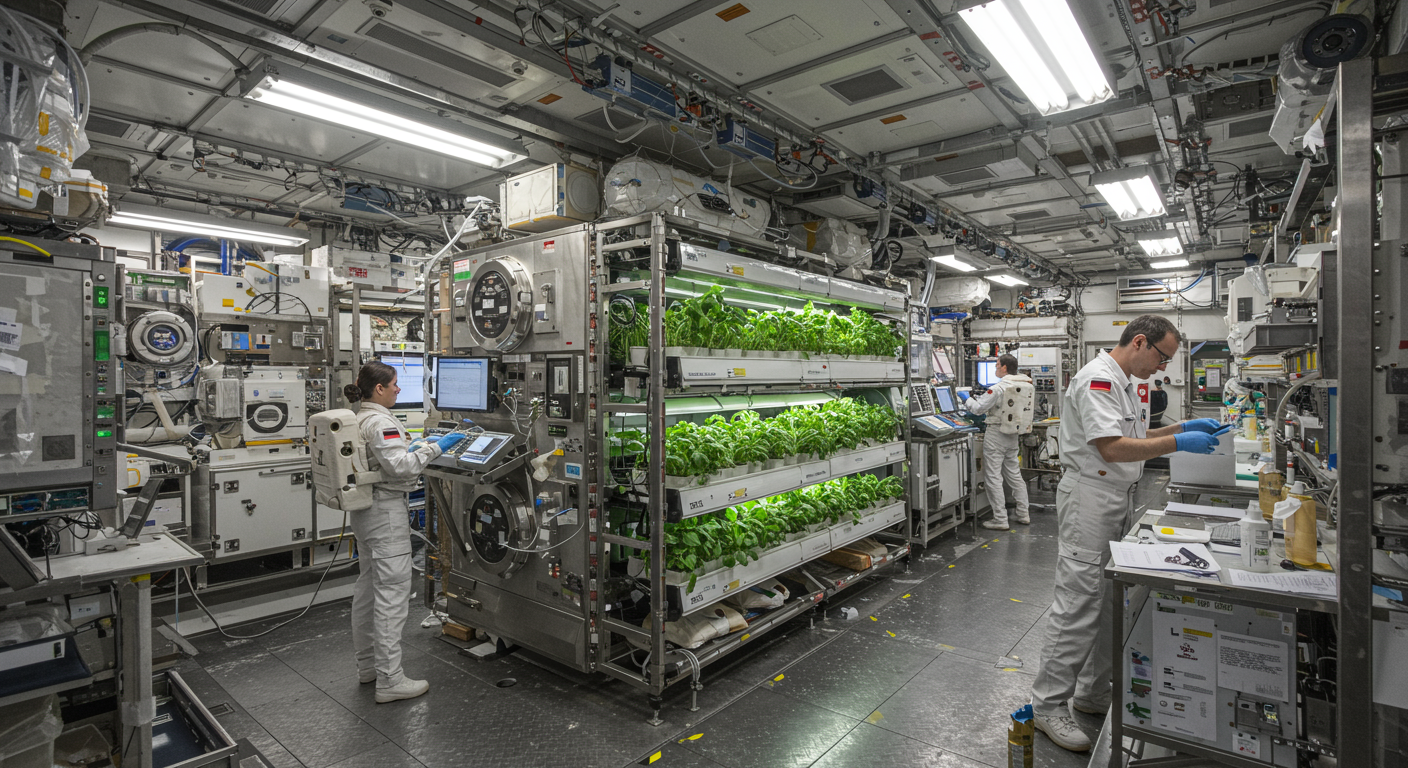
Long-term space missions require closed-loop food production systems that can operate independently of Earth-based supplies. Hydroponic and aeroponic systems maximize crop yields while minimizing water and space requirements. These systems use precisely controlled nutrient solutions and optimized lighting to achieve growth rates that often exceed Earth-based agriculture.
Cellular agriculture represents a revolutionary approach to protein production, using bioreactors to grow meat and dairy products from cell cultures rather than traditional livestock. Advanced nutrient cycling systems process organic waste into fertilizers and growing substrates, while genetic optimization produces crop varieties specifically adapted to low gravity, controlled atmospheres, and artificial lighting conditions.
In-Situ Resource Utilization (ISRU)
The ability to extract and process local resources dramatically reduces dependence on Earth-based supplies. Atmospheric processing systems can extract water vapor, carbon dioxide, and other gases from planetary atmospheres, converting them into breathing air, rocket fuel, and industrial feedstocks. On Mars, the National Aeronautics and Space Administration's MOXIE experiment has already demonstrated oxygen extraction from the thin carbon dioxide atmosphere.
Water extraction technologies target ice deposits, atmospheric humidity, and even mineral hydrates, using heating, sublimation, and chemical processes to produce potable water and industrial process fluids. Mining and processing systems must operate autonomously in extreme environments, extracting metals, silicates, and other materials for construction and manufacturing. Advanced 3D printing and automated manufacturing systems transform these raw materials into everything from habitat components to replacement parts for critical systems.
Habitat Design and Infrastructure
Space habitats must provide not only physical protection but also psychological well-being for long-term occupancy. Modular construction systems allow habitats to expand as populations grow, using standardized components that can be manufactured locally or delivered from Earth. These systems must maintain structural integrity under pressure differentials, temperature extremes, and potential micrometeorite impacts.
Artificial gravity generation through rotating structures helps mitigate the health effects of long-term weightlessness, though the engineering challenges of large rotating habitats require advanced materials and precision manufacturing. Psychological design considerations become critical for missions lasting years or decades, incorporating natural lighting cycles, private spaces, recreational areas, and communication systems that maintain connections with Earth.
Power generation systems must operate reliably in deep space conditions where solar energy may be limited or unavailable. Nuclear reactors, radioisothermal thermoelectric generators, and advanced battery storage systems provide the consistent power required for life support, manufacturing, and communication systems.
Propulsion and Transportation Systems
Long-term space presence requires propulsion technologies that go beyond current chemical rockets. Ion drives, nuclear thermal propulsion, and fusion-powered systems offer the efficiency needed for cargo transport and emergency evacuation scenarios. These systems must balance fuel efficiency with reliability, as rescue missions may not be possible for interplanetary settlements.
Supply chain logistics between Earth and space settlements require regular cargo deliveries of critical components, spare parts, and materials that cannot be produced locally. Emergency return capabilities must account for medical evacuations, equipment failures, and other scenarios requiring rapid transportation back to Earth or to other space installations.
Communication and Data Management
Communication systems for long-term space missions must function across interplanetary distances with transmission delays ranging from minutes to hours. Autonomous decision-making systems and artificial intelligence become essential for managing critical systems when real-time Earth communication is impossible.
Data storage and transmission optimization ensures that scientific research, operational data, and personal communications can be maintained despite bandwidth limitations and communication blackouts. Emergency communication and navigation systems provide backup capabilities when primary systems fail, using multiple redundant pathways and protocols to maintain contact with Earth and other space installations.
The integration of these diverse technologies represents one of humanity's greatest engineering challenges. Success requires not only advancing individual systems but also ensuring their seamless interaction in the unforgiving environment of space. As these technologies mature, they bring the possibility of permanent human presence beyond Earth closer to reality.