The Science Behind Artificial Atmospheres in Space Habitats
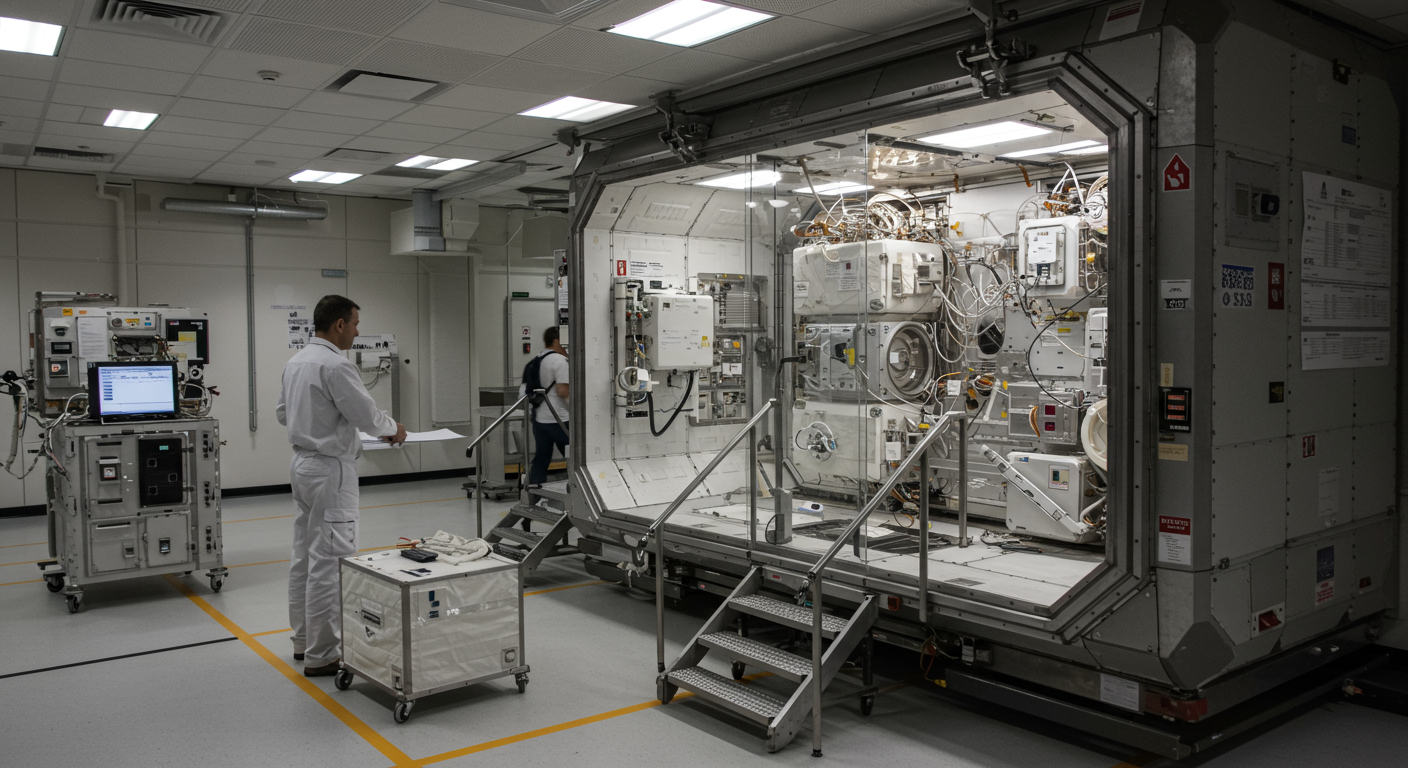
Creating breathable, Earth-like conditions in the vacuum of space represents one of humanity's most complex engineering challenges. As we venture further into space exploration with plans for lunar bases and Mars colonies, the science behind artificial atmospheres becomes increasingly critical to human survival and mission success.
The Challenge of Creating Earth-Like Conditions in Space
Space presents a uniquely hostile environment for human life. The vacuum of space, extreme temperatures, and radiation exposure make artificial atmospheres absolutely essential for any long-term human presence beyond Earth. Unlike our planet's natural atmospheric systems, which are maintained by vast geological and biological processes, space habitats must create and maintain their own closed atmospheric systems.
The fundamental challenge lies in replicating Earth's complex atmospheric balance within confined spaces while accounting for the absence of gravity, limited resources, and the constant threat of system failure. Every component must be carefully engineered for reliability, redundancy, and efficiency.
Core Components of Environmental Control and Life Support Systems (ECLSS)
Environmental Control and Life Support Systems form the backbone of any space habitat's atmospheric management. These integrated systems have evolved dramatically from the simple oxygen tanks of early spacecraft to the sophisticated recycling systems aboard the International Space Station.
Modern ECLSS architecture consists of multiple interconnected subsystems that work together to maintain atmospheric pressure, composition, temperature, and humidity. The integration of these systems is crucial—failure in one component can cascade through the entire life support network. This interdependency drives the need for robust backup systems and continuous monitoring.
The evolution from Apollo-era consumable systems to today's regenerative technologies represents decades of engineering advancement, with each mission providing valuable data for improving system reliability and efficiency.
Atmospheric Composition and Gas Management
Maintaining the proper balance of atmospheric gases in space habitats requires precise control systems. While Earth's atmosphere contains approximately 21% oxygen and 78% nitrogen, space habitats often operate with modified compositions to optimize safety and resource efficiency.
Critical to atmospheric management is preventing toxic gas buildup. Trace contaminants from equipment, materials, and human activity must be continuously monitored and removed. Advanced filtration systems and chemical scrubbers work around the clock to maintain air quality standards.
Pressure regulation presents unique challenges in the microgravity environment. Systems must maintain adequate pressure for human comfort while preventing dangerous pressure differentials. Sophisticated leak detection systems use various technologies to identify and locate breaches in the habitat's pressure shell, enabling rapid response to potentially catastrophic failures.
Air Revitalization: Removing CO2 and Generating Oxygen
Two fundamental processes define atmospheric revitalization in space: removing carbon dioxide exhaled by crew members and generating fresh oxygen for breathing. Carbon dioxide removal typically employs molecular sieves or chemical scrubbers that selectively capture CO2 from the cabin atmosphere.
Oxygen generation primarily relies on water electrolysis, which splits water molecules into hydrogen and oxygen using electrical current. This process requires a steady water supply, linking atmospheric systems directly to water recovery and recycling systems. Emergency oxygen generation systems, including solid fuel oxygen generators, provide backup capabilities during system failures.
The Sabatier reaction represents an advanced approach to atmospheric processing, combining captured CO2 with hydrogen to produce water and methane. This process removes CO2 while recovering valuable water, though the methane byproduct must be safely vented or processed further.
Closed-Loop Systems and Resource Conservation
The ultimate goal of space habitat life support is achieving closed-loop operation, where resources are continuously recycled with minimal waste. This approach dramatically reduces the need for supply missions and enables long-duration missions to distant destinations like Mars.
Current closed-loop systems can recover and recycle a significant percentage of atmospheric gases, but achieving complete closure remains elusive. System efficiency is limited by inevitable losses through crew consumption, equipment leakage, and waste disposal. These losses must be compensated through supplies or in-situ resource utilization.
Backup systems and consumable reserves remain critical components of any life support architecture. Even the most reliable closed-loop systems require redundancy and emergency supplies to ensure crew safety during extended missions or system failures.
Temperature and Humidity Control Integration
Atmospheric systems must integrate seamlessly with thermal management to maintain comfortable living conditions. Temperature control in space habitats involves complex heat transfer mechanisms that account for the lack of natural convection in microgravity environments.
Humidity control serves dual purposes: crew comfort and system protection. Excess humidity can damage sensitive equipment and create unhealthy conditions, while insufficient humidity affects crew health and comfort. Condensate recovery systems capture water vapor from the atmosphere, contributing to the overall water recycling process.
Air circulation systems ensure even distribution of conditioned atmosphere throughout habitat modules. These systems must overcome the absence of natural air currents while maintaining adequate ventilation for all living and working spaces.
Current Applications and Future Developments
The International Space Station serves as humanity's primary testbed for advanced life support technologies. Decades of operation have provided invaluable data on system performance, reliability, and crew interaction with atmospheric systems. According to the National Aeronautics and Space Administration, lessons learned from ISS operations directly inform the design of next-generation systems.
Future missions, including the lunar Gateway station and Artemis program lunar bases, will deploy more advanced atmospheric systems with higher automation and improved efficiency. These systems must operate with greater autonomy due to increased communication delays and limited crew intervention capabilities.
Mars habitat atmospheric systems face unique challenges, including processing the planet's CO2-rich atmosphere and operating through extreme temperature variations. Research continues into technologies that could utilize Martian atmospheric resources while maintaining Earth-like conditions inside habitats.
Emerging technologies focus on increased automation, predictive maintenance, and improved integration between life support subsystems. Artificial intelligence and machine learning applications show promise for optimizing system performance and predicting failures before they occur.