The Science Behind Artificial Atmospheres in Space Habitats
The Science Behind Artificial Atmospheres in Space Habitats
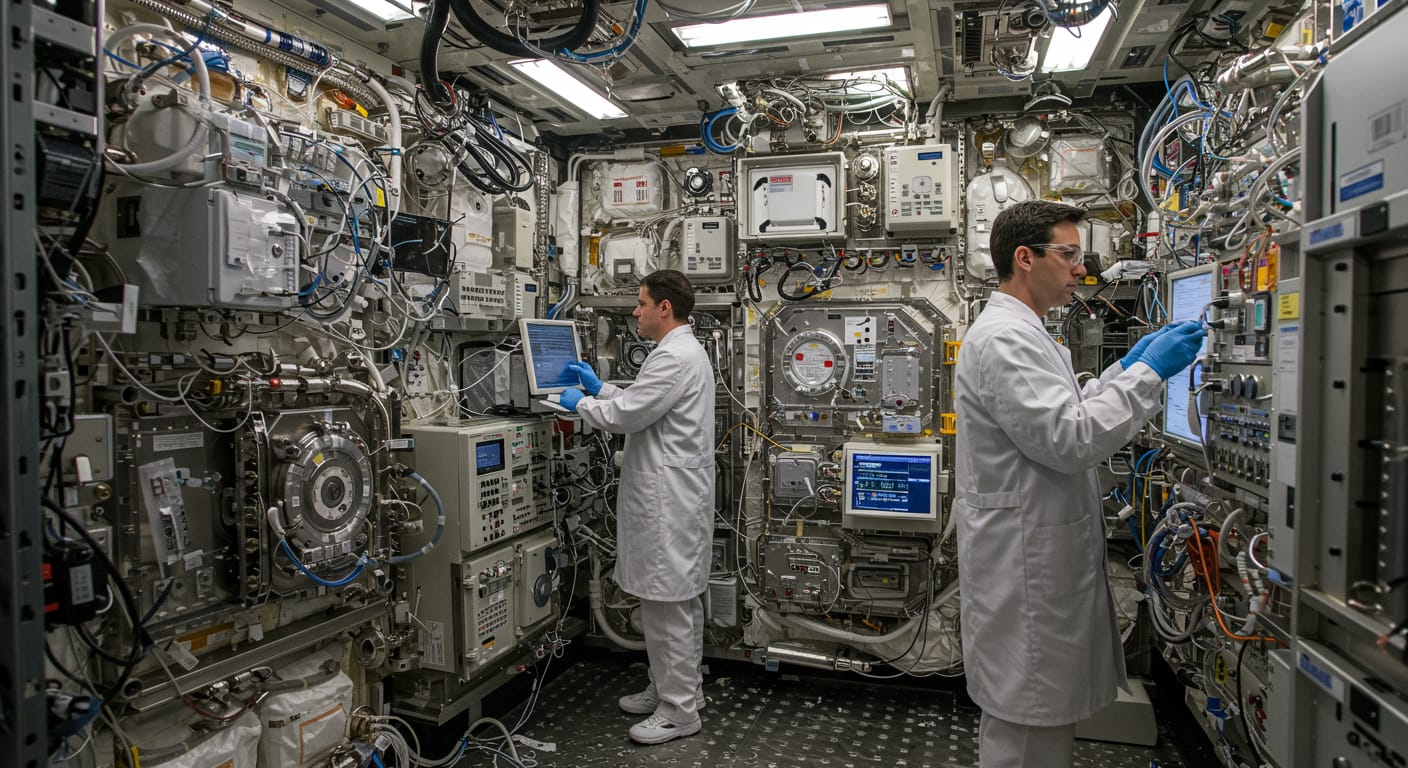
Creating a breathable atmosphere in the vacuum of space represents one of humanity's most complex engineering challenges. Astronauts aboard the International Space Station depend on sophisticated systems that control everything from oxygen levels to humidity, maintaining Earth-like conditions hundreds of miles above our planet. These life support technologies form the foundation for future Mars missions and permanent space settlements.
Atmospheric Composition: The Perfect Recipe for Life
Replicating Earth's atmospheric composition in space requires precise control of gas mixtures. Space habitats maintain approximately 21% oxygen and 78% nitrogen—the same ratio that has sustained life on Earth for millions of years. Even small deviations from this balance can have serious consequences for crew health and safety.
Modern atmospheric control systems continuously monitor gas concentrations using advanced sensors that detect real-time changes. These systems automatically adjust the mixture by adding or removing specific gases to maintain optimal breathing conditions. The challenge extends beyond achieving the right initial composition to maintaining it over months or years of continuous operation.
Temperature and humidity play equally critical roles. Systems must prevent condensation that could damage sensitive equipment while ensuring crew comfort. This integration of atmospheric composition with environmental controls represents a significant engineering achievement in space technology.
Pressure and Environmental Control Systems
Maintaining atmospheric pressure against the vacuum of space requires robust containment systems and careful pressure regulation. Space habitats typically operate at slightly lower pressure than sea level on Earth, reducing structural stress while providing adequate oxygen partial pressure for human respiration.
Engineering challenges extend beyond simple containment. Systems must account for thermal expansion, micrometeorite impacts, and gradual outgassing of materials. Multiple protection layers and redundant sealing systems ensure that small breaches don't result in catastrophic pressure loss.
Environmental control systems integrate pressure management with temperature and humidity regulation. These interconnected systems create stable, livable conditions that support both human crews and sensitive scientific equipment.
Air Recycling and Regeneration Technologies
Long-duration space missions require closed-loop life support systems that recycle atmospheric components rather than relying on Earth supplies. Carbon dioxide scrubbing represents a critical function, removing CO2 exhaled by crew members before it reaches dangerous concentrations.
Current systems use chemical processes to capture and remove carbon dioxide from the atmosphere. Some CO2 can be processed to recover oxygen through electrolysis and other chemical reactions, creating a more sustainable atmospheric cycle. The International Space Station serves as a testbed for these recycling technologies, providing valuable data on long-term performance.
Oxygen generation methods have evolved beyond simple tank storage to include on-demand production systems. Electrolysis units split water into hydrogen and oxygen, providing a renewable source of breathable atmosphere. The efficiency and energy requirements of these systems continue improving through ongoing research and development.
Contamination Control and Air Purification
Sealed space environments face unique contamination challenges that don't exist in Earth's open atmosphere. Trace contaminants from equipment outgassing, human metabolism, and scientific experiments can accumulate to harmful levels without proper filtration systems.
Advanced air purification technologies remove both gaseous and particulate contaminants from habitat atmospheres. These systems employ multiple filtration methods, including activated carbon filters for chemical contaminants and HEPA filters for particles. Real-time monitoring systems continuously track air quality and trigger purification processes when needed.
Sources of atmospheric pollution in space habitats are diverse and sometimes unexpected. Materials safe on Earth may release harmful gases in the closed environment of a spacecraft, requiring careful selection and testing of all habitat components.
Redundancy and Safety Systems
The critical nature of atmospheric systems demands multiple layers of redundancy and comprehensive safety protocols. Backup systems ensure crew survival even when primary atmospheric controls fail, while emergency protocols provide clear procedures for responding to atmospheric emergencies.
Compartmentalization strategies allow crews to isolate atmospheric problems to specific habitat sections, preventing the spread of contamination or pressure loss. These design approaches enable continued operation of unaffected areas while repairs are made to damaged systems.
Crew training programs ensure astronauts can manually operate atmospheric systems during emergencies. This human backup capability provides an additional safety layer when automated systems fail or require maintenance.
Current Research and Future Applications
Ongoing experiments aboard the International Space Station continue refining atmospheric control technologies for future missions. According to NASA research programs, these tests evaluate new materials, improved efficiency systems, and scaled-up technologies needed for larger habitats and longer missions.
Planning for lunar bases and Mars missions drives development of more autonomous and efficient atmospheric systems. Future applications will require systems that operate for years with minimal maintenance while supporting larger crews in permanent settlements.
Scaling atmospheric systems for permanent space settlements involves both technical and logistical considerations. Future habitats may house hundreds or thousands of people, requiring atmospheric systems of unprecedented size and reliability.
Research from NASA and the European Space Agency suggests that advanced atmospheric control systems will be ready for deployment in deep space exploration missions within the next decade, marking a significant step toward permanent human presence beyond Earth.