The Rise of Space-Based Solar Power Stations: How Orbital Energy Could Transform Renewable Power
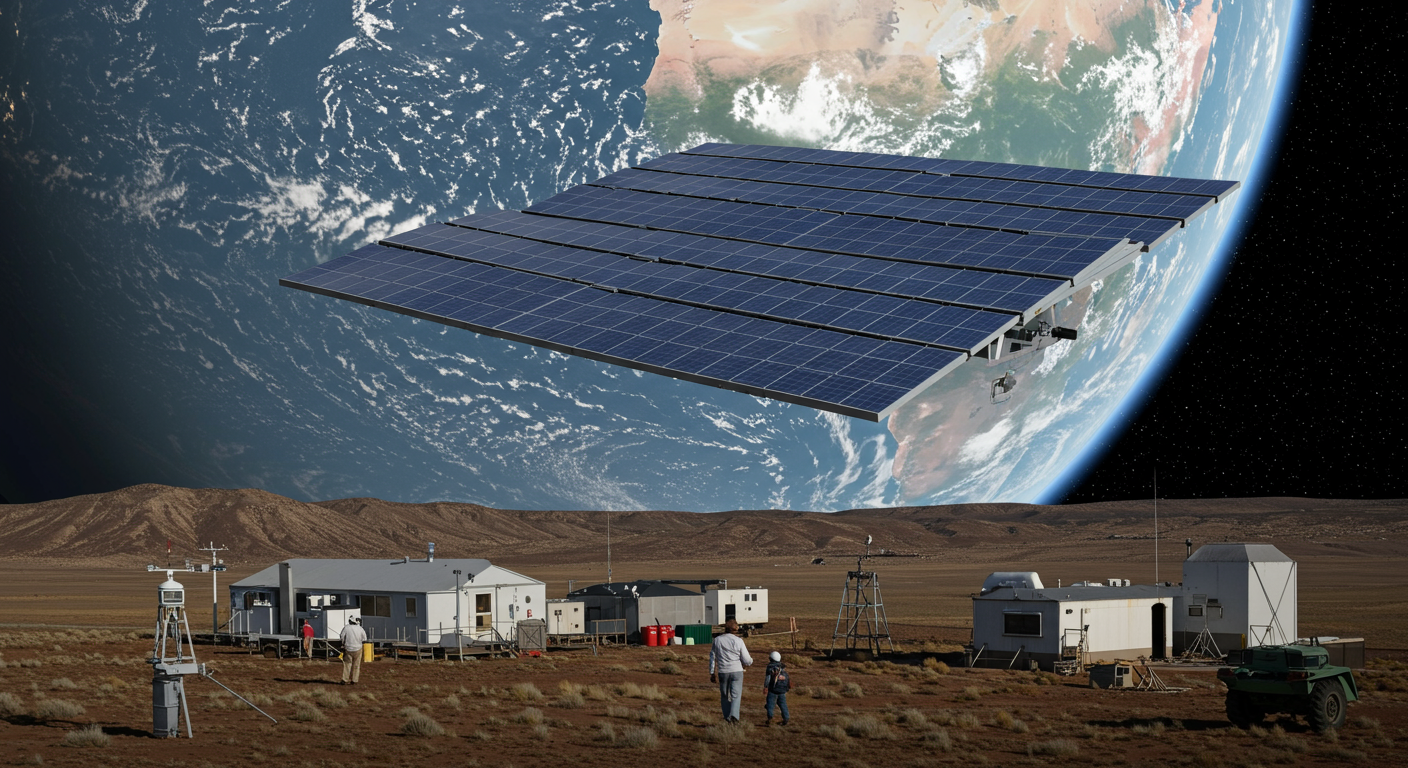
As the world grapples with climate change and soaring energy demands, scientists and engineers are looking beyond Earth's atmosphere for solutions. Space-based solar power stations represent one of the most ambitious renewable energy concepts under development today, promising to harness the sun's energy in space and beam it wirelessly to Earth.
Unlike terrestrial solar panels that struggle with weather, atmospheric interference, and the day-night cycle, space-based systems could operate continuously in the vacuum of space, where sunlight is abundant and unfiltered. This revolutionary approach has captured the attention of major space agencies and private companies worldwide, driving significant investment in research and development.
The Science Behind Space-Based Solar Power
Space-based solar power systems would function as massive orbital power stations, collecting solar energy through large arrays of photovoltaic panels or solar concentrators positioned in geostationary orbit approximately 22,000 miles above Earth. These systems would convert sunlight into electrical energy, then transmit that power wirelessly to receiving stations on Earth's surface.
The fundamental advantage of space-based collection lies in the consistent availability of solar energy. In space, solar panels achieve continuous exposure to sunlight without atmospheric filtering, which reduces solar energy by roughly 30% on Earth's surface. Space-based systems also face no interference from weather patterns, seasonal variations, or the day-night cycle that limits terrestrial solar installations.
The wireless power transmission component represents one of the most technically challenging aspects of these systems. Current research focuses on two primary methods: microwave power transmission and laser-based systems. These technologies must efficiently convert electrical energy into electromagnetic radiation, transmit it across thousands of miles of space, and then convert it back to usable electricity at ground-based receiving stations.
Current Players and Research Programs
The National Aeronautics and Space Administration has maintained active research into space-based solar power for decades, with renewed focus through various technology development programs. The agency continues to study the feasibility of large-scale systems and has funded research into critical enabling technologies including wireless power transmission and space-based construction methods.
The European Space Agency has prioritized this research through its Clean Energy from Space initiative, exploring both the technical and economic viability of orbital power stations. The ESA's approach emphasizes international collaboration and has established partnerships with member nations to advance key technologies.
Japan has developed one of the most comprehensive national roadmaps for space solar power. The Japan Aerospace Exploration Agency conducts regular demonstrations of wireless power transmission technologies, with Japanese researchers achieving successful power transmission over several kilometers—representing important proof-of-concept milestones.
Private sector involvement has accelerated in recent years, with companies like Space Solar developing commercial concepts and Caltech's Space Solar Power Project conducting pioneering research into lightweight, deployable solar arrays designed specifically for space-based applications.
Technical Breakthroughs Driving Progress
Recent advances in several critical technologies have brought space-based solar power closer to practical reality. Developments in ultra-lightweight, high-efficiency solar panels have dramatically reduced the mass requirements for orbital installations, addressing one of the primary obstacles to space-based construction.
Wireless power transmission has seen significant improvements in both microwave and laser-based systems. Researchers have demonstrated increasingly efficient power conversion and transmission over extended distances, though substantial challenges remain in scaling these technologies to the gigawatt levels required for commercial viability.
Progress in space construction and assembly technologies—partly driven by commercial space station development and satellite servicing missions—has advanced the feasibility of constructing large structures in orbit. Robotic assembly systems and modular construction approaches could enable the assembly of kilometer-scale solar arrays in space.
Several recent demonstration missions have validated key concepts, including successful wireless power transmission experiments and deployable solar array technologies designed for space-based power generation.
Major Challenges and Obstacles
Despite promising technological advances, space-based solar power faces substantial engineering, economic, and regulatory challenges. The scale of construction required presents unprecedented engineering obstacles, with proposed systems requiring solar arrays covering several square kilometers and weighing thousands of tons.
Economic hurdles remain formidable, particularly regarding launch costs and infrastructure investment. While launch costs have decreased significantly with reusable rocket technology, the expense of delivering massive amounts of material to geostationary orbit continues to challenge the economic viability of these systems compared to rapidly improving terrestrial renewable energy sources.
Technical obstacles include achieving sufficient power transmission efficiency to make the systems practical and developing ground-based receiving infrastructure capable of safely handling high-power microwave or laser transmissions. Current wireless power transmission efficiencies, while improving, still fall short of levels needed for commercial competitiveness.
Regulatory and safety considerations for wireless power transmission add another layer of complexity, as high-power electromagnetic transmissions could potentially interfere with aircraft, satellites, or other electronic systems. International coordination would be essential for managing orbital positions and transmission corridors.
Timeline and Future Prospects
Current research timelines suggest that demonstration missions for space-based solar power could begin within the next decade, with several space agencies targeting the late 2020s or early 2030s for small-scale proof-of-concept satellites. These missions would validate key technologies and provide crucial data for scaling up to commercial systems.
Commercial viability remains further in the future, with most projections suggesting that large-scale, economically competitive systems could emerge in the 2040s or 2050s, assuming continued technological progress and cost reductions in space access and construction.
The potential impact on global energy systems could be transformative if technical and economic challenges are overcome. Proponents envision networks of orbital power stations providing clean, continuous energy to regions worldwide, potentially supplying significant portions of global electricity demand.
The long-term vision extends beyond individual power stations to comprehensive space-based energy infrastructure, potentially enabling energy abundance and supporting further space exploration and development activities.
Space-based solar power represents both an ambitious engineering challenge and a potential solution to humanity's growing energy needs. While significant obstacles remain, continued research and technological development by space agencies and private companies worldwide suggest that orbital energy systems may eventually play a crucial role in the global transition to renewable energy.