The Rise of Space-Based Solar Power Stations: From Science Fiction to Energy Reality
The Rise of Space-Based Solar Power Stations: From Science Fiction to Energy Reality
Introduction: The Promise of Orbital Energy
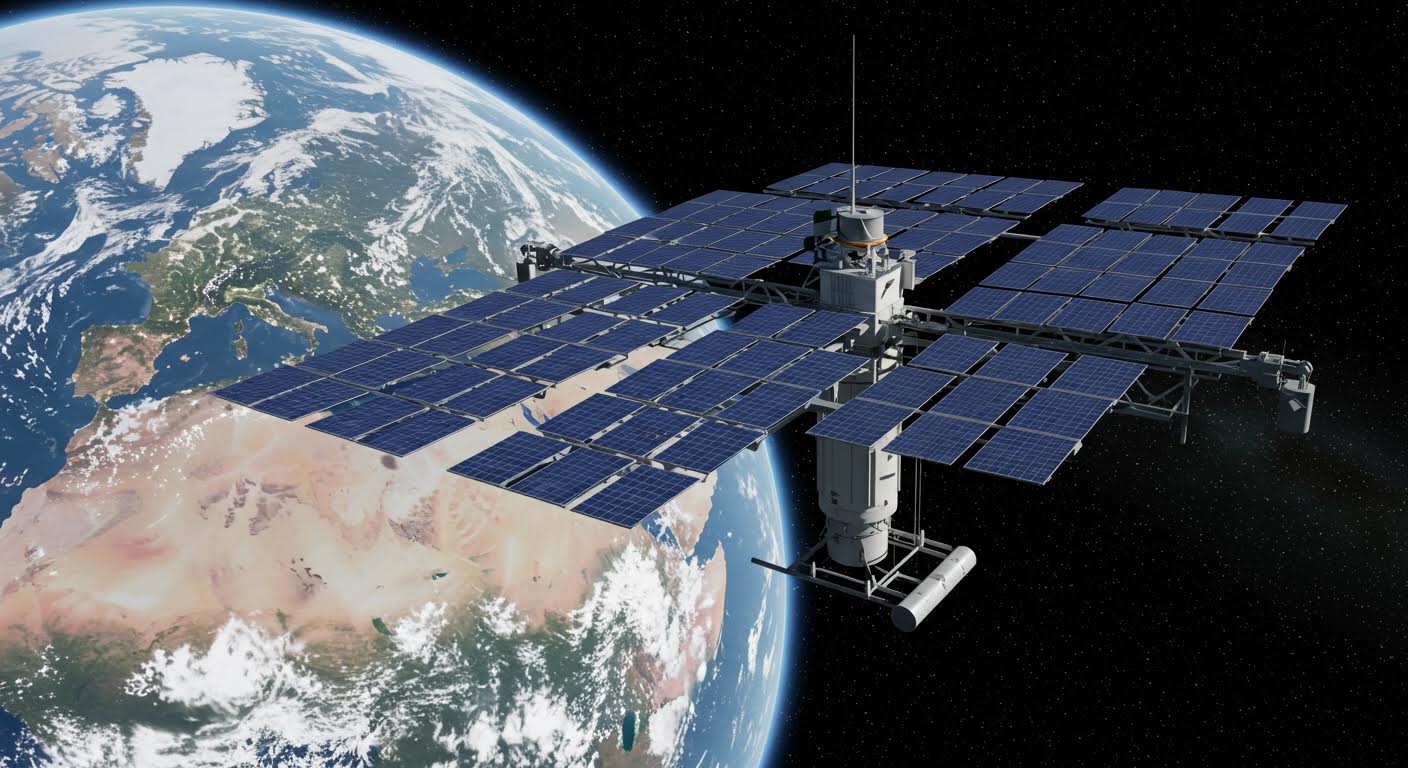
Space-based solar power represents one of the most ambitious approaches to solving global energy challenges. The concept involves deploying massive solar arrays in Earth's orbit to collect sunlight and beam that energy back to our planet using wireless power transmission. Unlike ground-based solar farms, these orbital power stations would operate continuously—unimpeded by weather, clouds, or nightfall.
As climate change accelerates and energy demands soar, space-based solar power offers the tantalizing possibility of clean, abundant electricity generation. What began as theoretical discussions in the 1960s has evolved into active research programs backed by major space agencies and growing commercial investment. Recent breakthroughs in space systems, wireless power transmission, and launch capabilities are bringing this once-futuristic vision within reach.
How Space-Based Solar Power Works
The concept operates on a straightforward principle: solar panels positioned in space collect sunlight and convert it to electricity, which is then transmitted wirelessly to receiving stations on Earth. The space environment provides crucial advantages—orbital solar arrays can achieve efficiency rates far higher than terrestrial installations because they avoid atmospheric interference, cloud cover, and seasonal sunlight variations.
A typical system consists of three main components: the space-based solar collection array, a power transmission system, and ground-based receiving infrastructure. The solar collectors, positioned in geostationary orbit approximately 22,000 miles above Earth, would be enormous structures potentially spanning several kilometers. These arrays would convert sunlight to electricity with remarkable consistency, operating at full capacity virtually 24 hours a day.
This continuous operation capability represents a fundamental advantage over terrestrial renewables. While ground-based solar installations produce power only during daylight hours and wind turbines depend on weather conditions, space-based systems could provide steady baseload power comparable to traditional fossil fuel or nuclear plants.
Engineering Challenges and Solutions
The most significant technical hurdle involves wireless power transmission from orbit to Earth. Two primary approaches are under investigation: microwave transmission and laser-based systems. Microwave transmission, currently the leading candidate, would use precisely focused radio frequency beams to deliver power to ground-based receiving antennas called rectennas.
Engineers face complex challenges around beam control and safety. The microwave transmission must accurately hit receiving stations measuring several kilometers across from a distance of 22,000 miles, while ensuring the beam doesn't pose risks to aircraft, satellites, or populated areas. Advanced phased array antenna systems and sophisticated tracking mechanisms are being developed to maintain precise beam focus.
Space construction presents another enormous challenge. These installations would dwarf any structure previously built in space, requiring new approaches to assembly and maintenance. Robotic construction systems, modular design principles, and potentially space-based manufacturing capabilities may be necessary to make these massive installations feasible.
Power conversion efficiency throughout the entire system remains critical. Energy losses occur during initial solar collection, conversion to transmission format, wireless transmission through space and atmosphere, and final conversion back to usable electricity on the ground. Current research focuses on minimizing these losses to achieve overall system efficiency that justifies the enormous infrastructure investment.
Government Programs Leading the Charge
The National Aeronautics and Space Administration has emerged as a leader in space-based solar power research, with several active programs investigating key technologies. NASA's Space Solar Power Initiative focuses on developing lightweight solar arrays, wireless power transmission systems, and robotic assembly techniques. Recent NASA studies have outlined potential demonstration missions that could validate these technologies in space within the next decade.
The European Space Agency has integrated space-based solar power research into its Clean Space initiative, viewing orbital solar power as a potential solution to Europe's energy security challenges. ESA's approach emphasizes international collaboration and has led to partnerships with multiple European nations to advance the technology.
The U.S. Department of Energy has recognized space-based solar power as a significant renewable energy frontier, providing funding for research into ground-based receiving systems and grid integration technologies. The department's involvement signals government recognition that orbital solar power could play a crucial role in America's clean energy future.
International collaboration efforts are expanding, with technology sharing agreements and joint research programs emerging between space agencies. These partnerships recognize that the scale and complexity may require coordinated global efforts to achieve success.
Recent Technological Breakthroughs
Several recent advances have accelerated development. Lightweight, flexible solar panel technology has dramatically reduced the mass requirements for space-based arrays. New materials and manufacturing techniques have produced solar cells that maintain high efficiency while being much lighter and more durable than previous generations.
Microwave power transmission has seen significant improvements in both efficiency and beam control accuracy. Laboratory demonstrations have achieved transmission efficiencies approaching commercially viable levels, while new antenna designs promise better beam focusing and reduced power losses during transmission.
Robotic assembly and construction systems have advanced considerably, driven partly by other space industry needs. Automated systems capable of assembling large structures in space are moving from experimental concepts to operational reality, making the construction of massive installations more feasible.
Perhaps most importantly, launch costs have decreased dramatically due to reusable rocket technology and increased competition in the commercial space sector. Lower launch costs directly impact economics, making it more feasible to transport the massive amounts of equipment needed for orbital power stations.
Commercial Investment and Market Potential
Private companies are beginning to enter the development landscape, attracted by the enormous market potential for clean, continuous power generation. Several startups and established aerospace companies have announced research programs, with some projecting operational systems within 15-20 years.
Economic factors remain challenging but are improving. While initial investments would be enormous—potentially reaching hundreds of billions of dollars for full-scale systems—the long-term revenue potential from continuous clean energy generation could justify these costs. Economic models suggest that space-based solar power could become cost-competitive with other power sources as technology matures and launch costs continue declining.
Applications extend beyond terrestrial power generation. The technology could prove essential for lunar bases, Mars colonies, and deep space missions where nuclear power isn't feasible and solar conditions are challenging. This broader market potential adds to the commercial incentive for development.
Integration with existing power grid infrastructure presents both challenges and opportunities. The ability to provide steady baseload power could complement intermittent renewable sources like wind and terrestrial solar, potentially serving as a cornerstone technology in fully renewable energy systems.
Timeline and Future Outlook
Current technology readiness levels vary across components, with some elements approaching demonstration readiness while others require additional research. Solar collection technology is relatively mature, wireless power transmission is advancing rapidly, and space construction capabilities are developing through various space industry initiatives.
Most experts project that initial demonstration missions could occur within the next 10-15 years, followed by progressively larger installations leading to commercial-scale operations by the 2040s or 2050s. However, these timelines depend heavily on continued technological progress and sustained funding for research and development.
Remaining hurdles include perfecting wireless power transmission at scale, developing cost-effective space construction methods, and creating regulatory frameworks for international operations. Success in addressing these challenges could position space-based solar power as a transformative technology in the global transition to renewable energy.
The potential impact on the renewable energy landscape could be profound. Space-based solar power offers the possibility of abundant clean energy that operates continuously regardless of weather or geographical constraints. If successfully developed, orbital power stations could become a cornerstone technology in humanity's efforts to address climate change while meeting growing global energy demands.