The Real Hardware Challenges Behind Humanoid Robots
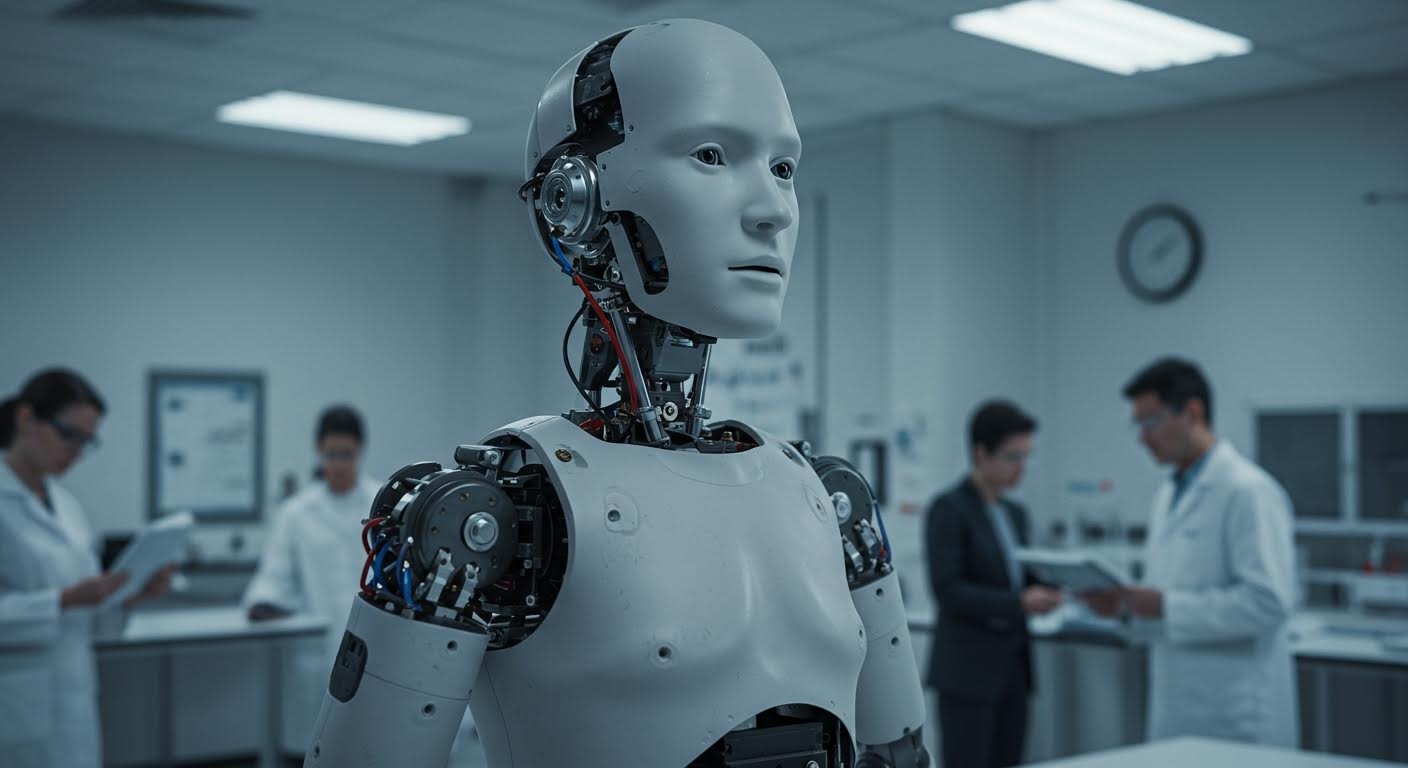
Humanoid robots have captivated our imagination for decades, from sci-fi movies to flashy tech demos. Yet despite billions in investment and relentless research, the gap between our vision of versatile, human-like robots and today's reality remains frustratingly wide. While AI software advances grab headlines, the biggest barriers to truly capable humanoid robots are hardware challenges that prove far more stubborn than anyone expected.
The promise is compelling: robots that navigate human spaces, manipulate objects with dexterity, and operate autonomously for hours. The reality? Complex engineering trade-offs between power, weight, durability, and performance that still constrain even the most advanced systems.
The Actuator Problem: Power vs. Precision
Every humanoid robot faces a fundamental challenge: replicating the remarkable efficiency of biological muscle. Human muscles deliver an impressive combo of strength, precision, and energy efficiency that robotic actuators still can't match.
Electric motors—the most common choice—face inherent limits. While they offer precise control and reliability, they need gear systems to generate enough torque for human-scale movements. These gears add weight, create mechanical slack, and introduce failure points. The result? Robots that move with characteristic mechanical stiffness instead of fluid, natural motion.
Boston Dynamics pioneered hydraulic systems that deliver impressive power-to-weight ratios, letting their Atlas robot nail backflips and parkour moves. But hydraulics need pumps, fluid reservoirs, and complex valves that add bulk and complexity. They're also noisy and require careful maintenance to prevent leaks.
Tesla's humanoid prototype takes a different approach, emphasizing electric actuators optimized for efficiency over peak performance. This trades explosive athletic moves for longer operational periods. The challenge remains: finding actuator tech that matches biological muscle's remarkable combination of strength, speed, precision, and efficiency.
Power Systems: The Energy Density Bottleneck
No single factor limits humanoid robots more than power constraints. Current battery tech simply can't match the energy density needed for truly autonomous operation.
A typical humanoid robot demands substantial power across multiple systems: actuators for movement, computers for processing, sensors for perception, and cooling for thermal management. This power hunger often results in operating times measured in hours, not the days or weeks needed for practical applications.
The core issue is energy density. Even advanced lithium-ion batteries deliver roughly 250-300 watt-hours per kilogram, while biological systems achieve much higher effective energy densities through efficient metabolism. This forces brutal trade-offs: carry heavy battery packs that kill mobility, stay tethered to external power, or accept severely limited runtime.
Some research teams explore energy harvesting from movement or environmental sources, but these typically provide only supplementary power. Others investigate fuel cells for better energy density, though these add complexity and safety concerns.
Sensor Integration: Building Human-Like Perception
Humanoid robots need sophisticated sensory systems to navigate complex human environments. Unlike factory robots in controlled settings, humanoids must process visual info, maintain balance, sense contact forces, and integrate multiple data streams in real-time.
The perception hardware stack involves multiple sensor types: cameras for vision, IMUs for balance, force sensors for touch and manipulation, and joint sensors for position awareness. Each generates continuous data streams that must be processed, filtered, and merged into coherent environmental models.
The challenge goes beyond individual sensors to the computing power needed for real-time sensor fusion. Processing high-res visual data while managing balance control and manipulation tasks requires serious computational resources—which consume power and generate heat in compact systems.
Cost matters too. Research robots might use expensive LIDAR or high-end cameras, but commercial humanoids need sensor solutions that balance capability with manufacturing costs. This often means accepting reduced performance or coverage.
Materials and Mechanical Design
Humanoid robot materials face competing requirements that are tough to satisfy simultaneously. Components must be light enough to avoid excessive power consumption, yet durable enough to withstand repeated stress from walking, manipulation, and falls.
Traditional materials like aluminum and steel offer well-understood properties but may be too heavy. Advanced composites provide better strength-to-weight ratios but cost significantly more and require complex manufacturing.
Joint design is particularly challenging—robotic joints must operate through millions of cycles while maintaining precision and reliability. Unlike biological joints with self-healing properties, robotic joints gradually wear and need maintenance or replacement. Bearings, gear trains, and seals all represent potential failure points that must be engineered for longevity.
Manufacturing scalability adds another constraint. Research prototypes might use custom-machined parts or specialized materials, but commercial robots need designs that can be manufactured efficiently at scale. This often means compromising optimal performance for manufacturability.
Thermal Management: Keeping Cool Under Pressure
Packing electronics, actuators, and power systems into a humanoid form factor creates serious thermal challenges. High-performance processors generate substantial heat, as do power electronics driving loaded actuators.
Unlike desktop computers or industrial gear, humanoid robots can't use large cooling fans or bulky heat sinks. The thermal system must fit within the robot's form factor while effectively removing heat from critical components. This often requires sophisticated heat pipes, carefully designed airflow, and strategic component placement.
Thermal issues cascade through robot systems, affecting performance and reliability. Overheating processors throttle performance, reducing responsiveness. Hot actuators operate less efficiently and suffer faster wear. Battery performance degrades at high temperatures, creating feedback loops that severely impact capabilities.
System integration becomes complex as thermal constraints interact with mechanical design, power routing, and sensor placement. Component locations become compromises between multiple competing requirements.
Control Hardware: Processing Complex Movement
Humanoid control requires processing massive amounts of sensor data and generating coordinated actuator commands within tight timing constraints. Walking involves continuous balance adjustments and coordinated movement across dozens of joints while processing visual and tactile feedback.
The computing architecture must handle multiple real-time control loops simultaneously. Balance control might need update rates of several hundred hertz, while visual processing and path planning operate on different timescales. This creates complex scheduling requirements.
Traditional processors may lack the specialized capabilities for efficient robotic control. Some research groups explore dedicated hardware like FPGAs or AI accelerators that handle specific tasks more efficiently. However, these approaches often require custom software development and may lack general-purpose flexibility.
Latency in the sensory-motor loop is critical. Delays between sensing conditions and responding with actions can cause instability, particularly in dynamic situations like walking on uneven terrain or recovering from disturbances.
The Road Ahead: Breakthrough Technologies
Despite current challenges, emerging technologies offer potential pathways toward more capable humanoids. Advanced materials research continues producing lighter, stronger options, including smart materials that could enable more efficient actuation or adaptive mechanical properties.
Battery improvements, while gradual, continue increasing energy density and reducing weight. Solid-state batteries and alternative storage approaches may eventually provide the power density needed for extended autonomous operation.
AI-optimized hardware architectures designed for robotics could significantly improve perception and control system efficiency. These might include specialized processors that handle common robotic computations more efficiently than current alternatives.
However, breakthrough timelines remain uncertain. Many fundamental humanoid robotics challenges represent well-known engineering trade-offs rather than problems awaiting single technological solutions. Progress will likely come through incremental improvements across multiple domains rather than revolutionary advances in any single area.
The hardware challenges behind humanoid robots reflect the remarkable complexity of biological systems we often take for granted. While continued R&D will undoubtedly improve robotic capabilities, achieving truly human-like versatility and efficiency remains a formidable engineering challenge that may require decades of sustained effort.