Why Chemical Rockets Still Win — and Where Nuclear Thermal Might Not
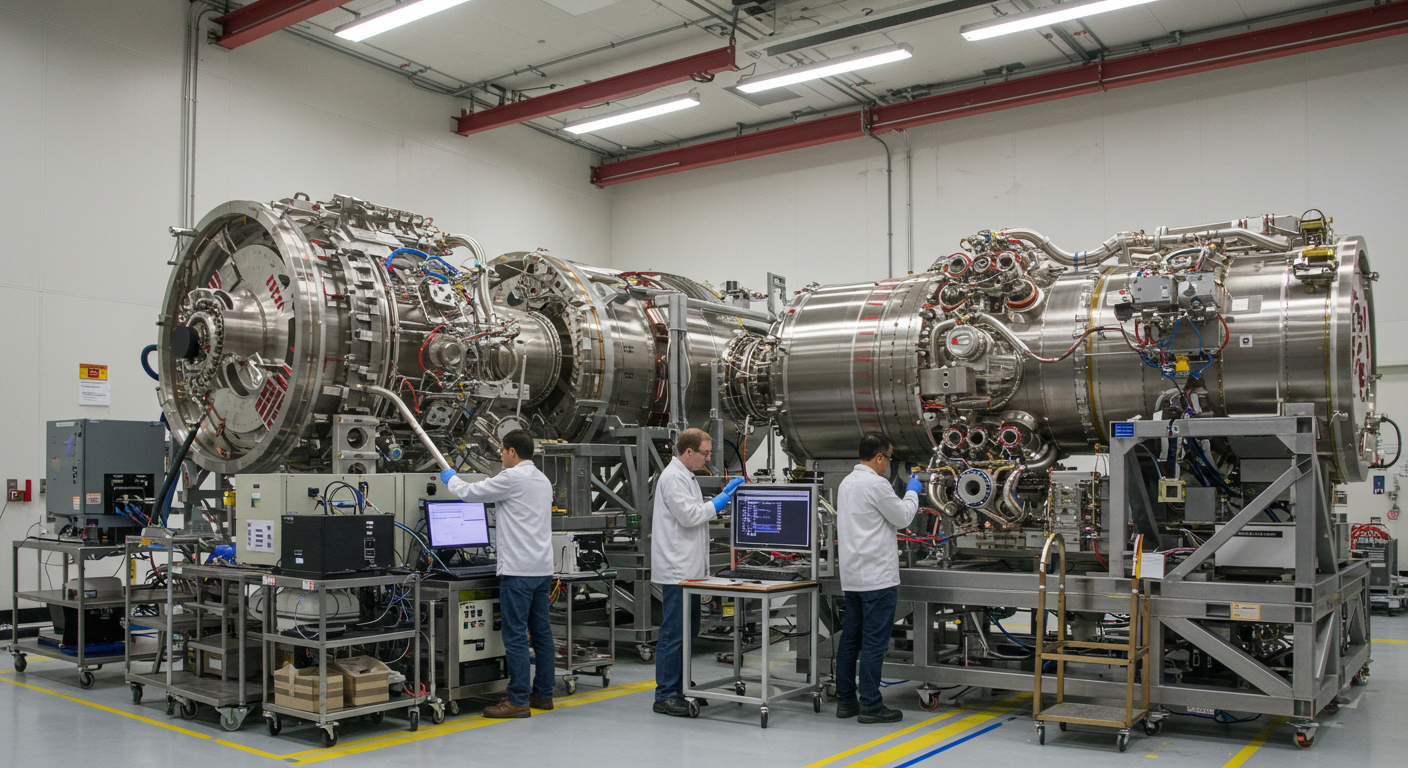
The push to build faster space propulsion systems is gaining momentum as agencies and aerospace companies look beyond the limits of conventional rockets. The goal is not speed for its own sake. Shorter travel times could reshape mission design, reduce astronauts' exposure during long voyages, and make it easier to move cargo and scientific instruments deeper into the solar system.
That urgency reflects a new phase in space planning. Missions to the Moon, Mars, and beyond require propulsion options that can do more than lift payloads off Earth and make modest orbital adjustments. Even so, this remains a research-and-development race. The technologies drawing the most attention are promising, but they are still moving through testing, design, and demonstration rather than routine operational use.
Why Chemical Rockets Still Dominate — and Where They Fall Short
Chemical propulsion remains the backbone of modern spaceflight because it is proven, powerful, and well understood. It delivers the high thrust needed for launch and for mission phases where strong, immediate acceleration matters most. That operational maturity is a major reason chemical rockets continue to dominate both government and commercial missions.
But chemical systems also come with clear limits. They are comparatively inefficient in their use of propellant, which means long-distance missions can require large fuel loads and difficult design trade-offs. For deep-space exploration, that can reduce flexibility, increase mass, and make it harder to build missions that move quickly while carrying substantial cargo.
In other words, chemical rockets are excellent at some jobs, especially launch, but they are not the ideal answer for every mission beyond Earth orbit. That gap is driving renewed interest in alternatives that can improve efficiency, shorten transit times, or both.
Nuclear Thermal Propulsion Has Moved to the Center of the Conversation
Among the concepts now drawing the most attention is nuclear thermal propulsion. In basic terms, this approach uses a reactor to heat a propellant, which is then expelled to generate thrust. The appeal is that it could offer better efficiency than traditional chemical propulsion while still producing meaningful thrust, a combination that is especially attractive for deep-space missions.
That potential has made nuclear thermal systems a leading candidate in discussions about future crewed and robotic exploration beyond the Earth-Moon system. Faster transit could affect nearly every part of a mission plan, from launch windows and cargo staging to crew health and the total amount of consumables required for long journeys.
The concept is not new, but the seriousness of current development efforts has changed. Nuclear thermal propulsion is no longer just a recurring idea in long-range exploration studies. It is now backed by active government programs, contractor work, and reactor concept development intended to move it closer to real-world demonstration.
NASA and DARPA Are Turning Nuclear Thermal Concepts Into Demonstration Programs
NASA has supported nuclear thermal propulsion reactor concept work through targeted awards, signaling continued interest in the technology as part of its broader space technology strategy. According to NASA, those efforts are meant to move the field from high-level theory toward the engineering detail required for an actual flight system.
The Defense Advanced Research Projects Agency has gone further with its Demonstration Rocket for Agile Cislunar Operations, or DRACO, a program aimed at demonstrating an in-space nuclear thermal rocket. The DARPA program has become one of the clearest signs that advanced propulsion is shifting from paper studies toward hardware-focused development. Reporting from SpaceNews and Space.com has reinforced that impression, highlighting the role of major aerospace and nuclear technology contractors.
Taken together, NASA-backed reactor work and DARPA's demonstration push suggest that nuclear thermal propulsion has become one of the most closely watched avenues in the race for faster space travel. That does not mean success is guaranteed or imminent, but it does show that the technology is now being treated as a serious development priority rather than a distant speculation.
Faster Doesn’t Mean One Technology Will Win Everything
The race for better propulsion is not a winner-take-all contest. Different propulsion families solve different problems, and the trade-offs are fundamental. Broadly speaking, the challenge is balancing thrust and efficiency. Some systems provide strong acceleration but consume propellant quickly. Others are extremely efficient but generate much lower thrust over longer periods.
That framework helps explain why no single technology is likely to replace every other option. Chemical propulsion remains essential for launch and other high-thrust mission phases. Electric propulsion is already valuable for missions that can tolerate gradual acceleration. Nuclear thermal propulsion is being explored as a possible middle ground for future deep-space applications where both travel time and efficiency matter.
Rather than searching for one universal engine, agencies are building a more diversified propulsion toolkit. The most important question is often not which system is best overall, but which one is best suited to a specific destination, payload, timetable, and mission architecture.
Advanced Electric Propulsion Is Competing on Efficiency, Not Raw Thrust
Electric propulsion is a central part of this broader competition, even if it does not create the dramatic image associated with high-thrust rockets. According to the European Space Agency, these systems use electrical energy to accelerate propellant and can achieve very high efficiency compared with chemical propulsion. That makes them especially useful for long-duration missions where gradual, sustained acceleration is acceptable.
Electric propulsion is already an important operational technology in space, particularly for satellites and some deep-space mission profiles. Its strength is not brute-force speed at the start of a mission, but the ability to achieve major trajectory changes while using less propellant. For many spacecraft, that efficiency can translate into lower mass demands or greater mission flexibility.
In the current propulsion race, electric systems and nuclear thermal systems are not necessarily direct substitutes. Instead, they represent different paths toward improved performance. One competes by maximizing efficiency over time, while the other is being pursued for the possibility of combining stronger thrust with better efficiency than chemical rockets alone.
The Biggest Obstacles Are Engineering, Safety, and Regulation
If faster propulsion were easy to build, it would already be commonplace. The real barriers are severe engineering demands, especially for systems expected to operate under extreme temperatures, high radiation, and long mission durations. Materials, reactor design, thermal management, and reliability all become critical challenges when propulsion concepts move from theory into hardware.
Nuclear propulsion adds another layer of complexity because safety and regulation are inseparable from the technology itself. Any system involving a reactor must satisfy stringent review, handling, and launch requirements. Those realities affect timelines, testing pathways, and public accountability, and they are a major reason progress tends to come through carefully staged demonstrations rather than sudden leaps to operational deployment.
Even non-nuclear advanced propulsion systems face difficult development paths. Power generation, endurance, integration with spacecraft systems, and mission-specific constraints can all slow adoption. As Nature and other reporting on the sector have noted, the race is real, but so are the technical and institutional hurdles that stand between a promising concept and routine use.
What the Propulsion Race Really Means for the Next Decade
Over the next decade, the most realistic expectation is not a wholesale replacement of chemical rockets. It is a gradual expansion of available propulsion options through demonstrations, incremental capability gains, and mission-by-mission adoption. Some technologies will mature into specialized roles long before they become common across the industry.
That is still a meaningful shift. As agencies such as NASA and DARPA continue to invest in nuclear thermal development, and as electric propulsion keeps advancing in practical missions, the space sector is assembling a broader set of tools for exploration. The result could be spacecraft that travel farther more efficiently, reach destinations on more flexible timelines, and support more ambitious operations beyond Earth orbit.
The race to build faster-than-ever propulsion systems is therefore less about a single dramatic breakthrough and more about a changing architecture of space travel. If these efforts pay off, the long-term impact could be profound: more capable missions, new exploration strategies, and a future in which distance in space becomes a little less limiting than it is today.