There Is No Single 'Fastest' Rocket: How Space Propulsion Is Actually Measured
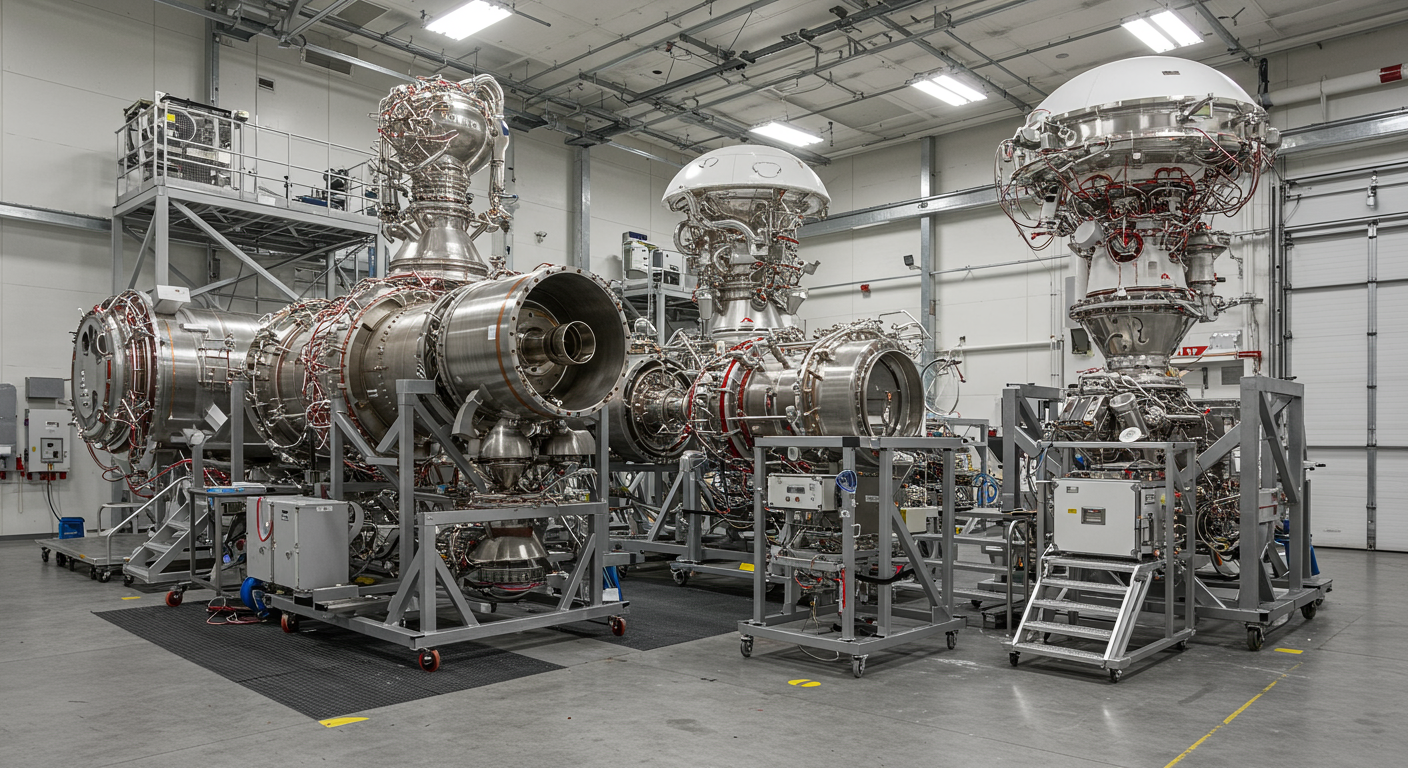
The phrase “fastest space propulsion system” sounds simple, but in practice there is no single winner. In spaceflight, speed depends on what a mission needs to accomplish: lifting off from Earth, changing orbit quickly, moving cargo efficiently over months, or cutting travel time to distant destinations. Different propulsion systems excel under different conditions, and the most important tradeoffs usually involve thrust, efficiency, propellant mass, onboard power, and mission duration.
That is why the current race is better understood as a competition among propulsion families at very different stages of maturity. Some are already essential to modern missions. Others are expanding what is practical in orbit. A few could eventually reshape deep-space travel if engineers can overcome major safety, funding, and technical barriers.
Why There Is No Single “Fastest” Space Propulsion System
Space propulsion is often discussed as if every engine could be ranked on one universal scale. That misses the core physics. A propulsion system that delivers enormous thrust for a short burn can be ideal for launch or escape maneuvers, while a system with very low thrust but exceptional efficiency may outperform it over long missions by accelerating steadily for months.
The key tradeoff is between thrust and specific impulse, a standard measure of propellant efficiency. High-thrust systems can produce rapid acceleration but often consume propellant quickly. High-efficiency systems use propellant far more sparingly, yet usually generate much less immediate force. Power availability also matters. Some advanced engines are limited less by the thruster itself than by whether a spacecraft can generate and manage enough electrical or thermal power to operate it effectively.
For that reason, the race to build faster space transportation is not a winner-take-all contest. It is a broader effort to develop propulsion tools suited to very different missions, from launch vehicles and satellites to cargo tugs and eventual human expeditions beyond the Moon.
Chemical Rockets Still Dominate When Raw Thrust Matters
Chemical propulsion remains the foundation of modern spaceflight because nothing else currently matches its combination of high thrust, operational experience, and mission readiness. Launching from Earth demands powerful acceleration to overcome gravity and atmospheric drag, and chemical rockets are still the only practical option at scale for that job.
They also remain critical for rapid maneuvers in space. When a mission needs a strong burn for orbital insertion, landing, ascent, or a time-sensitive trajectory correction, chemical systems are often the preferred choice. Their strengths are straightforward: they are proven, well understood, and already built into the world’s launch and spacecraft infrastructure.
The downside is efficiency. Chemical engines consume large amounts of propellant compared with many electric alternatives, which makes them less attractive for long-duration deep-space missions where every kilogram matters. For journeys that require sustained acceleration or highly efficient use of onboard mass, chemical propulsion can become a limiting factor rather than an advantage.
Electric Propulsion Is Changing the Economics of In-Space Travel
Electric propulsion systems, including ion thrusters and Hall-effect thrusters, have become increasingly important because they use propellant far more efficiently than chemical rockets. Instead of producing a dramatic burst of force, they generate small but continuous thrust by accelerating charged particles. Over time, that steady push can build to very high spacecraft velocities.
This makes electric propulsion especially useful for satellites, station-keeping, orbit-raising, and some deep-space missions that can unfold over long periods. NASA, the European Space Agency, and commercial operators have all helped demonstrate how these systems can improve mission economics by allowing spacecraft to do more with less propellant mass. That can mean lighter vehicles, longer mission life, or more flexible orbital operations.
The tradeoff is patience and power. Electric thrusters generally cannot deliver the immediate acceleration needed for launch or fast, high-thrust maneuvers. They also depend on a spacecraft having enough electrical power, usually from solar arrays, and enough time to benefit from slow, cumulative acceleration. In other words, electric propulsion is not replacing chemical rockets across the board. It is expanding what becomes practical once a spacecraft is already in space.
Nuclear Propulsion Could Cut Deep-Space Transit Times
Nuclear propulsion is often discussed as one of the most promising ways to shorten travel times for deep-space missions, especially those aimed at Mars. But the term covers more than one concept. Nuclear thermal propulsion uses a reactor to heat propellant, typically hydrogen, and expel it through a nozzle for thrust. Nuclear electric propulsion uses a reactor to generate electrical power for high-efficiency thrusters, combining nuclear energy with electric propulsion methods.
Each approach offers a different balance of performance. Nuclear thermal systems could provide stronger thrust and improved efficiency than conventional chemical propulsion in some mission profiles, making them attractive for crewed exploration where transit time matters. Nuclear electric systems could support efficient long-duration cargo or robotic missions, especially where solar power becomes less practical farther from the Sun.
Despite the interest, major hurdles remain. Reactor safety is the most obvious challenge, but it is only one of many. Ground testing, thermal management, radiation shielding, launch approval, regulatory review, and cost all complicate development. Political acceptance matters too, particularly when nuclear systems are part of launch architectures. For now, nuclear propulsion remains a serious area of research and planning rather than a routine operational capability, according to NASA and defense-related efforts such as DARPA.
Plasma and Other Advanced Systems Span the Line Between Experimental and Speculative
Beyond chemical, electric, and nuclear propulsion lies a wide range of advanced concepts that attract intense interest but vary greatly in maturity. Some plasma-based and next-generation electric systems are extensions of technologies already in use, while others depend on breakthroughs that have not yet been demonstrated outside the laboratory. Fusion-related propulsion, beamed-energy systems, and antimatter-linked concepts often appear in discussions about the far future of interplanetary travel, but they are not all equally close to deployment.
That distinction matters. Some advanced plasma systems are being actively tested and may eventually improve performance within recognizable engineering frameworks. By contrast, more ambitious ideas can depend on major advances in power generation, extreme materials, heat rejection, precision beam infrastructure, or entirely new spacecraft architectures. In many cases, the propulsion concept itself is only one piece of the puzzle.
The result is a field where eye-catching announcements can blur the line between near-term engineering and long-horizon research. Reporting from SpaceNews, along with coverage in Scientific American and research published in Nature, often reflects this tension between credible incremental progress and more speculative long-term visions. The most realistic reading is that some of these systems may influence future mission design gradually, while others will remain theoretical until enabling technologies catch up.
The Real Race Is Between Timelines, Not Just Technologies
The organizations driving propulsion development are pursuing different timelines and goals. National space agencies such as NASA and the European Space Agency are focused on long-term exploration capabilities, scientific missions, and the technical groundwork needed for future human travel deeper into the solar system. Defense-related efforts, including programs associated with the Defense Advanced Research Projects Agency, often emphasize mobility, logistics, responsiveness, and strategic flexibility in cislunar space and beyond.
Private companies, meanwhile, tend to focus on systems that can be fielded sooner and tied to clear business cases, whether in launch, satellite services, orbital maneuvering, or spacecraft operations. Universities and research institutions contribute foundational work in plasma physics, materials, reactor concepts, and power systems that may not turn into products immediately but can shape the next generation of flight hardware.
That means the real race is not simply about who invents the most dramatic engine. It is also about who can move technologies from theory to testing, from testing to certification, and from certification to sustained use in real missions. In that sense, deployment timelines may matter more than headline performance claims.
What Will Arrive First in Actual Missions
The most plausible near-term future is not a sudden overthrow of existing propulsion. Chemical rockets will continue to dominate launch and other missions that require high thrust. Electric propulsion will likely keep expanding its role in satellite operations, orbital transfers, and selected deep-space missions where efficiency matters more than immediate acceleration. Nuclear propulsion may advance through demonstrations and planning milestones before becoming a regular part of operational architectures.
Some of the most advanced concepts may influence spaceflight indirectly before they appear as standalone breakthroughs. Improvements in onboard power systems, thermal control, lightweight materials, and autonomous navigation can make multiple propulsion families more effective. In that sense, faster travel may come as much from better mission architecture as from any single engine design.
The broader lesson is that “faster-than-ever” in space is a mission-dependent goal. The systems most likely to define the next era will be the ones that match propulsion type to mission need with the fewest compromises. Space travel will get faster, but probably not because one universal engine wins the race.