Nuclear, Starship and ESA: Who Is Actually Funding Faster Propulsion
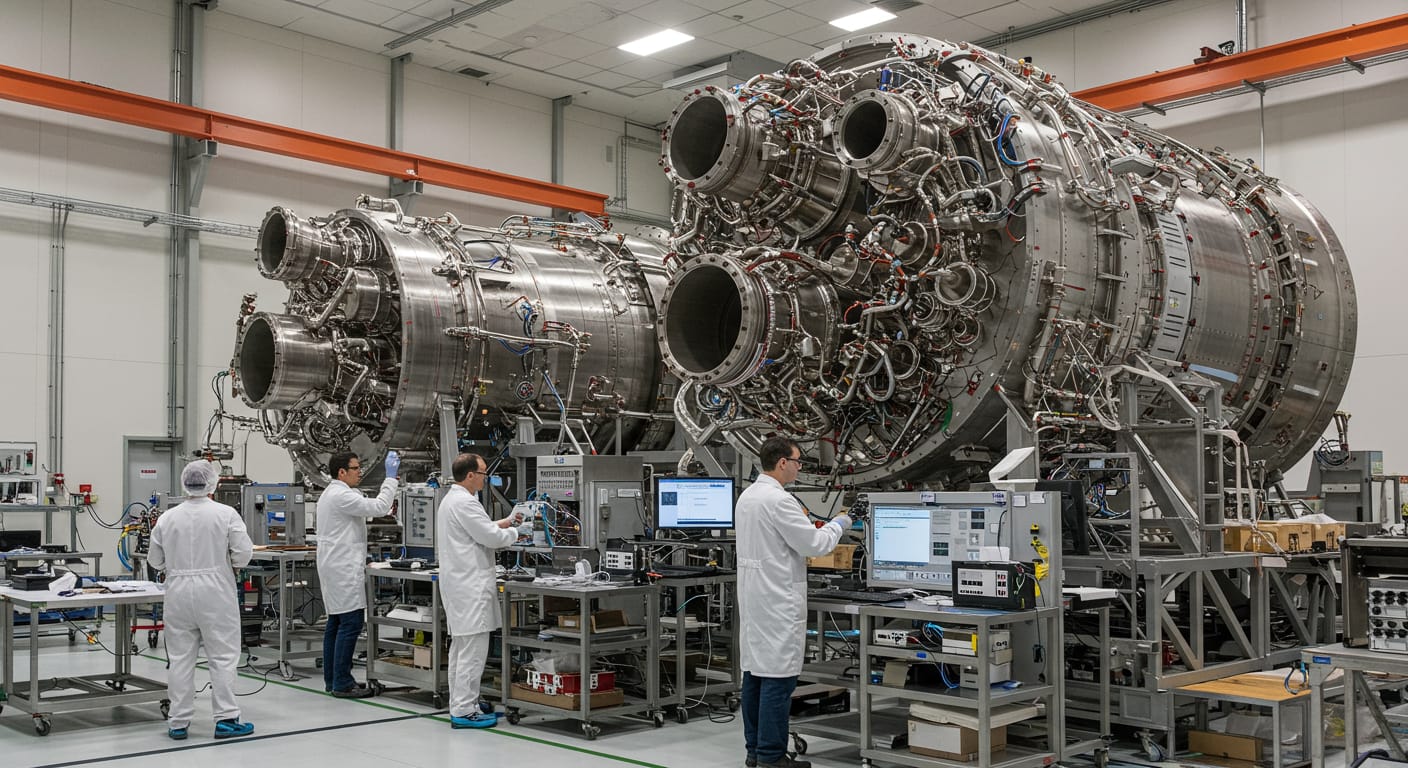
The space industry stands at the edge of a propulsion revolution. While chemical rockets carried humanity to the Moon and powered decades of exploration, their limitations become clear as we aim for Mars and beyond. Current Mars missions require six to nine months using traditional propulsion—creating serious challenges for crew safety, mission costs, and psychological health.
This reality has sparked an unprecedented race among government agencies and private companies to build faster propulsion systems. Organizations from NASA to SpaceX, and from the European Space Agency to cutting-edge research labs, are pursuing revolutionary approaches that could transform how we travel through space.
NASA's Nuclear Breakthrough: Thermal and Electric Systems
NASA leads the charge in next-generation propulsion through nuclear-powered systems. The agency's nuclear thermal propulsion program represents a major leap forward, potentially doubling chemical rocket efficiency while dramatically cutting Mars travel times.
Nuclear thermal propulsion uses a nuclear reactor to superheat propellant before expelling it through a nozzle. This approach could reduce Mars transit times to three or four months, significantly improving crew safety and mission viability. NASA's recent testing has shown promising results for reactor designs and fuel systems.
NASA is also advancing nuclear electric propulsion technologies. While these systems provide lower thrust, they deliver exceptional fuel efficiency for long missions. Nuclear electric propulsion uses reactors to generate electricity that powers ion drives, making them ideal for cargo missions and deep space exploration where efficiency matters more than speed.
The agency has committed substantial funding to these programs, partnering with private contractors to accelerate development. Current timelines suggest nuclear thermal systems could power crewed Mars missions by the late 2030s, though significant technical and regulatory challenges remain.
SpaceX's Starship: Redefining Heavy-Lift Capabilities
SpaceX has taken a different path, focusing on revolutionary advances in conventional rocket design through Starship. While Starship uses methane-fueled Raptor engines rather than exotic propulsion, its innovations lie in unprecedented scale, reusability, and efficiency.
Starship's architecture represents a paradigm shift for deep space missions. Complete reusability, combined with massive payload capacity, could make Mars missions economically viable for the first time. The system's design enables in-space refueling, allowing spacecraft to carry enough fuel for return trips—essential for sustainable Mars exploration.
Recent test flights show significant progress in SpaceX's rapid development approach. Each test provides data that drives quick design improvements, accelerating timelines compared to traditional aerospace programs. This iterative methodology positions Starship as potentially the first next-generation system to reach operational status.
Orbital refueling integration represents another breakthrough. By letting spacecraft refuel in Earth orbit, the system removes payload limitations for deep space missions, enabling larger crews, extended durations, and comprehensive scientific equipment.
European Competition: ESA's Future Launcher Programme
The European Space Agency recognizes the strategic importance of advanced propulsion and is developing its response through the Future Launchers Preparatory Programme. This initiative aims to ensure European competitiveness in a landscape dominated by American innovations.
The European Space Agency focuses on next-generation launcher technologies that could leapfrog current capabilities. The program emphasizes reusability, advanced propulsion concepts, and manufacturing innovations that could position Europe as a major space economy player. Unlike NASA's nuclear focus or SpaceX's scale emphasis, the ESA pursues a diversified technology portfolio.
International partnerships drive the ESA strategy, leveraging collaborations with member nations and commercial partners to share costs and expertise. This approach lets European organizations pursue ambitious propulsion technologies while managing substantial investments.
Current timelines suggest ESA's next-generation systems could become operational in the early 2030s, positioning them to compete directly with American systems for deep space missions and commercial launches.
Experimental Frontiers: Beyond Conventional Propulsion
Beyond major institutional players, researchers at universities and specialized labs explore propulsion concepts that push physics boundaries. Recent theoretical breakthroughs have opened new possibilities that could revolutionize interplanetary travel.
Ion drives represent one mature experimental technology, offering exceptional fuel efficiency through electromagnetic acceleration of charged particles. While ion propulsion provides minimal thrust, its efficiency makes it ideal for long missions where gradual acceleration achieves high velocities over time.
Solar sail technology harnesses radiation pressure from the Sun or powerful lasers for fuel-free propulsion. Recent demonstrations have proven the concept, with spacecraft successfully using solar sails for attitude control and orbital adjustments. Scaled-up versions could enable high-speed outer solar system missions.
Fusion propulsion represents the ultimate goal for many researchers, offering theoretical possibilities for rapid solar system transit. While fusion power generation remains challenging on Earth, space's unique conditions might offer advantages for fusion-powered spacecraft. Research institutions actively pursue proof-of-concept demonstrations, though practical applications remain years or decades away.
These experimental approaches face significant technical hurdles, but breakthroughs could fundamentally change space exploration capabilities. Leading research efforts include major universities, national laboratories, and specialized aerospace research centers.
The Race Timeline: When Speed Meets Reality
Competition among propulsion approaches creates a complex timeline where technical capabilities, funding realities, and regulatory requirements intersect. Each organization faces unique challenges that could accelerate or delay development schedules.
NASA's nuclear propulsion programs benefit from substantial government funding and decades of nuclear expertise, but face regulatory hurdles for launching nuclear materials and operating space reactors. Environmental reviews, safety assessments, and international agreements could extend timelines regardless of technical progress.
SpaceX's commercial approach enables rapid iteration and testing, potentially allowing Starship to achieve operational status before exotic propulsion systems. However, the company must demonstrate long-term reliability for crewed missions and develop orbital refueling infrastructure.
Funding challenges affect all participants, as advanced propulsion requires substantial investments over extended periods. Government programs face budget constraints and political changes, while private companies must balance propulsion development with immediate revenue needs.
Geopolitical implications add complexity, as advanced propulsion capabilities could provide significant strategic space advantages. This reality drives continued government investment but creates potential restrictions on technology sharing and international cooperation.
Upcoming Mars mission windows in the late 2020s and early 2030s create natural deadlines that could determine which technologies achieve deployment first. Organizations demonstrating reliable, safe propulsion systems within these timeframes will likely dominate the next exploration phase.
As this propulsion race continues, winners will reshape humanity's relationship with space, potentially making interplanetary travel as routine as transcontinental flights became in the 20th century. Technologies emerging from this competition could determine whether Mars becomes humanity's second home or remains a destination for only the most ambitious missions.