The Race to Build Faster-Than-Ever Space Propulsion Systems
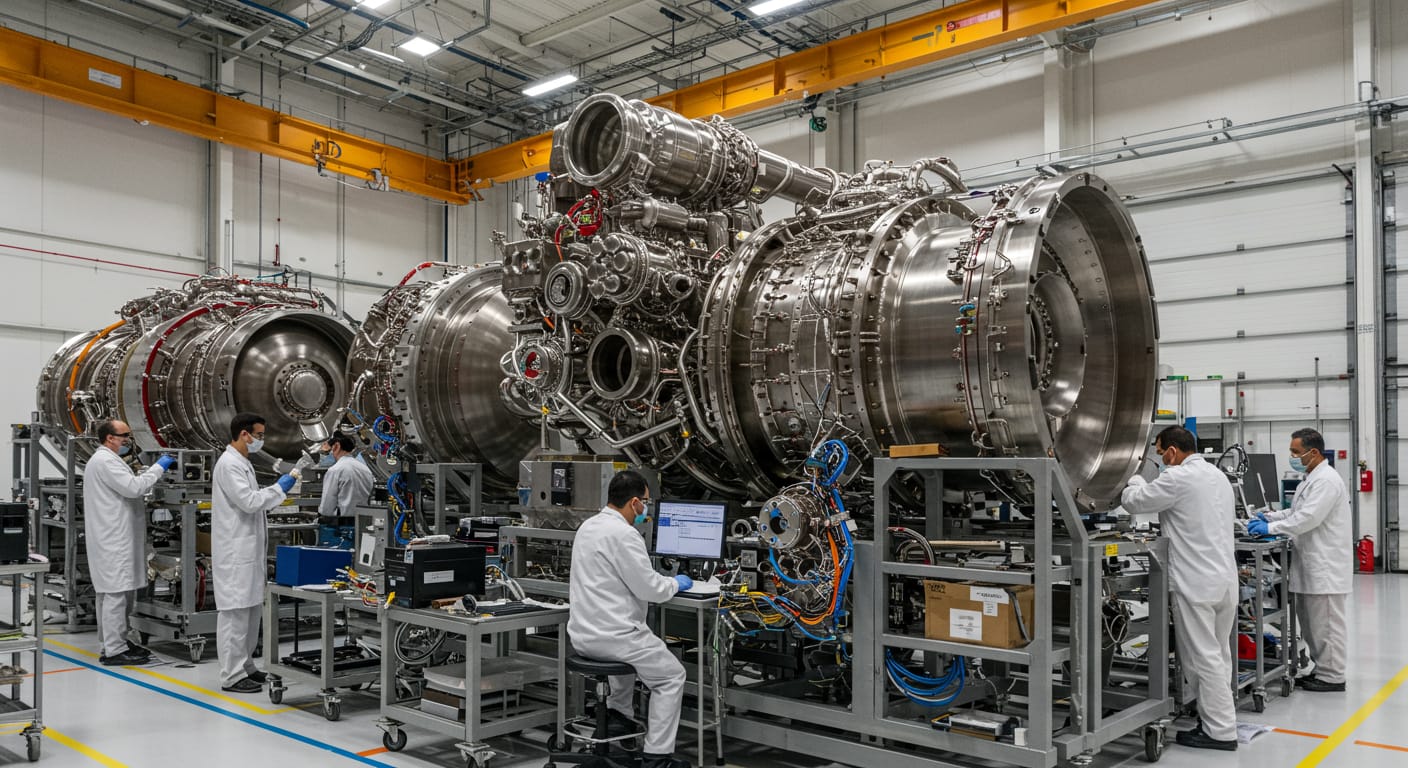
The dream of faster space travel is driving an unprecedented technological race as space agencies, private companies, and research institutions compete to develop propulsion systems that could revolutionize how we explore the cosmos. From nuclear-powered rockets to reusable chemical systems and experimental fusion drives, multiple breakthrough technologies are moving from concept to reality.
The New Space Race for Speed
Today's chemical rockets, while reliable, face fundamental limitations that make deep space exploration challenging and expensive. A trip to Mars using conventional propulsion takes six to nine months, creating significant challenges for crew health, mission complexity, and cost. The need for faster propulsion has never been more urgent as space agencies plan ambitious missions to Mars and beyond.
Multiple competing technologies are now in various stages of development, each offering different advantages for specific mission profiles. While some focus on incremental improvements to existing systems, others promise revolutionary capabilities that could transform space exploration within the next two decades.
Nuclear Propulsion: NASA's Big Bet
The National Aeronautics and Space Administration is investing heavily in nuclear propulsion technologies that could cut Mars travel time in half. Nuclear thermal propulsion systems heat propellant using a nuclear reactor instead of chemical combustion, providing roughly twice the efficiency of conventional rockets while maintaining high thrust levels.
The agency's Demonstration Rocket for Agile Cislunar Operations (DRACO) program aims to test a nuclear thermal rocket in space by 2027. This collaboration with the Defense Advanced Research Projects Agency represents the most serious attempt to deploy nuclear propulsion since the 1970s.
Nuclear electric propulsion offers even greater efficiency by using nuclear power to drive electric thrusters. While providing lower thrust than thermal systems, these designs could enable faster transit times for cargo missions and reduce the fuel requirements for deep space exploration.
Safety considerations remain paramount, with extensive testing required to ensure nuclear systems can operate safely in space while meeting strict regulatory requirements for launch and operation.
Chemical Propulsion Revolution: SpaceX and Beyond
SpaceX is revolutionizing chemical propulsion through its Starship system, which uses methane-fueled Raptor engines designed for full reusability. While still bound by the fundamental limits of chemical reactions, the company's approach focuses on dramatically reducing costs through reusability rather than improving raw performance.
The Raptor engines represent significant advances in combustion efficiency and can be manufactured at scale, potentially making frequent Mars missions economically viable even with longer transit times. Full reusability changes the propulsion equation by allowing multiple refueling missions to support a single deep space journey.
Other companies are pursuing advanced chemical systems, including air-breathing engines for atmospheric flight and more efficient combustion cycles. However, the laws of physics impose ultimate limits on chemical propulsion that make it unsuitable for truly fast interplanetary travel.
Electric and Ion Propulsion: Efficiency Champions
Electric propulsion systems like ion drives offer exceptional fuel efficiency, though at the cost of very low thrust. The European Space Agency's BepiColombo mission to Mercury demonstrates current ion drive capabilities, using electric thrusters for the multi-year journey while consuming minimal propellant.
Next-generation electric propulsion systems in development promise higher power levels and improved thrust-to-weight ratios. These systems excel at cargo missions where time is less critical than fuel efficiency, potentially enabling cost-effective transport of supplies to Mars bases.
The fundamental trade-off between thrust and efficiency means electric propulsion works best for uncrewed missions or as part of hybrid systems that combine different propulsion types for optimal performance across mission phases.
Breakthrough Technologies: Fusion and Beyond
Fusion rocket concepts are moving closer to reality as fusion energy research advances. These systems could provide the high thrust of chemical rockets with the efficiency of nuclear systems, potentially enabling Mars trips in just a few months.
Several research groups are developing fusion rocket designs, though significant technical challenges remain before these systems can be tested in space. Recent progress in fusion energy research has renewed optimism about fusion propulsion timelines.
Solar sail technology has moved from science fiction to operational reality, with successful demonstration missions proving that spacecraft can be propelled by sunlight pressure. While limited to certain mission profiles, solar sails offer unlimited operating time without fuel consumption.
More speculative electromagnetic propulsion concepts remain in early research phases, with uncertain feasibility and long development timelines before any practical applications might emerge.
The Global Competition and Its Impact
International rivalry is accelerating propulsion development as nations compete for space exploration leadership. China, Russia, and European countries are all pursuing advanced propulsion research, creating both competitive pressure and opportunities for collaboration.
Investment in propulsion technologies has increased dramatically, with government agencies, private companies, and venture capital all funding development programs. This financial support is enabling parallel development of multiple technologies rather than betting on single approaches.
The competition is shortening development timelines as organizations race to demonstrate breakthrough capabilities. This acceleration could lead to practical advanced propulsion systems becoming available years earlier than previously expected, fundamentally changing the timeline for Mars exploration and deep space missions.
The winner of this propulsion race will gain significant advantages in space exploration capabilities, potentially determining which nations and organizations lead humanity's expansion into the solar system. As these technologies mature over the next decade, they promise to transform space travel from a months-long ordeal into a routine journey.