The Future of Space-Based Manufacturing and Zero-Gravity Factories
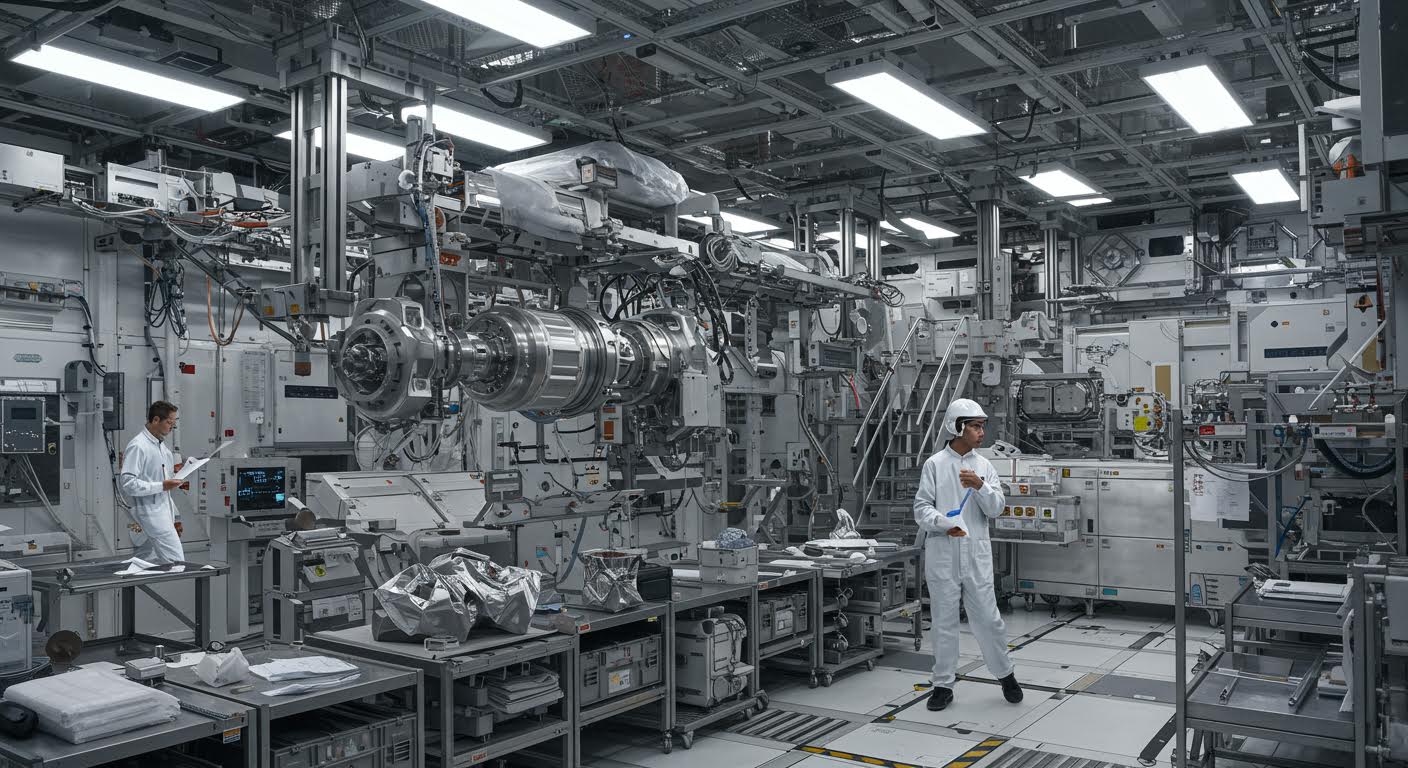
The final frontier is becoming the next manufacturing frontier. As space technology advances and launch costs decline, the prospect of zero-gravity factories orbiting Earth is shifting from science fiction to scientific reality. Space-based manufacturing promises to unlock new possibilities in materials science, pharmaceuticals, and advanced technologies by harnessing the unique physics of microgravity environments.
Why Space Manufacturing Matters
The microgravity environment of space offers manufacturing advantages that are impossible to replicate on Earth. Without the constant pull of gravity, materials behave differently during formation processes, enabling the creation of products with unprecedented purity and structural properties. These unique conditions address current limitations in Earth-based manufacturing, particularly for materials sensitive to gravitational forces and convection currents.
Economic drivers for space manufacturing are becoming increasingly compelling as certain high-value materials and products justify the significant costs associated with space-based production. The potential to manufacture goods that command premium prices due to their superior properties or impossibility to produce terrestrially creates a viable business case for orbital factories.
The Science Behind Zero-Gravity Manufacturing
Microgravity eliminates gravitational effects that typically interfere with crystal formation and material growth processes. On Earth, gravity causes heavier elements to settle and lighter ones to rise, creating impurities and structural inconsistencies in manufactured materials. In space, these gravitational effects disappear, allowing for more uniform crystal structures and material compositions.
The absence of convection currents in microgravity environments enables the production of exceptionally pure materials. Without buoyancy-driven fluid motion, temperature and concentration gradients remain stable, preventing the mixing and contamination that occurs in terrestrial manufacturing. This controlled environment proves particularly advantageous for sensitive manufacturing processes requiring precise conditions.
Additionally, the vacuum of space provides an ultra-clean environment free from atmospheric contamination, further enhancing the purity potential of space-manufactured products.
Current Space Manufacturing Applications
The International Space Station serves as humanity's first orbital laboratory for manufacturing research. According to NASA research initiatives, pharmaceutical companies conduct protein crystal growth experiments in microgravity, producing larger, more perfect crystals than possible on Earth. These enhanced protein crystals could lead to more effective drug designs and treatments.
Researchers are exploring ultra-pure fiber optic production in space, where the absence of gravity prevents bubbles and impurities from forming during the glass drawing process. The resulting fiber optics exhibit superior transmission properties compared to Earth-manufactured alternatives.
Metal alloy and composite material development represents another active area of space manufacturing research. Studies published in Nature demonstrate that microgravity allows for the creation of metal alloys with uniform distribution of components, potentially resulting in materials with enhanced strength, durability, and specialized properties impossible to achieve terrestrially.
Technologies Enabling Orbital Factories
Automated manufacturing systems specifically designed for space environments are under development to minimize human intervention in production processes. These systems must operate reliably in the harsh conditions of space while maintaining precise control over manufacturing parameters.
Robotic assembly and quality control systems adapted for zero gravity present unique engineering challenges. Traditional manufacturing equipment relies on gravity for component positioning and material handling, requiring complete redesign for microgravity operations. Advanced robotics and computer vision systems are being developed to handle these tasks in space-based facilities.
Sustained manufacturing operations in space require robust life support and power systems. Solar arrays provide abundant energy in orbit, while closed-loop life support systems enable long-duration manufacturing missions with minimal resupply requirements from Earth.
Economic Challenges and Market Opportunities
Transportation costs remain the primary barrier to commercial viability of space manufacturing. Current launch costs, while declining thanks to companies like SpaceX, still make it economically challenging to transport raw materials to space and return finished products to Earth. The industry focuses on high-value, low-mass products that can justify these substantial transportation expenses.
Products that command premium prices due to their unique properties or performance advantages represent the most promising market opportunities. Specialized pharmaceuticals, advanced semiconductors, ultra-pure materials, and exotic alloys with superior properties could justify the costs of space-based production.
Market projections for space-manufactured goods suggest significant potential once transportation costs decrease and production capabilities scale up. The unique properties of space-manufactured materials could create entirely new markets and applications currently impossible with terrestrial production methods.
Industry Players and Investment Landscape
The National Aeronautics and Space Administration, the European Space Agency, and other space agencies lead research initiatives in space manufacturing, conducting experiments aboard the ISS and developing technologies for future orbital factories. These government programs provide foundational research and risk reduction for commercial applications.
Private sector involvement is expanding rapidly, with SpaceX's reduced launch costs and reusable rockets making space manufacturing more economically feasible. Emerging space companies are developing specialized platforms and technologies specifically for orbital manufacturing operations.
Venture capital and government funding are driving development across the space manufacturing ecosystem. According to MIT Technology Review analysis, investment flows into companies developing space-qualified manufacturing equipment, automated production systems, and novel applications for space-produced materials.
Timeline and Future Projections
Near-term milestones focus on demonstrating commercial viability of specific space manufacturing applications. Within the next five years, we can expect to see expanded pharmaceutical research in space and initial commercial production of high-value materials in microgravity environments.
The 10-20 year outlook envisions dedicated orbital factories capable of sustained production operations. As launch costs continue declining and space infrastructure develops, larger-scale manufacturing facilities become economically viable. These orbital factories could produce significant quantities of specialized materials and products for Earth markets.
The long-term vision extends to comprehensive space-based industrial infrastructure supporting both Earth markets and space-based economies. As humanity expands its presence in space, orbital factories could supply materials and products for lunar bases, Mars colonies, and other space settlements, creating a self-sustaining space-based manufacturing ecosystem.
Space-based manufacturing represents a transformative technology that could revolutionize how we produce advanced materials and products. While significant challenges remain, the unique advantages of microgravity environments and declining space access costs are making orbital factories an increasingly realistic prospect for the near future.