The Future of Space-Based Manufacturing and Zero-Gravity Factories
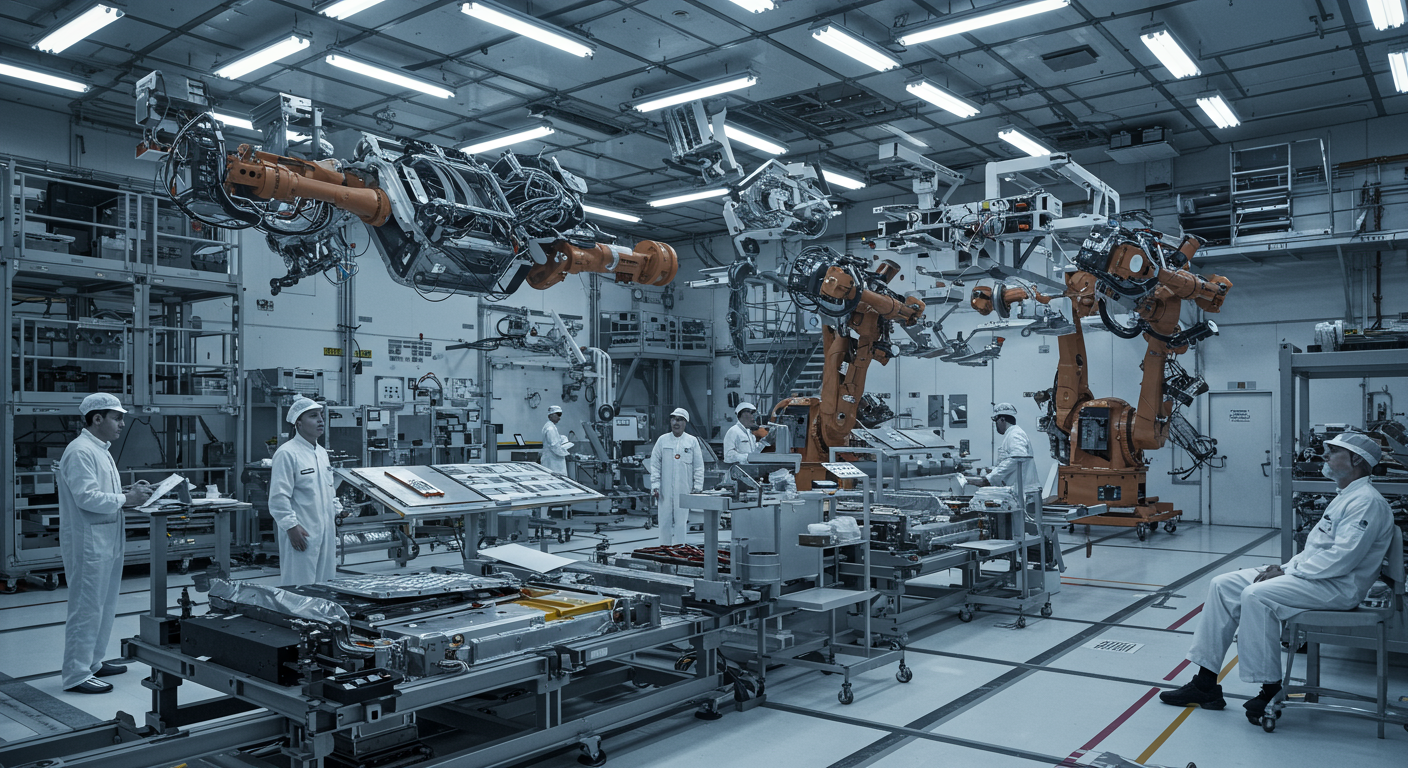
Manufacturing in space has transformed from science fiction fantasy to scientific reality. Zero-gravity factories now represent one of the most promising frontiers in modern industrial development. As space commercialization accelerates, microgravity environments unlock manufacturing possibilities that remain impossible on Earth.
The Microgravity Advantage: Why Space Manufacturing Matters
Space's microgravity environment offers unprecedented manufacturing opportunities that Earth's gravitational field fundamentally constrains. In zero gravity, materials behave differently, enabling products with superior properties impossible to achieve under terrestrial conditions.
Without gravitational forces, several Earth-based manufacturing challenges disappear entirely. Convection currents that cause inconsistencies in material mixing and crystal formation virtually vanish in microgravity. This creates more uniform material distribution and products with enhanced purity and structural integrity.
Sedimentation—another gravity-dependent process that introduces impurities and structural weaknesses—also disappears in space manufacturing. This enables advanced materials with precisely controlled compositions and properties unattainable on Earth.
Current Space Manufacturing Applications and Research
Several manufacturing applications have already demonstrated remarkable microgravity success, showcasing space-based production potential across multiple industries.
Fiber optics production stands out as particularly promising. Space-manufactured optical fibers show significantly enhanced purity and performance compared to Earth-produced counterparts. Without gravity-induced stress and contamination, these fibers achieve superior light transmission and reduced signal loss.
Advanced semiconductor manufacturing represents another breakthrough area. Eliminating contamination from gravitational settling enables semiconductor production with unprecedented purity levels. This could revolutionize electronics by creating more efficient and powerful computing components.
Pharmaceutical research has benefited tremendously from microgravity conditions, especially protein crystal growth experiments. Space-grown proteins often form larger, more perfect crystals than Earth-produced versions, potentially improving drug development and treatment effectiveness.
Metal alloy production in microgravity yields materials with superior structural properties, including enhanced strength and durability. Zero gravity's uniform mixing creates alloys with precisely controlled compositions and improved performance characteristics.
Government Space Agency Initiatives
The National Aeronautics and Space Administration leads space manufacturing research through comprehensive programs aboard the International Space Station. The agency's ISS manufacturing research initiatives have produced significant results across multiple disciplines, establishing the scientific foundation for commercial space-based production.
The European Space Agency has developed extensive microgravity production experiments partnering with research institutions and private companies. These collaborations demonstrate space manufacturing viability across numerous applications while fostering international cooperation in space-based industrial development.
International collaboration frameworks have become crucial for advancing space manufacturing capabilities. Shared facilities and joint research programs enable more comprehensive studies while distributing costs and risks associated with space-based research and development.
The shift from purely research-focused activities to commercial applications marks a significant milestone in space manufacturing development. Government agencies increasingly work with private companies to translate laboratory successes into viable commercial ventures.
Private Sector Development and Commercial Ventures
SpaceX has enabled space manufacturing infrastructure through reliable and cost-effective launch capabilities. The company's reusable rocket technology has significantly reduced space access costs, making space-based manufacturing more economically viable.
Blue Origin has announced ambitious orbital manufacturing facility plans, envisioning a future where space-based production becomes an industrial cornerstone. The company's comprehensive approach includes both supporting infrastructure and actual production technology.
Numerous startups focus on specific space manufacturing niches, from specialized materials production to pharmaceutical research. These companies develop targeted solutions for high-value applications where microgravity production benefits justify additional costs and complexity.
Investment trends show growing venture capital interest in space manufacturing, with funding flowing to companies developing both infrastructure and applications for zero-gravity production. This financial support accelerates development timelines and enables more ambitious projects.
Economic Challenges and Viability Factors
Transportation costs remain the most significant barrier to widespread space manufacturing adoption. Despite recent launch cost reductions, the expense of getting materials and equipment to space continues impacting economic viability for many potential applications.
For space manufacturing to achieve economic viability, products must demonstrate sufficient value differential to justify additional space-based production costs. This typically requires high-value, low-mass products where superior microgravity properties command premium prices.
Market analysis from Bloomberg suggests initial commercial viability will likely focus on specialized applications where space-manufactured products provide significant advantages over Earth-based alternatives. These niche markets can support higher prices while technology and infrastructure mature.
Timeline projections for cost-competitive space manufacturing vary, but most experts anticipate certain applications becoming commercially viable within the next decade as launch costs decline and manufacturing processes improve efficiency.
Future Outlook and Industrial Scaling
The roadmap from current proof-of-concept demonstrations to full commercial operations involves several critical milestones: developing automated manufacturing systems, establishing reliable supply chains, and creating appropriate regulatory frameworks.
Large-scale space factories require substantial infrastructure investments, including orbital platforms, automated manufacturing equipment, and systems for material transport and product return. These infrastructure requirements represent both significant challenges and opportunities for the developing space economy.
The potential impact on Earth-based manufacturing industries could be substantial, particularly where space-manufactured products offer significant performance advantages. While space manufacturing unlikely replaces terrestrial production entirely, it may capture significant market share in specific high-value applications.
The long-term vision for space-based industrial ecosystems extends beyond individual manufacturing facilities to comprehensive industrial infrastructure supporting permanent space settlements and enabling humanity's solar system expansion.