The Future of Human Expansion Beyond Earth Through Technology
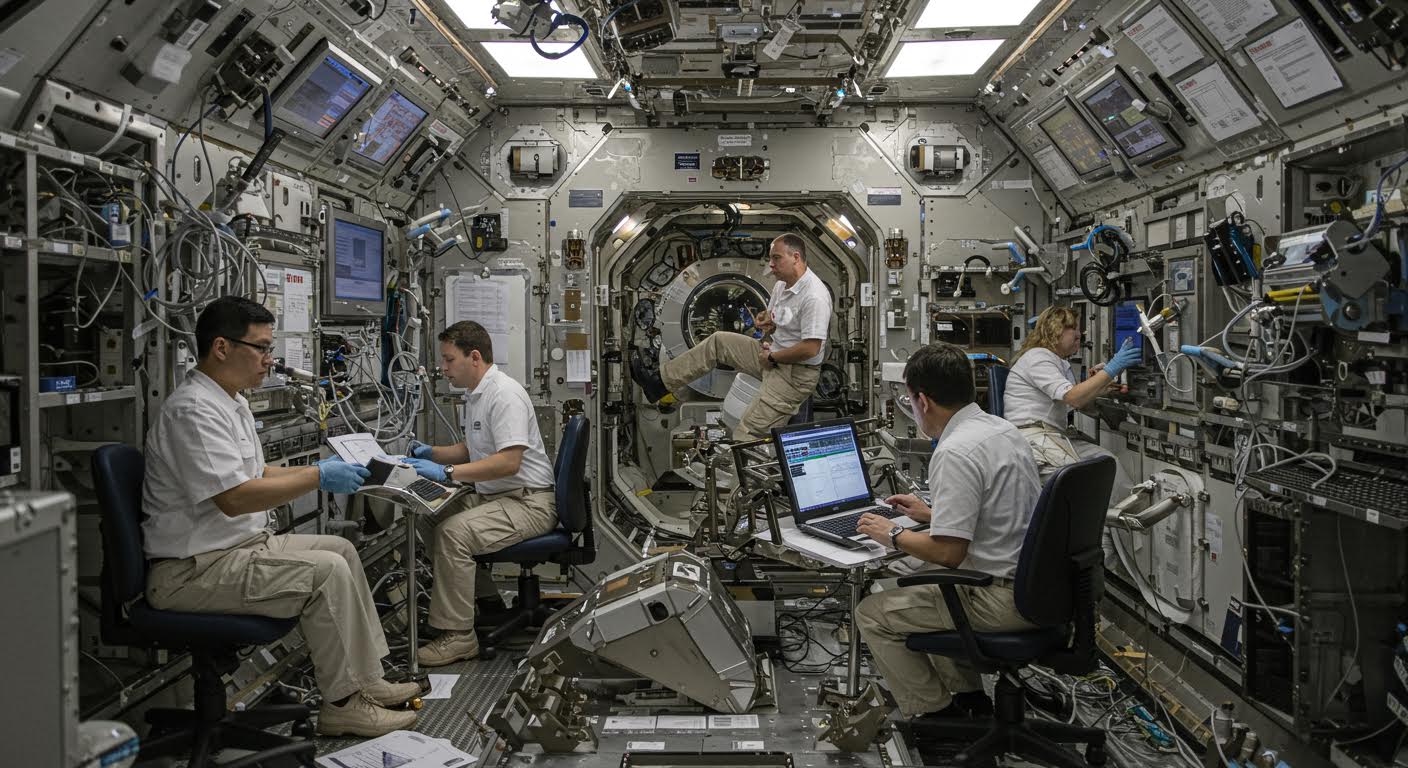
Humanity stands at the threshold of becoming a multi-planetary species, driven by unprecedented technological advances and renewed global commitment to space exploration. From lunar bases to Mars settlements, the technologies being developed today are laying the groundwork for permanent human presence beyond Earth.
Current Missions Paving the Way
The NASA Artemis program represents the most ambitious lunar exploration initiative since the Apollo era, establishing the technological and operational foundation for eventual Mars missions. The program aims to return humans to the Moon by the mid-2020s, with plans for a sustainable lunar presence that will serve as a proving ground for deep space exploration technologies.
Complementing government efforts, SpaceX has revolutionized space access through reusable launch systems, dramatically reducing the cost of payload delivery to orbit. The company's Mars colonization timeline envisions sending the first crewed missions to the Red Planet within the next decade, supported by their Starship vehicle designed specifically for interplanetary travel.
International collaboration through agencies like the European Space Agency has expanded the scope and capability of human space exploration. These partnerships share costs, expertise, and risk while fostering diplomatic cooperation that extends beyond terrestrial borders.
Revolutionary Technologies Enabling Human Survival
Advanced propulsion systems are crucial for reducing travel time to Mars from nine months to potentially three or four months, minimizing crew exposure to radiation and psychological stress. Nuclear thermal and electric propulsion technologies are being developed to achieve the thrust and efficiency needed for practical interplanetary travel.
Closed-loop life support systems represent another critical breakthrough, recycling air, water, and waste with near-perfect efficiency. These systems must operate reliably for years without resupply, making them essential for missions where return to Earth is impossible in case of emergency.
Radiation shielding presents ongoing challenges, as cosmic rays and solar radiation pose significant health risks during long-duration spaceflight. Solutions range from electromagnetic shielding to strategic use of spacecraft water supplies and equipment as protective barriers.
In-Situ Resource Utilization technology enables crews to extract essential resources like water, oxygen, and methane fuel directly from planetary surfaces and atmospheres. This capability dramatically reduces the mass that must be transported from Earth, making missions economically feasible.
Building Sustainable Off-World Habitats
Three-dimensional printing and robotic construction systems are being developed to build habitats using local materials, from lunar regolith to Martian soil. These automated systems could construct basic infrastructure before human crews arrive, providing immediate shelter and workspace.
Self-sustaining ecosystems for food production integrate hydroponic and aeroponic growing systems with waste processing and atmosphere management. These closed biological systems must maintain perfect balance while providing nutritional diversity for crew health and morale.
Modular habitat designs allow settlements to expand incrementally as populations grow and new mission requirements emerge. Standardized connection systems enable different modules to be combined in flexible configurations adapted to local conditions and mission objectives.
Energy systems for off-world settlements must operate reliably in environments with limited solar input, extreme temperatures, and no possibility of repair from Earth. Nuclear power systems, advanced solar arrays, and energy storage technologies are all being adapted for planetary surface deployment.
Overcoming Technical and Human Challenges
Medical technologies for space exploration address the physiological effects of reduced gravity, including bone density loss, muscle atrophy, and cardiovascular deconditioning. Countermeasures range from exercise equipment to pharmaceutical interventions and potential artificial gravity systems.
Psychological isolation and crew dynamics present equally challenging problems for multi-year missions. Advanced communication systems, virtual reality environments, and carefully planned crew rotation schedules are being developed to maintain mental health and team cohesion.
Emergency response capabilities must account for scenarios where rescue from Earth is impossible. This requires redundant life support systems, comprehensive medical facilities, and crew training for situations that would normally require specialized ground-based expertise.
Training and selection criteria for interplanetary missions extend far beyond traditional astronaut qualifications, requiring specialists in multiple fields who can adapt to unpredictable challenges with minimal external support.
Policy, Funding, and Public Support
Government investment strategies must balance ambitious long-term goals with political realities and competing budget priorities. Sustained funding over decades requires bipartisan support and clear demonstration of progress toward established milestones.
International treaties and cooperation frameworks are evolving to address questions of planetary protection, resource rights, and shared responsibility for human safety in space. These agreements must anticipate scenarios that have never occurred in human history.
Private sector partnerships are increasingly essential, bringing commercial efficiency and innovation to traditionally government-led space exploration. Companies like SpaceX, Blue Origin, and others are developing capabilities that complement and sometimes exceed government programs.
Public engagement and support remain crucial drivers of political commitment to space exploration. Educational initiatives, media coverage, and visible progress in space missions help maintain the social consensus necessary for long-term investment.
Timeline and Realistic Expectations
Near-term goals focus on establishing permanent lunar bases and conducting extended Mars surface missions. These intermediate steps are essential for testing technologies and procedures before committing to permanent off-world settlements.
Long-term visions of interplanetary civilization require solving fundamental questions about human reproduction, child development, and cultural evolution in space environments. These challenges extend well beyond current technological capabilities.
Risk assessment and contingency planning acknowledge that ambitious timelines often encounter unforeseen technical, political, or economic obstacles. Flexible program design allows for adaptation while maintaining progress toward ultimate goals.
Economic models for sustaining off-world communities must eventually demonstrate value beyond scientific research and national prestige. Whether through resource extraction, manufacturing, or other activities, space settlements must develop economic independence to ensure long-term viability.
The future of human expansion beyond Earth depends on successfully integrating technological innovation with practical engineering, international cooperation, and sustained commitment to humanity's greatest adventure. While the challenges are immense, the convergence of advancing technology, growing private sector capabilities, and renewed government investment suggests that the next decades will witness unprecedented progress toward making humanity a true spacefaring civilization.