Tesla’s First Cybercab Reportedly Emerges at Gigafactory Texas as EPA Records Hint at Production Specs
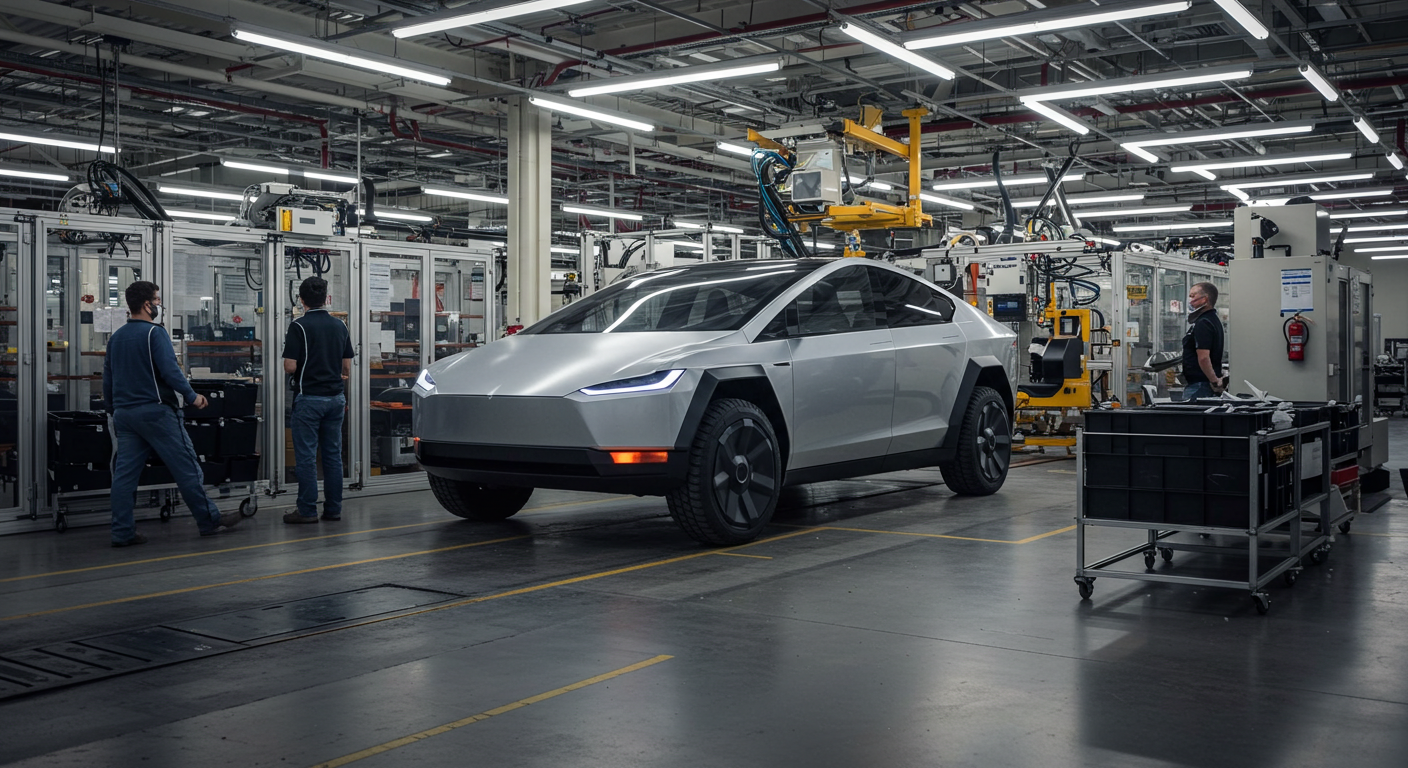
Tesla’s Cybercab program appears to be moving beyond the concept stage and into early production milestones. Reporting tied to public records and Tesla-related materials suggests the company has built its first Cybercab at Gigafactory Texas, while Environmental Protection Agency databases have surfaced regulatory and specification clues that indicate the vehicle is moving through the certification steps typically seen before broader production.
That does not mean a commercial robotaxi launch is imminent. But taken together, the factory activity and public filings offer one of the clearest signs yet that Tesla’s dedicated self-driving vehicle project is advancing beyond its initial reveal.
What’s confirmed about Tesla’s first Cybercab at Gigafactory Texas
Gigafactory Texas has become central to Tesla’s next generation of vehicle manufacturing, and the site is widely linked to the company’s efforts to scale new models and production programs. In this case, the key development is the reported construction of the first Cybercab at the Austin-area factory, tying Tesla’s robotaxi ambitions to a real manufacturing site rather than to prototypes or staged presentations alone.
Tesla’s own Gigafactory Texas materials establish the plant as one of the company’s major production hubs. Independent reporting adds the more specific claim that Cybercab production activity has started there, making the factory the focal point for tracking how quickly Tesla can turn its robotaxi concept into a certifiable vehicle program.
How EPA filings surfaced the robotaxi’s production specifications
Public Environmental Protection Agency databases are not launch announcements, but they can reveal useful details about vehicles moving through regulatory and certification channels. Fuel economy guides, test data systems, and related records may show model-year references, manufacturer identifiers, configuration entries, and other technical clues that suggest a vehicle is being prepared for formal market treatment.
For the Cybercab, those records have drawn attention because they appear to show production-related specifications tied to Tesla’s robotaxi program. That matters because regulatory filings often provide firmer evidence than rumor alone, even if they still leave major questions unanswered.
At the same time, EPA entries need to be read carefully. They can point to certification activity or planned vehicle attributes, but they do not by themselves confirm commercial launch dates, production volumes, or how close a model is to widespread deployment.
What the public records appear to show
The available records appear to point to model-year and classification details associated with Tesla’s Cybercab, giving outside observers a better sense of how the company is positioning the vehicle in regulatory terms. Depending on the specific entry, Environmental Protection Agency-related systems can expose naming conventions and technical identifiers that help distinguish a vehicle from Tesla’s existing consumer lineup.
That distinction matters. A filing may show that a vehicle exists in certification paperwork and may outline certain production specifications, but interpretation beyond that can quickly become speculative. Reporters and industry analysts may draw broader conclusions from those filings, yet the strongest takeaway is narrower: the Cybercab seems to be appearing in the kinds of public databases that often accompany a vehicle moving closer to formal production reality.
Why these filings matter for Tesla’s robotaxi timeline
For Tesla, certification-related disclosures matter because they suggest movement from unveiling a futuristic concept to preparing a vehicle for regulated road use. Public filings do not guarantee a near-term rollout, but they can mark the shift from idea to execution.
That is especially relevant to Tesla’s robotaxi ambitions, which depend not only on manufacturing but also on clearing regulatory requirements, fitting the right vehicle classification, and demonstrating technical readiness. Reuters and other major outlets have framed these kinds of disclosures as signs of tangible forward progress, while also cautioning that they fall short of proving operational readiness.
In other words, the filings matter less as a prediction of an exact launch date and more as evidence that Tesla’s program is generating the paperwork and production signals expected of a real vehicle effort.
What remains unconfirmed
Several major points are still unresolved. EPA-related filings do not confirm that the Cybercab is ready for full commercial service, that Tesla has solved the autonomous-driving challenges required for a driverless fleet, or that large-scale production is underway.
They also do not settle questions about deployment geography, regulatory approval for robotaxi operations, pricing, or how quickly Tesla could scale beyond initial builds. Some secondary coverage may treat these records as evidence of a rapidly approaching launch, but that goes beyond what the filings alone can support.
The safest reading is that Tesla appears to be making measurable progress, with Gigafactory Texas and public certification breadcrumbs offering a more concrete picture than before, while the most consequential milestones still lie ahead.
The bigger takeaway
The Cybercab story is becoming more substantive because two separate threads now appear to be converging: manufacturing activity at Gigafactory Texas and publicly visible regulatory data. Together, they suggest Tesla’s robotaxi effort is no longer just a forward-looking concept but an active vehicle program taking steps that can be observed outside the company.
Still, the most defensible conclusion is a measured one. This looks like an incremental but notable milestone, not definitive proof of an imminent robotaxi launch. What to watch next are additional certifications, more detailed regulatory disclosures, and any direct Tesla statements that clarify production status, specifications, and deployment plans.