Tesla Starts Optimus Humanoid Production at Fremont as Quarterly Profit Falls 43% to $787 Million
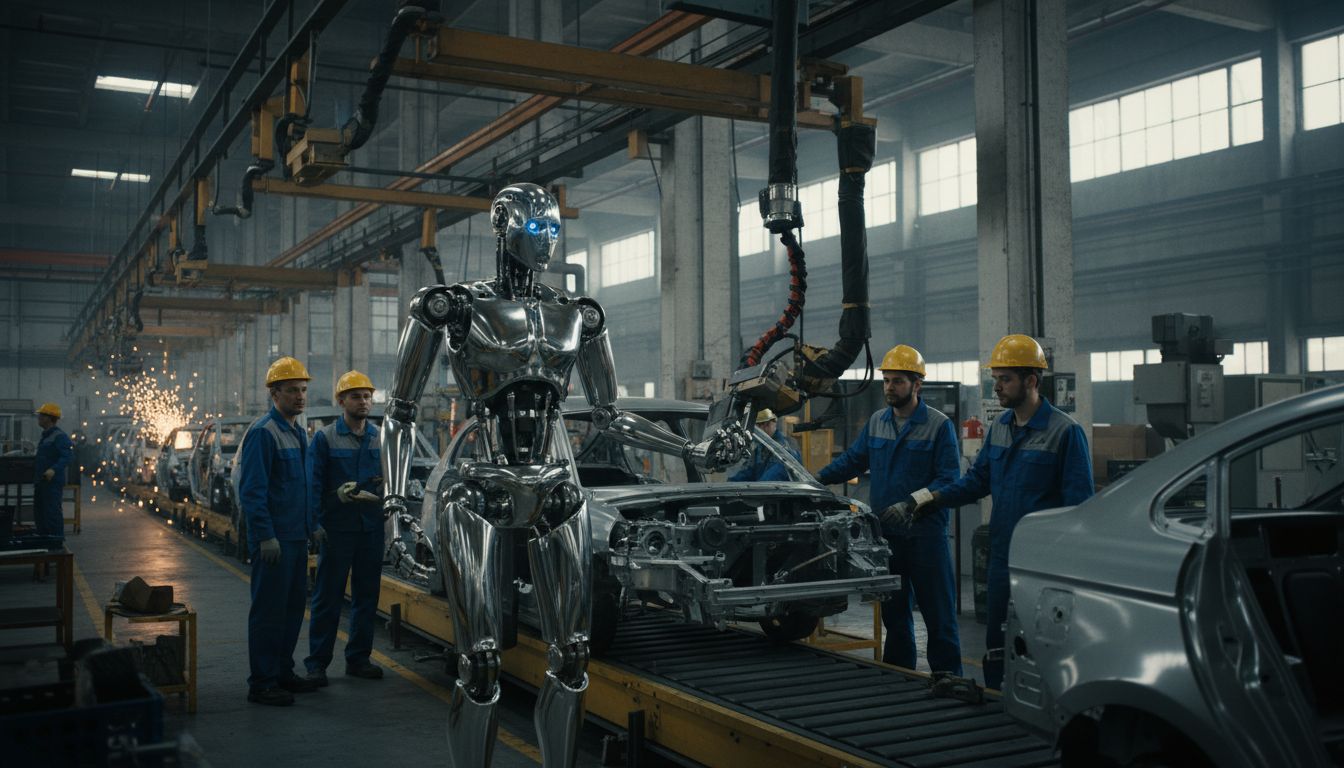
Tesla Begins Optimus Production Even as Profit Slides 43%
Tesla reported third-quarter 2026 GAAP net income of $787 million, down 43% year-over-year from $1.37 billion, even as total revenue held roughly flat at $28.04 billion. The company delivered 486,532 vehicles during the quarter. The results arrived alongside a notable operational milestone: the start of production for Tesla's Optimus humanoid robot, creating a headline contrast between a widely watched robotics ambition and a weaker bottom line.
Inside the Optimus Production Ramp at Fremont
Tesla has started early-stage production of the Optimus humanoid robot at its Fremont, California factory. Executives described the ramp as "somewhat bumpy," language that signals ongoing production challenges rather than a smooth rollout. Elon Musk reiterated a long-term target of producing 20,000 Optimus units per week by the end of 2027. Many observers note that this figure is an unverified executive projection rather than a confirmed production plan, and Tesla's history of shifting timelines for ambitious goals suggests the target should be treated with caution until more production data becomes available.
Where the Profit Decline Is Coming From
Several factors contributed to the drop in profitability. Rising spending on artificial intelligence, robotics, and Full Self-Driving (FSD) development has pressured margins. Solar and energy storage revenue declined 16% year-over-year to $2.8 billion, and broader softness across the automotive and energy segments weighed on overall results. Services revenue was a bright spot, growing 33% year-over-year to $4.6 billion, partially offsetting weakness elsewhere in the business.
FSD and Robotaxi: Growth Signals Amid More Delays
Active FSD subscriptions grew 67% year-over-year to 1.74 million, pointing to continued consumer interest in the feature. At the same time, Tesla again pushed back the timeline for "unsupervised" FSD and a wider robotaxi fleet expansion, with executives now pointing to the second quarter of next year. Tesla's Cybercab robotaxi service in Austin has logged nearly two million cumulative unsupervised miles. A recurring concern among industry watchers is that repeated timeline slips on unsupervised FSD raise questions about how much weight should be given to executive projections on future milestones, including the newly announced Optimus production targets.
What Tesla Didn't Say: No Forward Guidance
Notably, Tesla did not provide numeric financial or delivery guidance for the upcoming period. This leaves investors and analysts relying largely on qualitative statements about Optimus and FSD progress rather than concrete targets. The contrast between precise, reported financial figures and vaguer forward-looking commentary underscores a degree of uncertainty about how these initiatives will translate into near-term financial results.