Stellantis Starts Road-Testing Factorial’s Solid-State Battery in a Dodge Charger
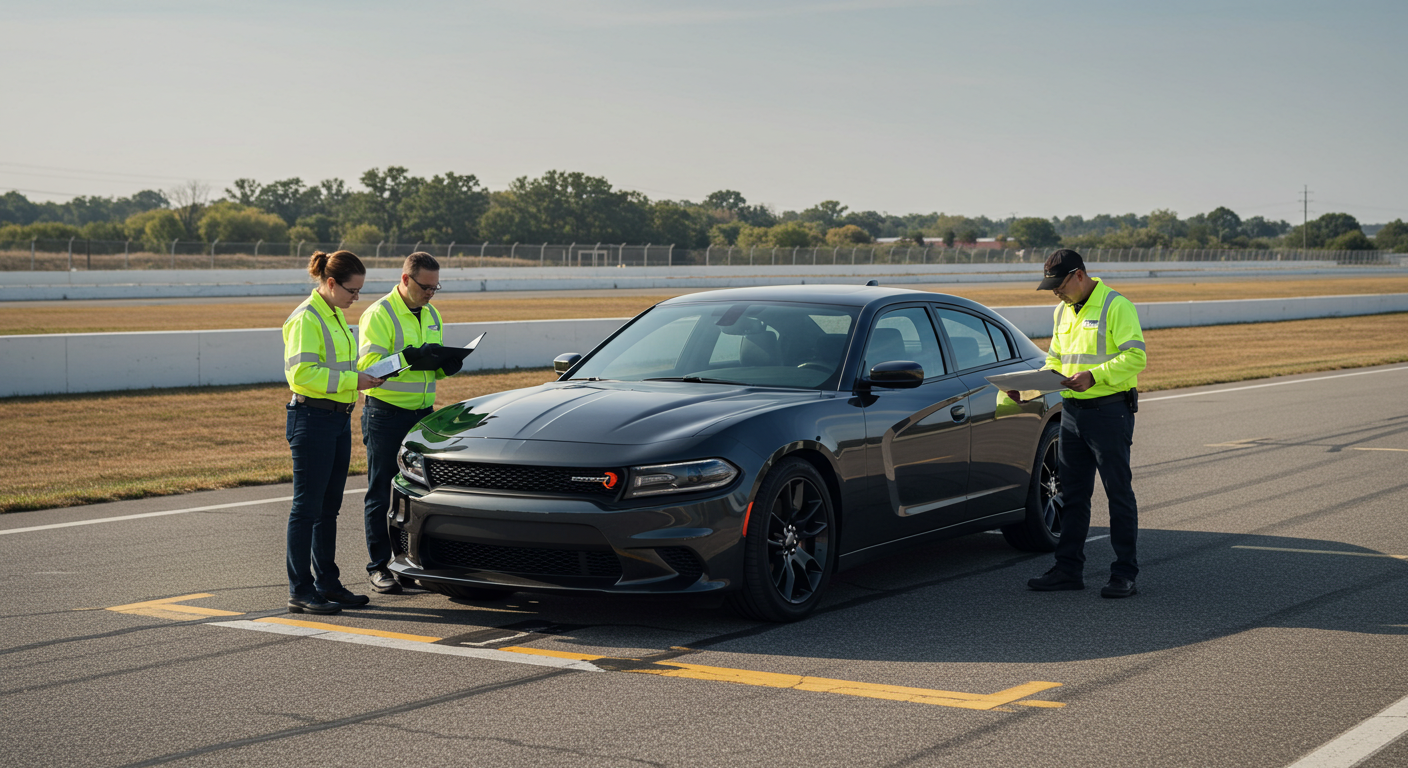
Stellantis says it has begun road-testing a Dodge Charger demonstrator equipped with solid-state battery technology from Factorial, a milestone that moves the partnership beyond lab work and into vehicle-level validation. The step matters because it shows the battery is now being evaluated in real driving conditions, though it remains a prototype milestone rather than a commercial launch.
That distinction is important. Automakers and battery startups often announce promising cell-level breakthroughs, but far fewer reach the stage where those cells are integrated into a working vehicle for on-road testing. By describing this as a demonstrator program, Stellantis is signaling technical progress without suggesting that a production Dodge Charger with this battery is ready for sale.
What the 375 Wh/kg claim means
Stellantis and Factorial say the battery reaches an energy density of 375 watt-hours per kilogram, or Wh/kg. In simple terms, that measures how much energy a battery can store relative to its weight. Higher energy density can help an electric vehicle travel farther, reduce battery mass, or give engineers more flexibility in packaging and performance.
The figure stands out because it is higher than the broad range commonly associated with many lithium-ion EV batteries in current production vehicles. Still, that does not automatically translate into a finished vehicle with dramatically better range. Pack design, cooling, structural integration, software limits, and real-world efficiency all shape final performance. It is also important to treat the 375 Wh/kg number here as a company-reported specification, not an independent verification.
Why road-testing matters more than a lab demo
Road-testing is a more meaningful checkpoint than a laboratory cell announcement because it evaluates more than chemistry alone. A battery that performs well in controlled conditions still has to work inside a vehicle system with thermal management, charging demands, vibration, weather exposure, safety controls, and durability requirements.
Putting the battery into a Dodge Charger demonstrator suggests progress in pack integration and real-world validation. It can generate data on how the cells behave under acceleration, regenerative braking, temperature swings, and repeated use outside the lab. Even so, a successful prototype program does not mean the hardest commercial problems have been solved. Manufacturing at automotive scale, maintaining quality and yield, and reaching acceptable cost remain major hurdles for any next-generation battery.
What Stellantis and Factorial are actually developing
Stellantis and Factorial have worked together for several years on solid-state battery development, with Stellantis previously investing in the startup as part of its broader EV strategy. Factorial has promoted solid-state and solid-state-adjacent battery platforms as a way to improve energy density, safety characteristics, and charging performance compared with conventional lithium-ion designs.
Based on official materials from Stellantis and Factorial, the current milestone is about moving the technology from development cells toward vehicle demonstration. The road-testing announcement fits into a broader validation program, not a declaration of near-term mass deployment. Any future deployment windows discussed by the companies should still be understood as targets that depend on technical and manufacturing progress.
The remaining hurdles before a production EV uses this battery
The solid-state battery race has long been defined by impressive prototypes and difficult scale-up challenges. The biggest open questions include manufacturability, cost, cycle life, fast-charging consistency, thermal behavior, and the ability to produce large volumes with reliable yields. A battery can look promising in test vehicles and still require years of work before it becomes practical for mass-market production.
That caution is common across the industry. Automakers, suppliers, and startups have repeatedly pointed to solid-state batteries as a major future breakthrough, but commercialization timelines have often moved more slowly than early forecasts suggested. That is why analysts and industry outlets such as Reuters and Automotive News tend to treat each new milestone carefully: meaningful progress does not always mean near-term market availability.
Why this announcement matters in the EV battery race
Even with those caveats, the announcement is significant. The auto industry is competing intensely to develop batteries that can improve range, reduce weight, enhance safety, and lower long-term costs. Any sign that a solid-state program has advanced to on-road prototype testing deserves attention because it shows movement beyond theory and isolated lab-performance claims.
For Stellantis, the Dodge Charger demonstrator gives the milestone a recognizable vehicle context, making the technology feel more tangible than a standalone cell announcement. For Factorial, it offers visible evidence that its partnership with a major global automaker is producing real validation steps.
The measured takeaway is that this is a genuine technical milestone, not a finished breakthrough. Road-testing a prototype battery in a vehicle is a stronger signal than a lab demo, but it is still only one stage in a long process that must also include durability proof, cost control, and industrial-scale manufacturing.