SpaceX Targets Starship Flight 14 for September 2026, With First Orbital Starlink V3 Deployment on the Line
SpaceX Targets Starship Flight 14 for September 2026, With First Orbital Starlink V3 Deployment on the Line
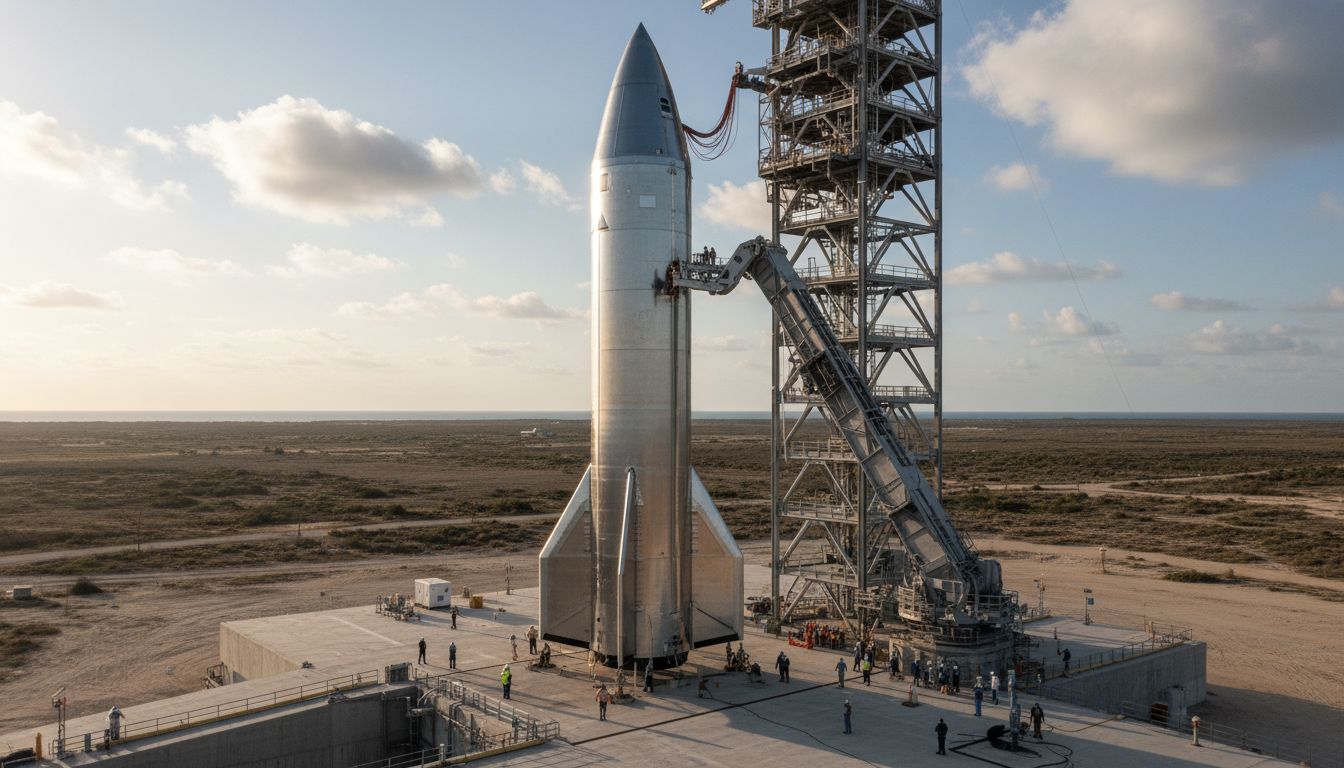
SpaceX appears to be preparing for what many observers describe as a pivotal moment in the Starship program: Flight 14, reportedly aimed at achieving the vehicle's first sustained orbital insertion. According to available scheduling and tracking sources, this mission would also mark the first time Starship carries an operational payload rather than a test mass, in this case a batch of Starlink V3 satellites.
Reported target dates differ depending on the source. Space Launch Schedule cites September 18, 2026, while NextSpaceflight's tracking database lists September 28, 2026. Both dates are described as NET, or "No Earlier Than," a designation that signals the schedule remains tentative and contingent on vehicle readiness and regulatory clearance. Given SpaceX's history of shifting launch dates, industry watchers generally treat these as preliminary targets rather than fixed commitments.
The Payload: Starlink V3 Satellites Head to Orbit
A recurring point of interest among space enthusiasts is the payload itself. Deploying operational Starlink V3 satellites, rather than the mass simulators used in earlier tests, would represent a meaningful step for the program if achieved. However, sources disagree on the exact payload count: the mission topic framing references approximately 20 satellites, while Space Launch Live describes a payload of 26 units, reportedly including a small number equipped with cameras.
Some reports suggest each Starlink V3 satellite could contribute roughly 1 terabit per second of network capacity, though this figure appears to originate from aggregator-style specifications rather than confirmed SpaceX documentation. Readers should treat these capacity figures as illustrative rather than settled fact until corroborated by primary sources.
Pre-Flight Milestones: Booster 21 and Ship 41 Testing Campaign
Ahead of the planned flight, multiple sources describe a series of standard pre-launch health checks. Booster 21 is reported to have completed cryogenic proof testing in mid-to-late July 2026, followed by a full-duration static-fire test in late August. Separately, Ship 41 is reported to have undergone its own cryogenic proof testing in late June, followed by a six-engine static fire in late August.
These milestones are consistent with SpaceX's typical iterative testing approach, in which hardware is progressively validated before a launch attempt. That said, the specific dates and outcomes cited here come from secondary aggregation and trade press coverage, including Tech Times and NextSpaceflight, rather than direct SpaceX statements, and should be understood as reported rather than confirmed.
Mission Profile: From Liftoff to Splashdown
The planned mission profile, as described across available sources, involves liftoff from Starbase's OLP-2 launch pad, followed by hot-staging separation and a boostback burn intended to return the booster toward a splashdown zone in the Gulf of Mexico. The ship stage would then continue toward orbital insertion, eventually executing a deorbit burn and splashdown in the Pacific Ocean.
Some sources note that SpaceX could shorten the mission profile depending on real-time vehicle health assessments during flight, underscoring that this sequence represents a plan rather than a guaranteed outcome.
Why the Discrepancies Matter — and What Remains Unconfirmed
The conflicting launch dates and differing satellite counts across sources are worth noting not because any single source appears unreliable, but because they reflect the preliminary and evolving nature of mission planning at this stage. Encyclopedia-style entries such as Wikipedia and launch-tracking databases often draw from a mix of trade press coverage and SpaceX public statements, which are not always perfectly aligned or simultaneously updated.
It is worth emphasizing that objectives such as orbital insertion, successful payload deployment, and stage recovery remain goals for this flight rather than confirmed achievements. A recurring theme among those following the program is that each Starship flight represents another increment in a longer development campaign, rather than a singular finished milestone. Until the flight occurs and primary confirmation is available, the specific dates, payload counts, and mission outcomes described here should be regarded as provisional.