SpaceX Signals Another Starship Flight May Be Just Weeks Away
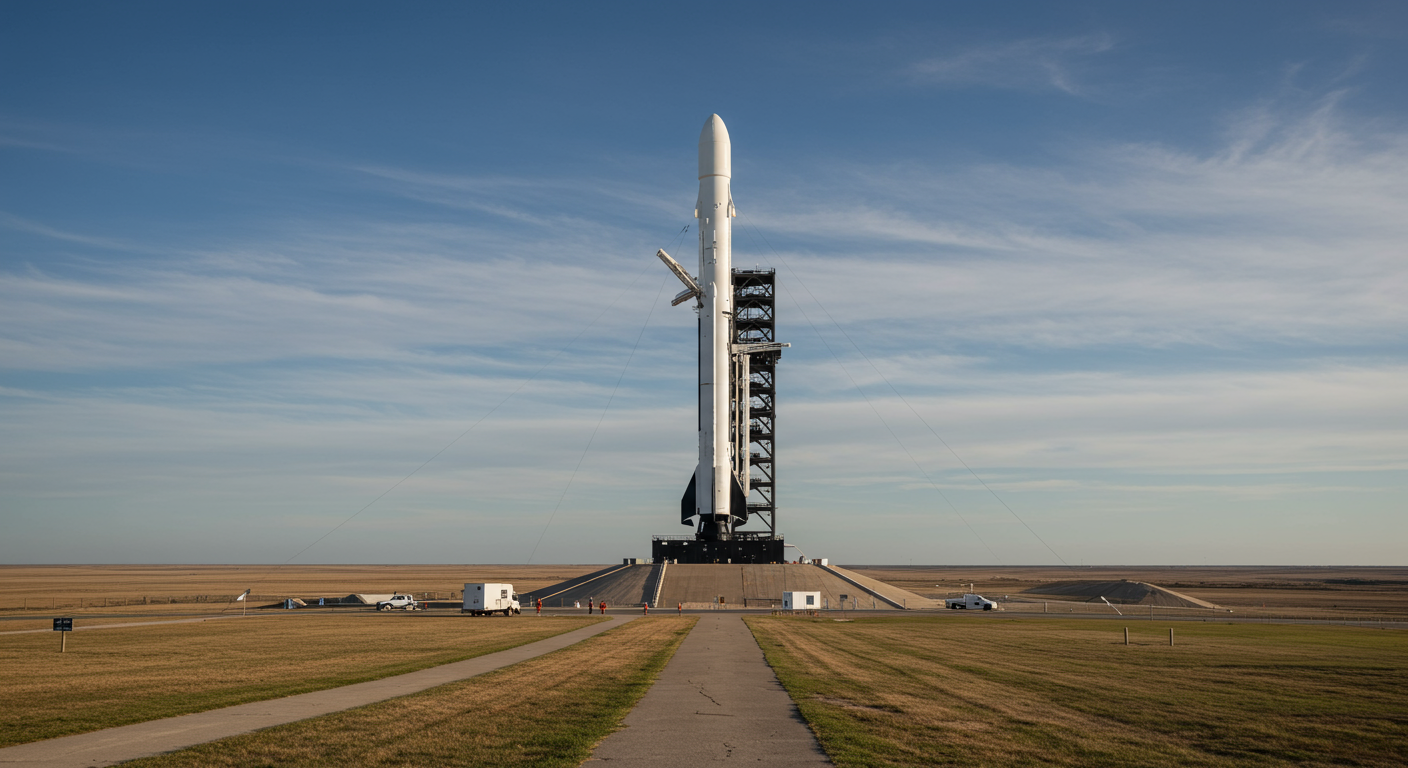
SpaceX is signaling that another Starship test flight could happen soon, with outside reporting and company activity pointing to a possible near-term launch attempt. But “weeks away” should not be mistaken for a firm launch date. For a vehicle as large and experimental as Starship, the final schedule depends on hardware readiness, ground systems, weather, range coordination, and regulatory approval.
That makes this less a countdown story than a status update on one of the most consequential spaceflight programs in development. Starship is SpaceX’s super heavy-lift system, and the company describes it as the most powerful launch vehicle ever developed. If the next test goes ahead, it will offer another major measure of whether that ambition is translating into more reliable flight performance.
Why the next flight matters now
Starship is central to SpaceX’s long-term plans for deep-space transport, high-volume satellite deployment, and eventually human missions beyond low Earth orbit. Each integrated test flight has therefore mattered far beyond a single launch-day result.
The immediate importance of the next mission is practical: it will show whether SpaceX has turned lessons from earlier flights into a more mature test campaign. A successful step forward would not mean Starship is suddenly operational, but it would strengthen the case that the program is moving from dramatic experimentation toward repeatable progress.
What makes Starship so powerful
Starship is built as a two-stage system. The first stage, called Super Heavy, is a massive booster designed to provide the thrust needed to lift the vehicle off the pad. The upper stage, also called Starship, serves as both the second stage and the spacecraft intended for cargo and, eventually, crewed missions.
According to SpaceX’s published specifications, the system is designed to deliver unprecedented lift capability compared with previous launch vehicles. That is the basis for the company’s description of Starship as the most powerful rocket ever developed. In practical terms, that power is about more than headline thrust: it reflects the scale of the payloads SpaceX hopes to send to orbit, the Moon, and eventually farther into space.
Still, raw power is not the same as flight maturity. A rocket can be unmatched on paper and still remain deep in a test-focused phase while engineers work through staging, engine performance, reentry profiles, and recovery or disposal sequences. That is why Starship remains under especially close scrutiny.
Where the program stands after earlier test flights
Previous integrated Starship test flights have shown a pattern familiar in ambitious aerospace programs: visible gains alongside visible setbacks. Early flights helped SpaceX gather data on liftoff, ascent, stage separation, engine operation, and the behavior of both stages under real flight conditions.
Some milestones were achieved only after earlier failures or partial successes, and those outcomes fed directly into updates to hardware, software, and flight procedures. As a result, each launch has functioned as both a public spectacle and a development exercise.
What matters now is not a full replay of every earlier test, but the broader trend. SpaceX has continued refining the vehicle and launch process, suggesting the company sees enough progress to prepare for another attempt. Whether that translates into a smoother mission is exactly what the next flight is expected to help answer.
Why “weeks away” does not mean ready to launch
SpaceX often works in parallel on vehicle assembly, engine testing, pad work, and mission planning, which can make a launch appear close before every piece is actually in place. Even when a booster and ship look nearly ready, several moving parts still have to align.
Those include final vehicle preparation, any required static-fire or other verification testing, launch site readiness, acceptable weather, and range availability. A near-term target can shift quickly if any one of those elements slips.
That is why any suggestion that the next flight is only weeks away should be treated as conditional unless and until SpaceX announces a formal launch window and regulators clear the mission. In other words, “soon” may be an accurate planning signal without guaranteeing a specific date.
The FAA’s role in when Starship can fly again
The Federal Aviation Administration is the key U.S. regulator for commercial launch licensing, including safety oversight and related compliance requirements for flights such as Starship’s test missions. That gives the agency a decisive role in whether a launch can proceed on SpaceX’s preferred timeline.
Even if the hardware appears ready, Starship cannot launch without the necessary Federal Aviation Administration sign-off. The Federal Aviation Administration’s SpaceX Starship materials also show that launch approvals are tied to a broader framework of safety review and environmental obligations, making regulatory status more than a procedural footnote.
For readers trying to judge whether another flight is truly imminent, Federal Aviation Administration updates are among the most important signals. Company momentum matters, but regulatory clearance is what turns momentum into an actual launch opportunity.
Why NASA and the wider space industry are paying attention
Starship’s importance extends well beyond SpaceX. NASA’s Artemis program, intended to return astronauts to the Moon and support a longer-term human presence in deep space, has tied part of its architecture to Starship’s development. That means test progress is relevant not just to one company’s roadmap but also to major U.S. exploration goals.
The broader space industry also has reason to watch closely. If Starship eventually delivers on its promised capacity, it could reshape assumptions about launch economics, spacecraft design, satellite deployment, and the scale of missions that become commercially realistic. A system capable of moving much larger payloads at a higher cadence would have consequences across the market.
That does not mean those outcomes are guaranteed. But each successful test increases confidence that Starship is more than an aspirational concept, while each delay or failure underscores how difficult it is to bring such a large new launch system into service.
What to watch before the next launch attempt
The clearest signs that a new Starship flight is nearing will come from a combination of official and visible milestones. The most important are Federal Aviation Administration licensing status, SpaceX test activity, signs of final stacking and pad readiness, and any formal launch window announcement.
Static-fire testing and other preflight checks are especially useful indicators because they show the company moving from preparation into mission-specific validation. At the same time, regulatory updates remain essential, since technical readiness alone is not enough.
If those pieces line up, the next Starship mission could mark another major step for the most ambitious rocket program in active development. Until then, the most accurate reading is a cautious one: SpaceX may be getting close, but schedule certainty remains limited until the company and regulators are aligned.