SpaceX Drew Attention for a Capsule Reveal and a Reported $20 Billion Debt Move on the Same Day
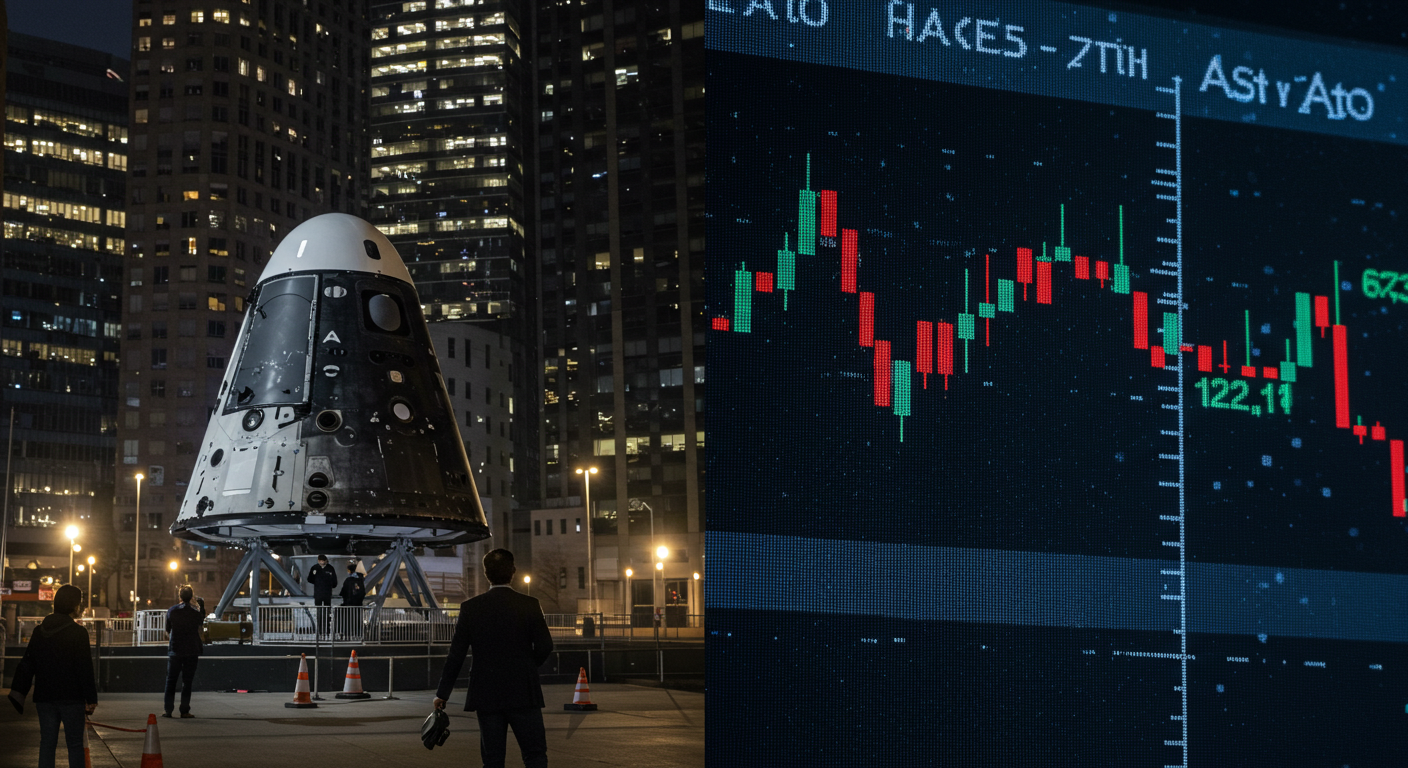
SpaceX drew unusual attention on two fronts in the same news cycle: apparent official material related to a reentry capsule called Starfall, and separate financial reporting describing a roughly $20 billion debt-related fundraising move. The overlap in timing is notable, but based on the sourcing now available, these look like concurrent developments rather than confirmed parts of a single strategy.
That distinction matters. SpaceX can communicate directly about its hardware plans through its own channels, while reporting on private-market financing usually relies on financial news organizations citing people familiar with the matter or deal documents that may not be widely public. For now, the clearest reading is that this is a mix of official product signals, outside financial reporting, and several unanswered questions.
What SpaceX actually showed about Starfall
Based on SpaceX official materials, Starfall appears to be a reentry-focused capsule or vehicle concept. Public detail remains limited, but the basic implication is that it would be designed to survive atmospheric return and support recovery after reentry. Without a fuller technical release from SpaceX, it is difficult to say much more with confidence about its mission profile, target customers, dimensions, payload class, or how mature the design really is.
At this stage, the project is best described as an announced or depicted concept with incomplete public specifications. If SpaceX has not published a dedicated technical overview, then assumptions about its exact role in the company’s roadmap would go beyond what is verified. It is also unclear from the available material whether Starfall is a genuinely new program name, a subcomponent of an existing effort, or a rebranding of work already underway within SpaceX’s broader launch-and-return ecosystem.
How much is independently confirmed about Starfall
Independent confirmation appears limited. Aerospace reporting, including coverage from SpaceNews, can help establish whether Starfall has been separately described, contextualized, or connected to known SpaceX programs, but major gaps in public information remain. Those gaps include the intended use case, development timeline, customer base, and whether the capsule is aimed at cargo recovery, spacecraft servicing, experimental missions, or another niche.
That lack of detail can naturally create intrigue, but intrigue is not the same as proof that the project was deliberately hidden. In the aerospace sector, especially among private companies, limited early disclosure is common. Concepts can surface in updates or presentations before the press has enough material to characterize them independently in detail.
What is being reported about the roughly $20 billion financing move
The financing story should be treated as reported rather than fully confirmed unless and until SpaceX or formal documentation provides specific terms. Financial outlets such as Reuters, Bloomberg, and The Wall Street Journal are the right places to watch for this kind of development, particularly because SpaceX is a private company and visibility into debt transactions can be narrower than it is for public issuers.
One important point is structure. A headline may describe the move in shorthand as a bond deal, but private-company fundraising can take several forms of debt or debt-like financing. Depending on the reporting, the transaction could be framed as a bond sale, a broader debt offering, a private fundraising package, or another capital-markets arrangement. Until the terms are clearly documented, the reported amount and exact format should be understood as subject to clarification.
A review of the Securities and Exchange Commission's EDGAR system may offer only limited help here. Because SpaceX is private, investors should not expect the same level of immediate public filing visibility that often accompanies a public company bond issuance. That makes reporting from Reuters, Bloomberg, and The Wall Street Journal especially important when assessing the scope and status of any major fundraising effort.
Why the financing matters
If reporting about a debt raise of that scale is accurate, it would underscore how capital-intensive SpaceX has become. Launch systems, satellite networks, manufacturing infrastructure, and next-generation vehicle development all require enormous and sustained investment. For a private company operating at that level, debt can be a way to raise large sums without immediately issuing new equity and changing ownership stakes.
Debt financing also sends a different signal than equity fundraising. Equity investors are buying ownership and future upside, while debt investors focus more directly on repayment prospects, cash generation, collateral, deal protections, and confidence in the company’s operating trajectory. A successful debt placement of that size would likely be read as evidence of strong market appetite and substantial confidence in SpaceX’s scale and long-term business position.
Are the two developments actually connected?
At the moment, there does not appear to be a firm public basis for saying the Starfall reveal and the reported financing move are strategically linked. It is reasonable to note the coincidence in timing. It is not reasonable, based on timing alone, to conclude that one was staged to support the other.
There are several cautious interpretations. One is simple coincidence: two separate developments happened to surface on the same day. Another is narrative signaling: even without a direct link, visible hardware progress can reinforce an image of momentum around the company. A third possibility is that both reflect the same broader reality, namely that SpaceX continues expanding technically and financially at the same time. But unless a source explicitly ties the two together, those remain interpretations rather than established facts.
What remains uncertain and what to watch next
For Starfall, the biggest unanswered questions are basic ones: what specific mission it is meant to serve, how far along the project is, when it might fly, and how it fits into SpaceX’s existing vehicle portfolio. The next meaningful signals would be a dedicated company update, more detailed technical material, procurement activity, customer announcements, or independent reporting from aerospace outlets with sourcing beyond promotional imagery or brief references.
For the financing story, the key uncertainties are final size, instrument type, pricing, maturity, investor demand, and whether the transaction was fully launched, marketed, or only discussed. Follow-up reporting from Reuters, Bloomberg, or The Wall Street Journal would be important, as would any disclosures that emerge through deal documentation or related filings.
For now, the cleanest conclusion is that SpaceX generated attention in hardware and finance at the same time, but the public record does not yet support treating those developments as one unified move. The capsule story appears real but only lightly detailed. The financing story appears significant but dependent on outside reporting for precision. In both cases, the next round of authoritative disclosure will matter more than the coincidence in timing.