SpaceX Catches Returning Starship Upper Stage With the Tower for the First Time
SpaceX Catches Returning Starship Upper Stage With the Tower for the First Time
SpaceX's Starship Flight 15 lifted off on November 13, carrying the Ship 42 upper stage atop Super Heavy Booster 22. The mission had been billed as a chance to repeat a tower-based booster catch, but by the time the flight sequence concluded, observers were instead discussing a different, unprecedented milestone involving the ship itself.
Booster 22 Catch Aborted, Diverted to Gulf Splashdown
Partway through descent, the attempt to catch Booster 22 with the launch tower's arms was called off. According to available reporting, the abort was triggered by an unspecified safety concern, and the booster was redirected to a contingency splashdown zone in the Gulf, where it was destroyed on impact. The precise technical cause of the abort has not been confirmed in the reporting reviewed so far, and SpaceX has not published a detailed explanation. Some accounts note that the flight plan reportedly included multiple built-in contingency checkpoints, suggesting the diversion may have been a planned fallback rather than an uncontrolled failure, though this remains unconfirmed.
Ship 42 Reaches Orbit and Deploys Starlink V3 Satellites
While the booster's fate dominated early attention, the upper stage proceeded largely as planned. Ship 42 ignited all six Raptor engines and climbed to an altitude of roughly 275 kilometers, reaching the velocity needed for its payload operations. The vehicle then deployed all 26 Starlink V3 satellites it was carrying, contributing to the broader Starlink constellation figures cited by industry trackers.
Historic First: Upper Stage Caught by the Launch Tower
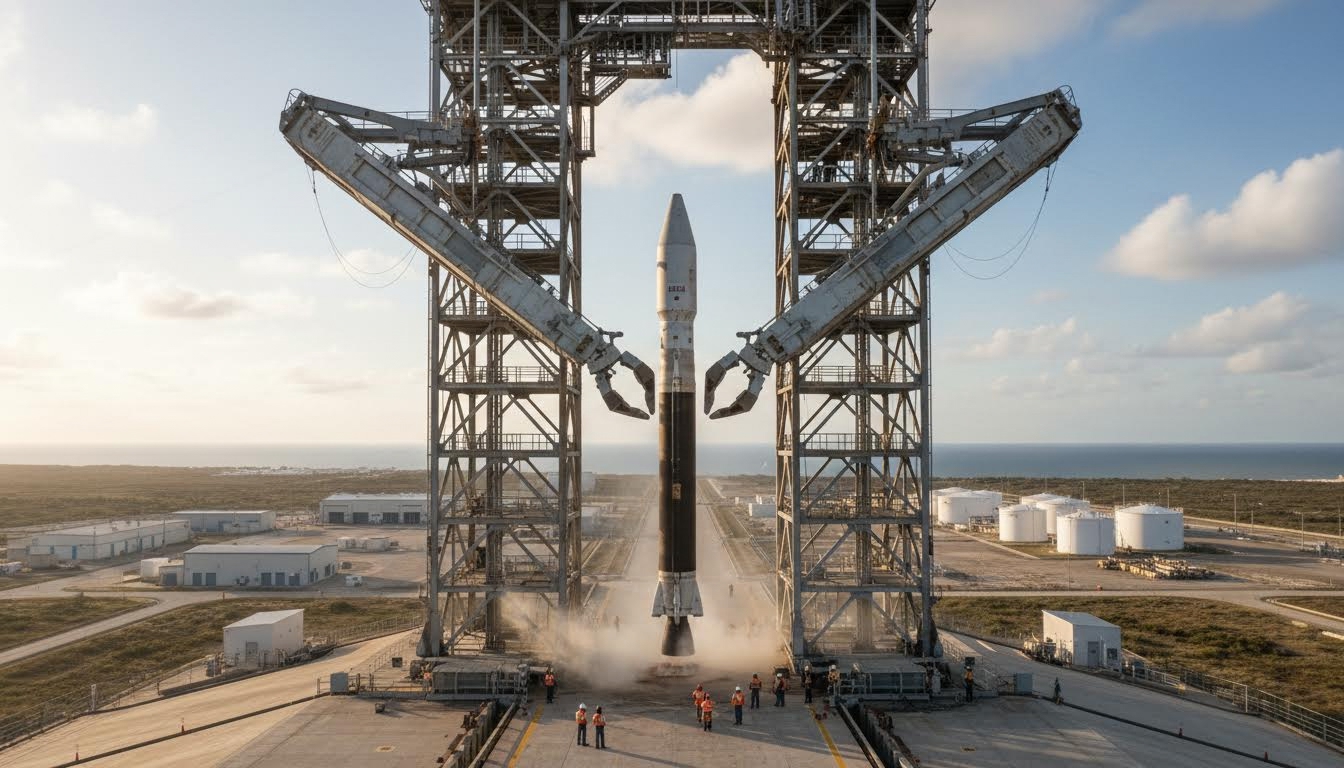
Following satellite deployment, Ship 42 returned to the launch site, where the tower's "chopstick" arms caught the descending vehicle. Many observers describe this as the first time a Starship upper stage, rather than only the booster, has been recovered using the tower-catch method. Coverage framed this as a milestone that extends beyond the booster-catch achievements demonstrated in earlier flights, even as the loss of Booster 22 left the overall mission outcome mixed.
Regulatory and Industry Context
Reporting indicates the Federal Aviation Administration issued the launch license for Flight 15 only shortly before the launch window opened, a timeline that some coverage frames as tight relative to the mission's complexity. A recurring theme across early accounts is that reporting has leaned heavily on SpaceX's own statements and real-time updates, with details evolving as more information becomes available. The technical cause behind the booster abort, in particular, remains an open question that has not yet been authoritatively resolved in public reporting.