South Korea's Reported $518 Billion Chip Push: Samsung and SK Hynix Take Center Stage in the AI Hardware Race
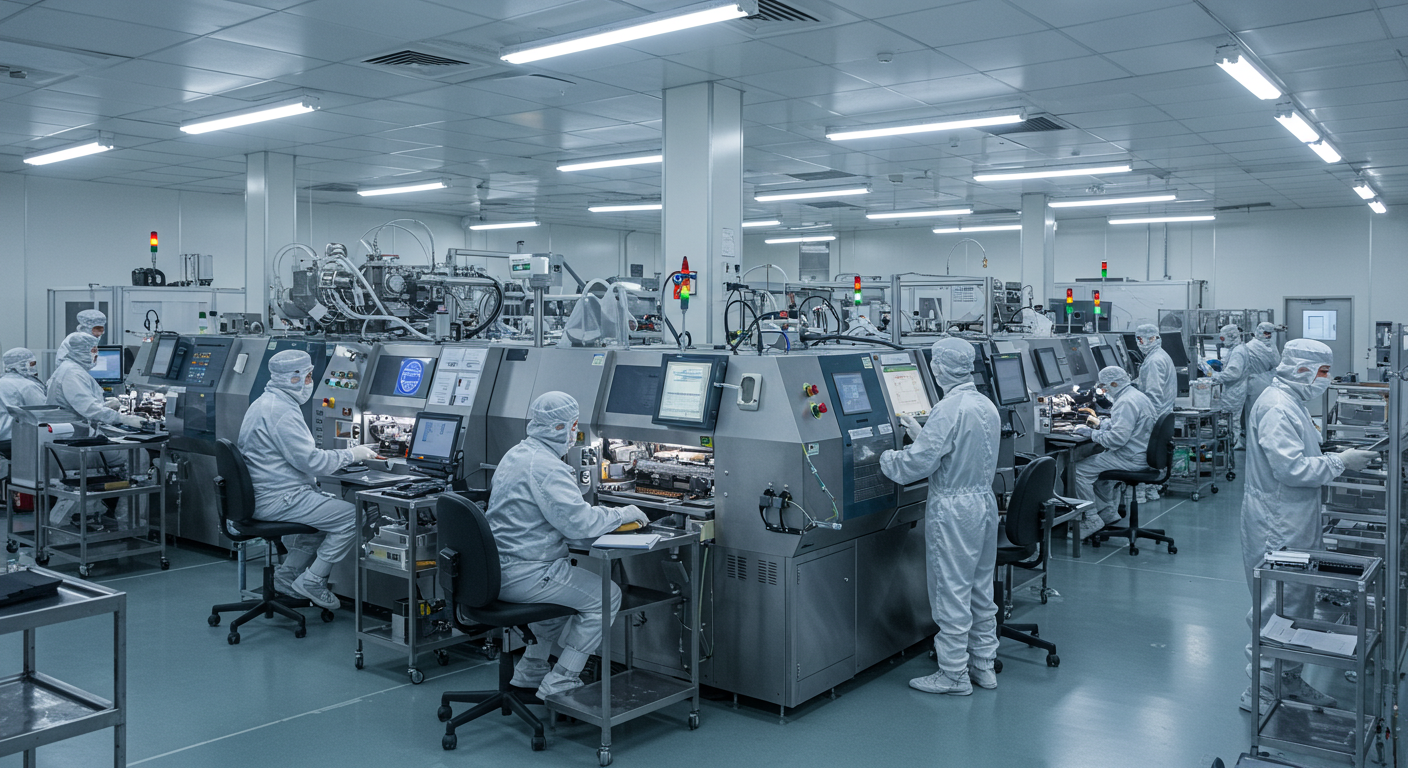
South Korea's Reported $518 Billion Chip Push: Samsung and SK Hynix Take Center Stage in the AI Hardware Race
South Korea has reportedly unveiled a sweeping national investment push, with figures cited around $518 billion, aimed at strengthening its domestic semiconductor manufacturing base. The initiative appears to be framed as a strategic response to intensifying global competition in AI-related chip production, positioning the country to defend its stronghold in memory chips while pushing further into advanced logic and foundry work. As with many large-scale industrial policy announcements, the specific figures, funding structure, and timeline associated with this push warrant confirmation from primary sources, including South Korea's Ministry of Trade, Industry and Energy and corporate investor-relations channels, before being treated as finalized.
South Korea's $518 Billion Bet on Chip Supremacy
The scale of the reported investment—approximately $518 billion—suggests an effort to consolidate South Korea's position at the center of global semiconductor supply chains. This kind of national commitment typically blends government incentives with private capital from major industry players, though the precise breakdown remains unclear based on available information. The initiative is described as part of a broader strategic response to escalating competition for AI chip production capacity worldwide. Given the absence of verified reporting from major outlets, the $518 billion figure and associated timeline should be treated as a reported claim pending confirmation from primary sources, including official government statements and corporate disclosures.
Samsung and SK Hynix as the Industrial Vehicles
Samsung Electronics and SK Hynix are positioned as the primary companies tasked with executing this fab expansion. The two firms have historically played complementary roles in South Korea's chip industry, with SK Hynix known for its leadership in high-bandwidth memory production and Samsung maintaining a diversified presence across memory, logic, and foundry services. Distinguishing between memory-focused investment and advanced logic or foundry capacity is important, as these segments face different competitive dynamics and serve different parts of the AI hardware supply chain. Specific commitments from either company would need to be confirmed through official channels, including Samsung's investor relations communications and SK Hynix's newsroom announcements.
Why AI Chips Are the Center of the Strategy
Global demand for high-bandwidth memory has grown sharply alongside the expansion of AI accelerators and data center infrastructure. HBM has emerged as a critical component in AI hardware, enabling the fast data transfer speeds required by modern AI training and inference workloads. Advanced foundry capacity, which supports the manufacturing of cutting-edge logic chips, is similarly viewed as a chokepoint in the broader AI hardware supply chain. South Korea's push appears designed to reinforce its established leadership in memory chip production while working to close gaps in advanced logic and foundry capabilities relative to competitors.
A Global Chip Race: U.S., Taiwan, and China
South Korea's reported investment push does not exist in isolation. The United States has pursued its own domestic semiconductor incentives through the CHIPS Act, aiming to rebuild advanced manufacturing capacity on American soil. Taiwan, home to TSMC, continues to expand its own advanced chip manufacturing capacity, maintaining its position as a critical hub for leading-edge logic production. China, meanwhile, has pursued a parallel path toward domestic semiconductor self-sufficiency, driven in part by geopolitical pressures and export restrictions. Within this landscape, South Korea's reported $518 billion commitment can be understood as one component of a broader pattern of national industrial policy competition centered on semiconductor capacity and AI chip production.
Open Questions and What to Watch
Several aspects of this reported initiative remain to be confirmed. The $518 billion figure itself, along with how funding is split between government incentives and private capital, requires verification from established business and technology news outlets such as Reuters, Bloomberg, and Nikkei Asia. The timeline for fab construction and completion, along with potential geopolitical implications related to export controls, represent additional angles worth monitoring as more detailed reporting emerges. Until such verification is available, the specific numbers associated with this initiative should be treated as preliminary rather than confirmed.