Smart Sensors and Devices Quietly Powering the Internet of Things
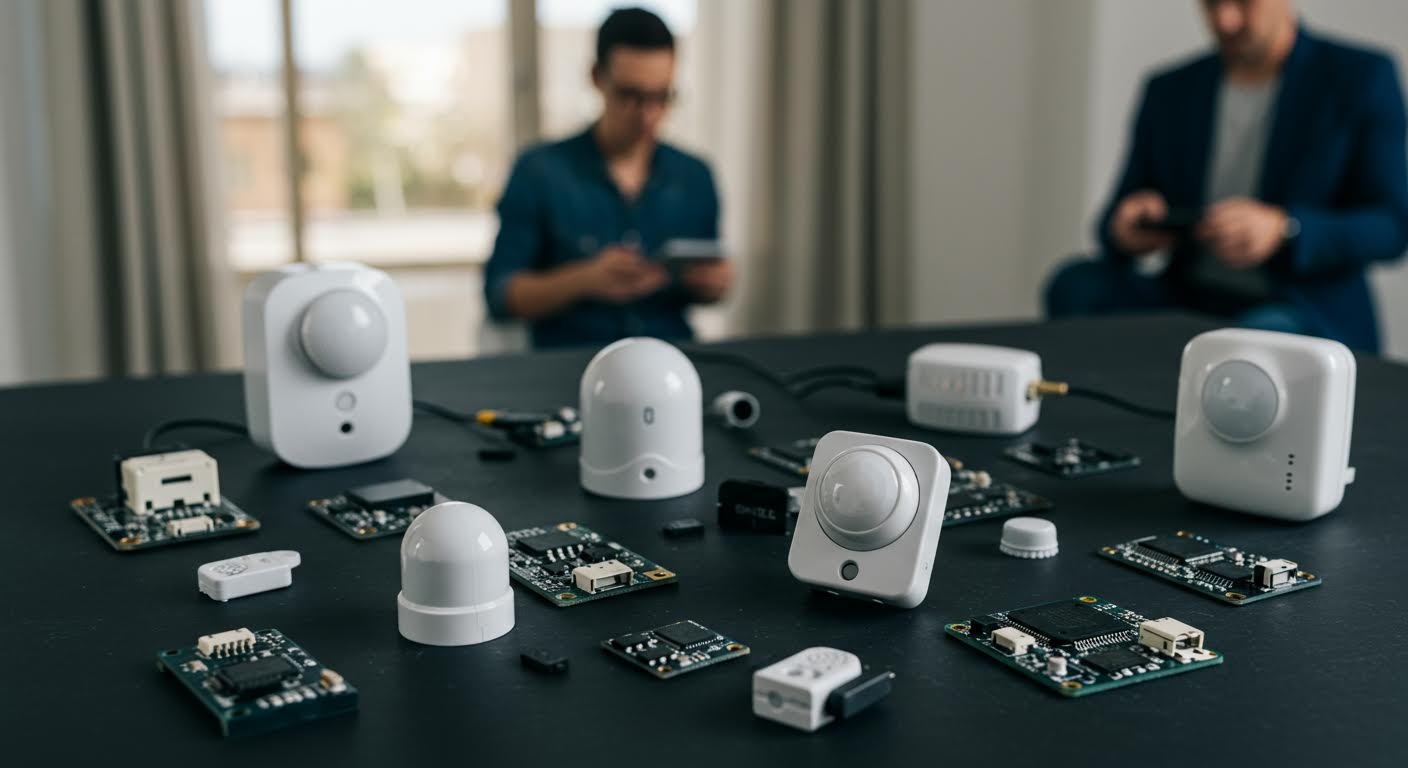
Behind every connected device and automated system lies a network of smart sensors quietly collecting data and enabling the Internet of Things ecosystem we increasingly depend on. These sophisticated devices serve as the data collection endpoints that make modern automation possible, transforming raw environmental information into actionable insights across industries.
The Hidden Foundation of Connected Systems
Smart sensors represent far more than simple data collectors—they form the nervous system of our connected world. These devices continuously monitor everything from temperature and humidity to motion and sound, feeding information into vast networks that enable automated decision-making and real-time responses.
The scale of sensor deployment has reached remarkable proportions. Modern infrastructure incorporates millions of these devices, creating dense networks that can detect patterns, predict failures, and optimize operations without human intervention. From office buildings that adjust lighting based on occupancy to industrial facilities that monitor equipment health, sensors have become integral to how systems operate efficiently.
This ubiquity stems from sensors' ability to bridge the physical and digital worlds. They translate analog conditions into digital data that can be processed, analyzed, and acted upon by software systems, creating feedback loops that enhance performance and reduce waste across countless applications.
Core Technologies Behind Smart Sensor Networks
The effectiveness of smart sensor networks depends on several key technological components working in harmony. Different sensor types excel at capturing specific data—temperature sensors for environmental monitoring, accelerometers for motion detection, and pressure sensors for industrial applications—each contributing unique information to the overall system intelligence.
Connectivity protocols form the communication backbone of these networks. WiFi enables high-bandwidth connections for data-rich sensors, while Bluetooth provides efficient short-range communication. LoRaWAN supports long-range, low-power applications, and cellular connections ensure reliability in remote deployments. Each protocol offers distinct advantages depending on the specific use case and environmental constraints.
Power management presents ongoing challenges for autonomous sensor operation. Advanced battery technologies, energy harvesting from ambient sources, and ultra-low-power circuit designs enable sensors to operate for years without maintenance. These power solutions are particularly critical for sensors deployed in remote or inaccessible locations.
Edge computing integration has revolutionized sensor capabilities by enabling real-time data processing at the collection point. Rather than sending all data to central servers, edge-enabled sensors can analyze information locally, reducing latency and bandwidth requirements while enabling immediate responses to critical conditions.
Major Platform Providers and Infrastructure
Enterprise IoT deployments rely on comprehensive platforms that can manage sensors at scale. IBM focuses on enterprise solutions that integrate sensor data with business intelligence systems, enabling organizations to derive operational insights from their connected devices. Their platform emphasizes data analytics and machine learning capabilities that transform sensor information into predictive insights.
Cisco's contribution centers on networking infrastructure that supports massive sensor deployments. Their solutions address the fundamental challenge of connecting thousands of devices reliably while maintaining security and performance standards. This includes specialized networking equipment designed for IoT environments and management tools that monitor network health across distributed sensor networks.
Amazon Web Services provides cloud services specifically designed for IoT device management and data processing. Their platform handles the massive data volumes generated by sensor networks, offering scalable storage, processing capabilities, and integration with other cloud services. This cloud-based approach enables organizations to deploy sensor networks without investing in extensive local infrastructure.
These platforms demonstrate how sensor data becomes valuable through sophisticated processing and integration capabilities. Raw sensor readings gain meaning when combined with analytics, visualization tools, and automated response systems that can act on the collected information.
Standards, Security, and Regulatory Framework
The National Institute of Standards and Technology has developed comprehensive guidelines for IoT device implementation and security, recognizing the critical importance of securing sensor networks. These standards address device authentication, data encryption, and secure communication protocols essential for protecting sensitive information collected by sensors.
Security challenges multiply with the distributed nature of sensor networks. Unlike centralized systems with defined perimeters, sensor networks create numerous potential entry points for malicious actors. Each sensor represents both a data collection point and a potential security vulnerability, requiring robust protection mechanisms at every device.
Privacy implications extend beyond traditional data collection concerns. Pervasive sensor deployment can create detailed profiles of human behavior, environmental conditions, and operational patterns. This comprehensive monitoring capability raises important questions about data ownership, consent, and the appropriate boundaries of automated surveillance.
Regulatory compliance requirements vary significantly across industries and applications. Healthcare sensors must meet strict privacy standards, while industrial sensors may face environmental and safety regulations. Financial services applications require additional security measures, and consumer devices face evolving privacy legislation that affects how sensor data can be collected and used.
Real-World Applications Across Industries
Smart city initiatives showcase sensors' potential for improving urban life through comprehensive environmental and infrastructure monitoring. Traffic sensors optimize signal timing and route planning, air quality monitors track pollution levels, and noise sensors help manage urban sound environments. These applications demonstrate how sensor networks can enhance city operations while providing valuable data for long-term planning.
Industrial IoT represents one of the most mature sensor application areas, with manufacturing facilities using extensive sensor networks for equipment monitoring and supply chain optimization. Vibration sensors detect machinery problems before failures occur, temperature monitoring ensures optimal production conditions, and tracking sensors provide real-time visibility into inventory and logistics operations.
Healthcare applications leverage both wearable and ambient sensors to monitor patient health and clinical environments. Wearable devices track vital signs and activity levels, while ambient sensors monitor air quality, temperature, and humidity in healthcare facilities. This combination enables both individual health monitoring and facility management optimization.
Agricultural IoT applications use sensors for precision farming and resource management, monitoring soil conditions, weather patterns, and crop health. These systems enable farmers to optimize irrigation, fertilization, and harvesting decisions based on real-time field conditions rather than general guidelines or seasonal patterns.
Technical Challenges and Market Outlook
Scalability issues become apparent as sensor deployments reach massive proportions. Managing thousands of devices, processing their data streams, and maintaining network performance requires sophisticated orchestration systems that can handle the complexity of large-scale IoT environments.
Data processing and storage challenges intensify with IoT scale. Sensor networks generate continuous data streams that can quickly overwhelm traditional processing systems. This has driven development of specialized IoT data platforms, edge computing solutions, and new approaches to data lifecycle management that balance storage costs with analytical requirements.
According to McKinsey research, the IoT sensor market shows continued strong growth, driven by decreasing device costs and improving connectivity infrastructure. The economic impact extends beyond sensor sales to include the value created through improved efficiency, predictive maintenance, and new data-driven services enabled by comprehensive monitoring capabilities.
Future developments focus on sensor miniaturization and enhanced capabilities. Advances in materials science, low-power electronics, and wireless communication continue to expand what's possible with sensor networks. IEEE Spectrum reports that emerging technologies like artificial intelligence integration and quantum sensing may further transform how these devices collect and process information.
The trajectory points toward even more pervasive sensor deployment as costs decrease and capabilities expand. This evolution will likely bring new applications, enhanced automation, and continued integration of physical and digital systems across every industry.