Samsung’s July 22 XR Reveal Could Set the Tone for the 2026 Smart-Glasses Race
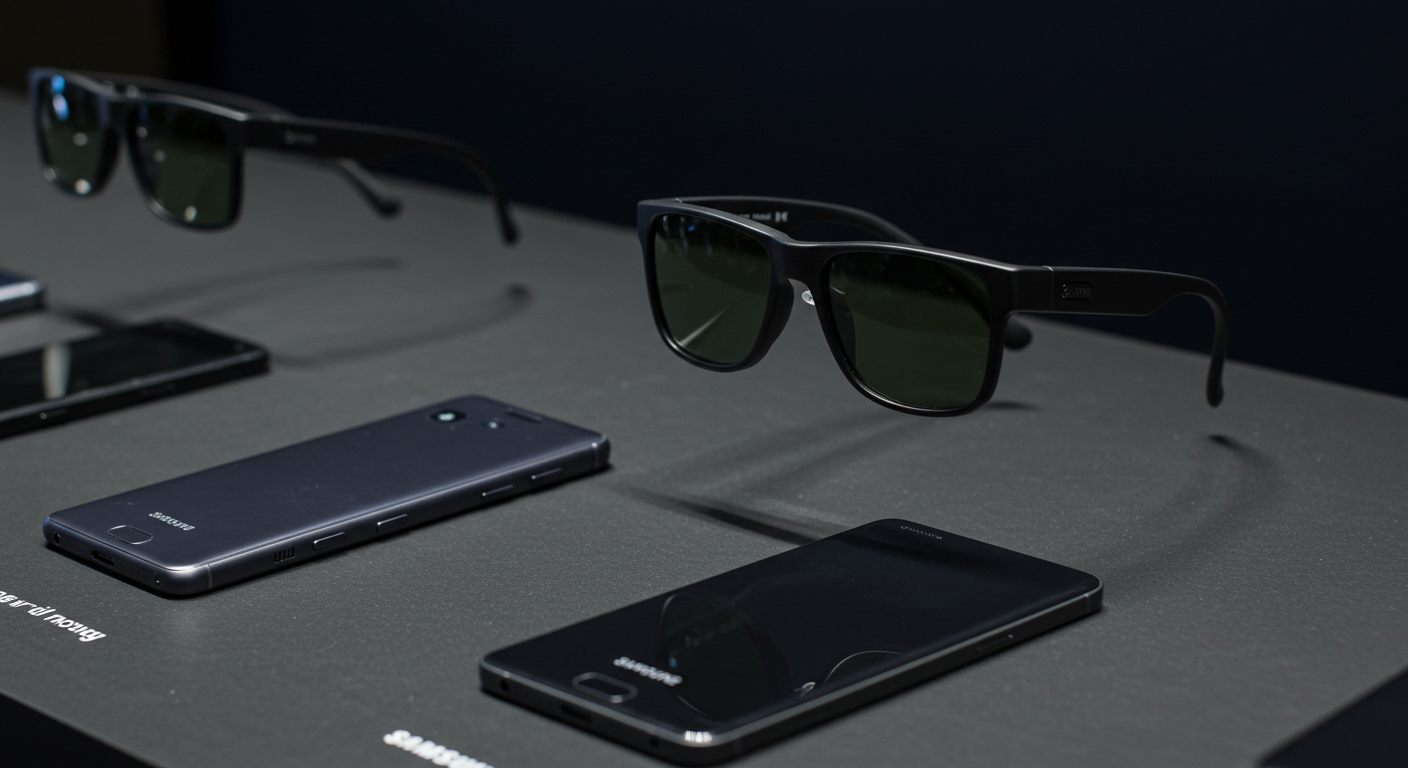
Samsung appears to be positioning July 22 as an important date for its extended-reality ambitions, with industry reporting and market attention pointing to a reveal tied to its Android XR smart-glasses efforts. What is clear from the public positioning of Samsung and Google is that both companies have been building toward a more serious push into face-worn computing. What remains less clear, at least until official event materials spell it out, is how much product detail Samsung will share and what branding it will use.
That distinction matters. Terms such as Galaxy Glasses have circulated widely in industry coverage, but unless Samsung uses that name in official materials, it is better treated as shorthand than confirmed branding. Even so, a partial reveal would still be significant, because it would suggest Samsung is moving beyond platform teasers and concept-stage messaging toward hardware meant to shape the next phase of Android XR.
Samsung sets up a July 22 XR moment
Samsung has spent the past year signaling that XR is part of its long-term device strategy, while Google has been rebuilding its wearable and immersive-computing story around Android XR, artificial intelligence, and developer support. A July 22 event tied to smart glasses would fit that trajectory. It would also give Samsung a chance to show whether its XR plans are becoming tangible products rather than future-facing promises.
The biggest question is how concrete the announcement will be. Samsung could choose a full product introduction with a launch window and hardware specifics, or it could offer a preview designed to establish direction while leaving final availability for later. Either approach would still carry strategic weight, because investors, developers, and consumers are all looking for signs that major Android hardware makers are ready to treat smart glasses as a real category.
Why this matters for Android XR
For Google, Android XR is more than another software label. It is an attempt to build a platform that can support headsets and smart glasses through shared tools, AI features, and developer pathways. Samsung is especially important to that effort because it brings manufacturing scale, retail reach, and experience turning emerging concepts into mainstream consumer electronics.
If Samsung delivers a credible smart-glasses reveal, Android XR starts to look more like the beginning of an ecosystem and less like a one-device experiment. That matters because platform success in wearables depends on more than hardware design. Developers need confidence that multiple devices, sustained software investment, and broad consumer reach are on the way. Samsung gives Google one of its strongest chances to make that case convincingly.
The partnership also combines strengths that neither company fully owns alone. Google brings the operating system, cloud services, AI capabilities, and developer infrastructure. Samsung brings industrial design, supply-chain muscle, mobile integration, and a global brand that can put new categories in front of ordinary buyers, not just enthusiasts.
What Samsung is likely trying to prove
If this device is indeed Samsung’s next major XR statement, the company is likely trying to prove four things at once: that smart glasses can be light enough for everyday wear, useful enough to justify using them regularly, connected tightly enough to the phone ecosystem people already rely on, and intelligent enough to feel like more than a novelty.
That puts the spotlight on practical use cases. Notifications, navigation, live translation, voice interaction, contextual search, and camera-assisted AI are the kinds of features that can make smart glasses feel relevant in daily life. But those use cases matter only if the hardware fades into the background. A device that feels awkward, heavy, short on battery life, or socially uncomfortable to wear will struggle no matter how advanced its software is.
Samsung also has to show that it understands the trust issues that come with face-worn technology. Privacy indicators, camera policies, and clear user controls will matter almost as much as display technology or chipset performance. In this category, comfort and social acceptance are not side issues. They are central product features.
Then there is the app question. Even excellent hardware can stall if it launches into a thin software environment. Samsung and Google need to make a persuasive case that developers will have enough tools, incentives, and audience potential to build experiences that go beyond demos.
The competition behind the smart-glasses-war framing
Calling this a smart-glasses war is best understood as industry analysis, not a literal declaration by the companies involved. But the framing exists for a reason. Multiple major players are now moving toward the same broad future: computing that shifts from the hand and pocket toward the face, ears, and voice.
Samsung’s effort sits within a crowded and evolving field. Meta has pushed aggressively into wearable glasses and mixed-reality hardware. Apple has established its own premium vision-computing path. Google is trying to avoid being left behind at the operating-system layer of that shift. Other hardware makers are also experimenting across adjacent categories, from camera-first wearables to display-equipped XR glasses and fuller mixed-reality headsets.
These products are not identical, but they shape the same competitive map. A lightweight AI-assisted pair of glasses, a passthrough mixed-reality headset, and a camera-centric wearable may target different immediate use cases, yet all are part of the broader contest to define what post-smartphone personal computing looks like. That is why a Samsung reveal would matter beyond a single product announcement.
Why 2026 could become the real proving ground
Even if July 22 produces meaningful news, 2026 may be the year that matters most. New categories are rarely won at reveal. They are judged over time through availability, pricing, software updates, battery performance, developer support, and the quality of second-wave products that fix early compromises.
A 2025 reveal can therefore serve as a setup year. It can give developers time to prepare, allow platform tools to mature, and signal to competitors that launch windows are tightening. By 2026, consumers are likely to judge these products less as futuristic experiments and more as actual buying decisions. That is when questions about value, comfort, and usefulness become much harder to avoid.
AI may also make 2026 more consequential than earlier smart-glasses cycles. Voice interaction, live translation, contextual assistance, and camera-aware features are all more compelling now than they were in previous wearable pushes. If the software is finally good enough, hardware makers have a better chance of convincing buyers that glasses can do something genuinely different from a phone or smartwatch.
What to watch on July 22
If Samsung uses July 22 to outline its smart-glasses plans, the most important details will be surprisingly basic. First, watch for the official name. That will indicate whether the company is building a distinct sub-brand, folding the product into the Galaxy identity, or previewing a concept without final commercial labeling.
Second, look for the shipping window and pricing signals. A firm launch timeframe would suggest confidence. Vague language may indicate the hardware is still more roadmap than retail product. Third, pay attention to form factor: whether Samsung is presenting true glasses, a glasses-like display device, or something closer to a compact headset.
Fourth, listen carefully to how Samsung and Google describe AI. If AI is presented as the core reason the product exists, that would suggest the device is being positioned as an always-available assistant rather than simply a new screen. Fifth, note compatibility and ecosystem messaging. Tight integration with Galaxy phones could help Samsung create a controlled user experience, but broader Android XR support would matter more for platform scale.
Finally, watch for developer language. References to app tools, partner support, APIs, and software readiness will reveal whether this is intended as a near-term ecosystem play or primarily a statement of ambition. In emerging hardware categories, the strongest launch is often the one that convinces developers there will still be a market a year later.
Whether July 22 delivers a full product debut or an early-stage preview, the event is shaping up to be a meaningful checkpoint for Samsung, Google, and Android XR. If the companies can show hardware that feels practical, intelligent, and socially wearable, they may help turn smart glasses from a recurring idea into a serious category. If not, the 2026 race will remain open for whoever best solves the basic problem the industry has wrestled with for years: making face-worn computing feel natural enough to use every day.