Samsung, Google, and Apple Are Converging on AI Glasses — but 2026 Needs an Asterisk
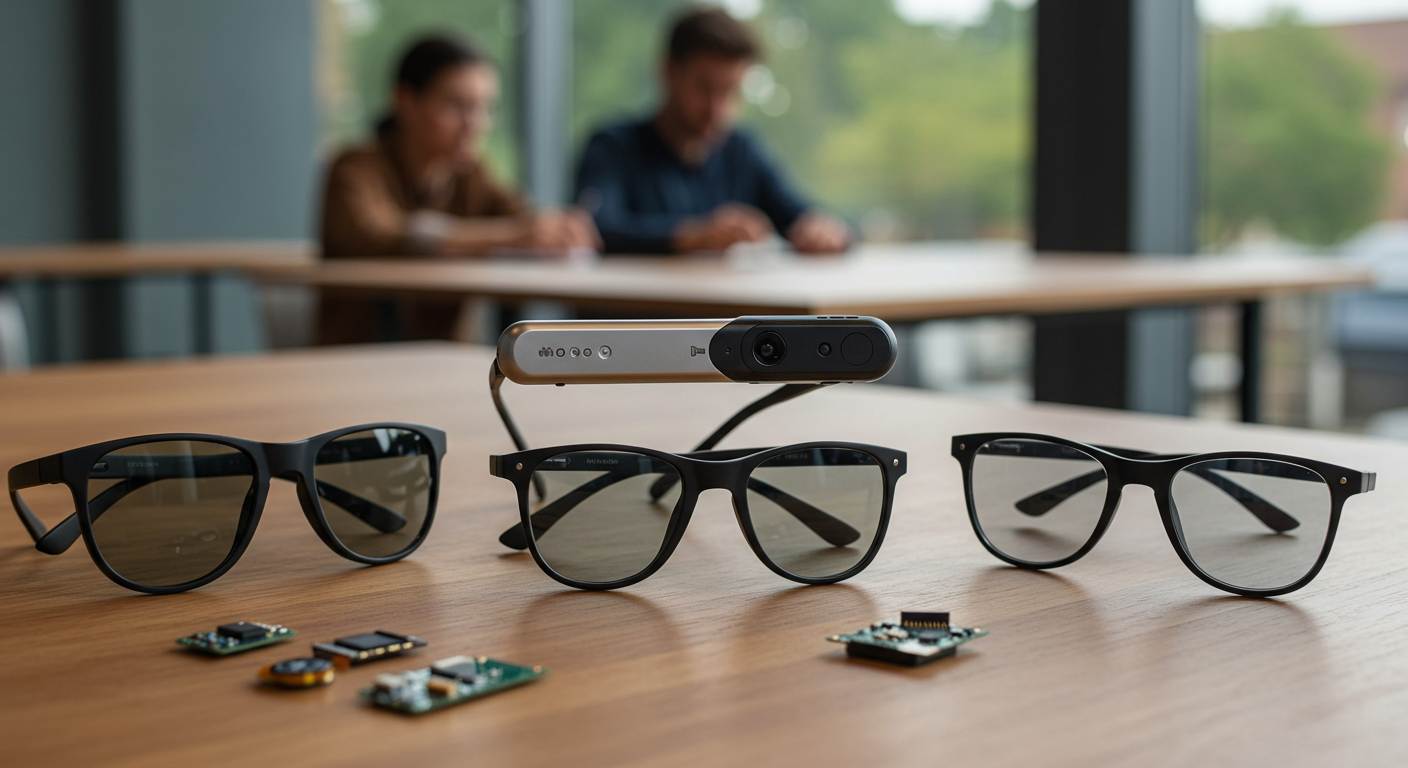
Smart glasses have spent years hovering between sci-fi promise and commercial disappointment, but that may finally be changing. What looks different now is not just better marketing or another wave of hype. It is the growing sense that major platform companies see AI-enabled glasses as a serious candidate for the next interface, one that could eventually handle some of the tasks now done by smartphones.
That is why reports linking Samsung, Google, and Apple to the category have drawn so much attention. Still, the safest way to frame the moment is this: 2026 is emerging as an important reported window for escalation in AI glasses, not a fully confirmed launch date across all three companies.
Why AI glasses are suddenly back on the agenda
Earlier smart-glasses efforts often failed because the hardware was awkward, the software felt limited, and the value proposition was hard to explain in everyday terms. AI changes that equation. A pair of glasses equipped with a camera, microphones, speakers, and optional display elements makes more sense when paired with multimodal assistants that can see, hear, translate, navigate, summarize, and respond in real time.
Advances in on-device processing, lighter components, voice interfaces, and connected AI services have made the concept more plausible than it was during the first wave of smart-glasses experiments. The idea is no longer just about putting notifications in front of your eyes. It is about creating an ambient computing layer that can interpret the world around you and respond with useful context.
That does not guarantee a breakout. But it does help explain why the category has moved from speculative concept videos to something large consumer-tech companies appear to be taking seriously.
Google looks best positioned to define the software layer
Of the companies in this race, Google has the clearest official footing on the platform side. Its Android XR push makes it clear that the company is thinking beyond headsets and toward a broader future for headworn computing, including glasses-oriented use cases.
Google's advantage is not just operating systems. It already controls many of the services that could make AI glasses useful in daily life: Search, Maps, Translate, Gemini-style assistant experiences, voice tools, Android app infrastructure, and a deep developer ecosystem. If smart glasses become practical everyday companions, Google has a strong case to provide the software layer that ties those experiences together.
That matters because glasses are unlikely to win as standalone gadgets. They will need an ecosystem of apps, cloud services, voice intelligence, and developer support. Google is arguably best positioned to offer that stack at scale.
Where things get less clear is hardware timing. Expectations around specific devices or launch windows should be attributed to external reporting from outlets such as The Verge, Bloomberg, and 9to5Google, rather than treated as fully confirmed product commitments based on official platform announcements alone.
Samsung could turn the category into a mass-market hardware fight
If Google looks strongest in software, Samsung may be best equipped to industrialize the hardware. Few companies have Samsung's combination of display expertise, component manufacturing, consumer-electronics scale, global mobile distribution, and experience bringing premium hardware to broad markets.
That combination could matter enormously if AI glasses move from niche demos to real retail products. A category like this will not be won solely by futuristic prototypes. It will depend on supply chains, battery tradeoffs, component yields, industrial design, and the ability to ship globally in meaningful volume.
Samsung also has the advantage of being able to connect any future glasses effort to a wider device ecosystem that includes phones, earbuds, wearables, and services. If the company commits to the form factor, it could quickly make AI glasses feel less experimental and more like a mainstream consumer-electronics contest.
Even so, broad corporate strength should not be mistaken for official launch confirmation. Claims about a specific 2026 Samsung AI-glasses debut rely more on industry reporting and expectations than on the general corporate material available through Samsung's public-facing Galaxy pages.
Apple's role is less confirmed but impossible to ignore
Apple is the least explicit of the three in official public material, but it may be the hardest to ignore. The company has already made its spatial-computing ambitions visible through Vision Pro, and its broader wearables strategy shows long-standing interest in devices that sit closer to the body and become part of everyday life.
That is why Apple is widely expected by analysts and reporters to keep exploring lighter, more practical headworn devices over time. A future glasses product, if it arrives, would likely be framed very differently from a high-end headset: more ambient, more socially wearable, more assistant-driven, and more dependent on seamless integration with the rest of Apple's ecosystem.
In that sense, glasses would not replace Vision Pro so much as occupy a different layer of the market. One is a high-immersion computing device. The other would aim for constant accessibility, short interactions, and all-day convenience.
But that future remains heavily tied to reporting rather than formal product confirmation. Any discussion of Apple's 2026 timing or roadmap should be treated as reported expectation, not as something Apple has publicly locked in through its newsroom materials.
This is not just a hardware race
The most important thing about AI glasses is that they are not merely another gadget category. They represent a battle over the next front end for artificial intelligence. The winners may not be the companies that ship first. They may be the ones that best combine assistant intelligence, chips, operating systems, developer tools, app ecosystems, sensors, and distribution.
In practical terms, glasses could become a new way to access AI without constantly reaching for a phone. Voice prompts, live translation, navigation overlays, object recognition, quick summaries, and contextual help all make more sense when delivered through an interface that sits on your face rather than in your pocket.
That raises the stakes. If glasses become a daily AI access point, then this is a platform fight, not just a wearables story. Ecosystem lock-in could matter more than first-mover advantage. The company that controls the assistant, the app model, and the surrounding services may have the biggest long-term edge.
What will decide whether AI glasses finally break through
The category's success will come down to basics that earlier products never fully solved. Battery life has to be good enough for real daily use. Comfort has to be high enough that people forget they are wearing the device. Cameras and microphones have to avoid triggering social backlash. Any display has to be genuinely useful rather than distracting. And the price has to feel justified by everyday utility, not novelty.
Those are tough requirements to satisfy at the same time. A product can be smart but too heavy, stylish but too limited, or powerful but too expensive. AI can make the software proposition much stronger, but it does not erase the physical constraints.
That is the real lesson from the earlier smart-glasses era. Consumers do not adopt face-worn technology just because it looks futuristic. They adopt it when it solves real problems with less friction than the device they already have.
If AI glasses break through this time, it will likely be because they handle a narrow set of high-frequency tasks extremely well: navigation, communication, translation, memory aids, contextual search, and hands-free assistance. The winning pitch will be utility, not spectacle.
The safer takeaway: the smart-glasses war is real, but the timelines need attribution
The strongest conclusion right now is not that every major company has fully confirmed an AI-glasses launch for 2026. It is that Google, Samsung, and Apple all have credible strategic reasons to compete in AI-enabled wearables, and the category is becoming too important to ignore.
Google has official momentum around Android XR and the software ecosystem that could make glasses useful. Samsung has the hardware scale to make the market more real if it pushes in. Apple remains the most powerful wildcard because its eventual entry could reshape consumer expectations overnight.
So yes, the smart-glasses war appears increasingly real. But the exact product timelines, especially any broad claim that all three will launch in 2026, still need careful attribution to external reporting rather than blanket certainty. What can be said with confidence is that AI glasses are no longer a fringe idea. They are becoming a serious strategic battleground in consumer tech.