Samsung Forecasts Record Quarterly Profit as AI Memory Demand Lifts Chip Earnings
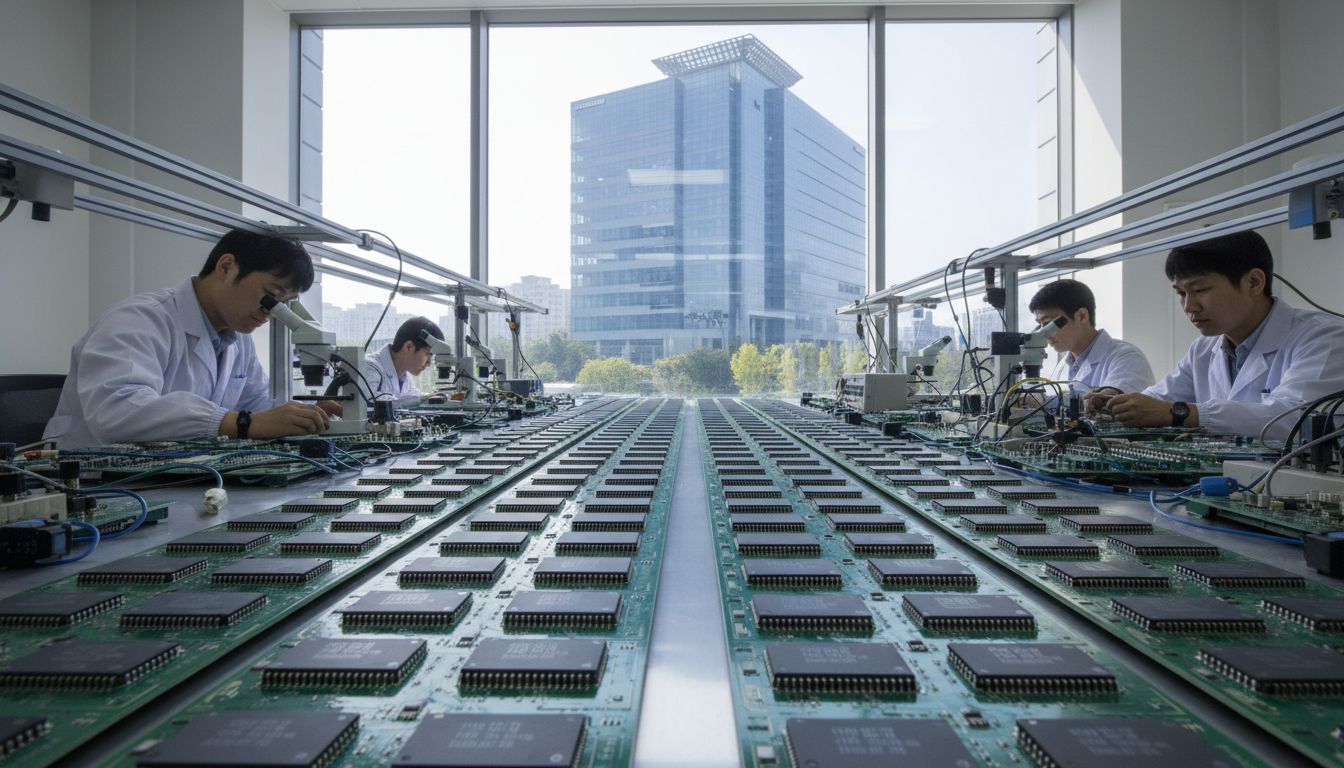
Samsung Electronics says it expects a record third quarter, with preliminary guidance calling for 107.4 trillion won in operating profit and about 195 trillion won in revenue. If confirmed in the full report, that would mark the company’s highest quarterly operating profit on record and the first time it has crossed the 100 trillion won threshold.
The headline growth rates are striking. Samsung’s projected operating profit is up about 783% from a year earlier, while revenue is expected to rise roughly 127%. The results fit a broader industry trend: AI infrastructure spending has sharply increased demand for advanced memory used in data centers and accelerators.
Samsung projects a record quarter as AI memory demand rises
The clearest figures come from Samsung Electronics’ own earnings guidance, with Reuters and other financial outlets reporting that the semiconductor business was the main driver. Investors will still need the full earnings release to see how profits were distributed across divisions.
More broadly, the results suggest the AI buildout is reshaping the semiconductor cycle. Demand for memory products used in AI servers, including high-bandwidth memory and DRAM, has become a major source of pricing strength and earnings momentum across the sector.
Why AI is driving the surge
A recurring theme in coverage is that Samsung is benefiting from the same forces lifting the wider chip industry: aggressive spending on AI infrastructure, tight supply of premium memory, and stronger pricing for components used in high-performance computing systems.
High-bandwidth memory has drawn particular attention because it is closely tied to AI accelerators and advanced server deployments. Reports also point to broader strength in DRAM and other memory categories, suggesting the quarter was not driven by a single niche product but by a wider upswing in memory demand.
Even so, the most definitive point is a narrower one: Samsung has issued strong preliminary numbers. Broader conclusions about how long the current upswing will last remain interpretation rather than confirmed fact.
What is confirmed versus what is interpretation
What is confirmed: Samsung has guided to 107.4 trillion won in operating profit and roughly 195 trillion won in revenue for the quarter. Those figures imply massive year-over-year growth and a record operating-profit result.
What remains less settled is the internal mix behind the quarter. Outside reports and analyst commentary suggest semiconductors generated most of the gains, while some non-chip businesses may have been comparatively weaker. But those details should be treated cautiously until Samsung provides segment-level results and management commentary in its full earnings release.
Similarly, claims that the quarter weakens the case for a near-term memory peak, or proves the AI spending wave still has room to run, are best understood as market interpretation. They may prove correct, but they are still forward-looking.
Why investors may still debate the results
Even record numbers may not settle the debate around Samsung’s outlook. One reason is expectations: when the market is already positioned for exceptional performance, a huge earnings print can still be judged against even higher forecasts.
Another concern raised in business coverage is durability. The recent memory boom has been closely tied to AI-related capital spending, and investors will be watching for signs that demand remains broad and sustained rather than concentrated in a narrow slice of customers or products.
There is also the usual cycle question hanging over memory markets. As many analysts note, pricing strength can look unstoppable near a peak, which is why commentary around supply discipline, long-term agreements, and order visibility may matter almost as much as the headline profit number.
What to watch in the full earnings release
The next key step is Samsung’s full report, which should provide more detail on which divisions powered the quarter and whether margins expanded evenly across the business. Investors will likely focus on how much of the strength came from semiconductors versus smartphones, consumer electronics, or display operations.
Management commentary on HBM demand, supply agreements, pricing trends, and capacity expansion will also be closely watched. Those details could help clarify whether this quarter reflects a temporary spike, a still-strengthening AI cycle, or something in between.
For now, the clearest takeaway is straightforward: Samsung’s preliminary guidance points to an extraordinary quarter, and AI-related memory demand appears to be at the center of it. The deeper question is not whether the quarter was strong, but how sustainable this level of performance will be in the quarters ahead.