Reported New Glenn pad incident could add pressure to Amazon’s Project Kuiper deadline
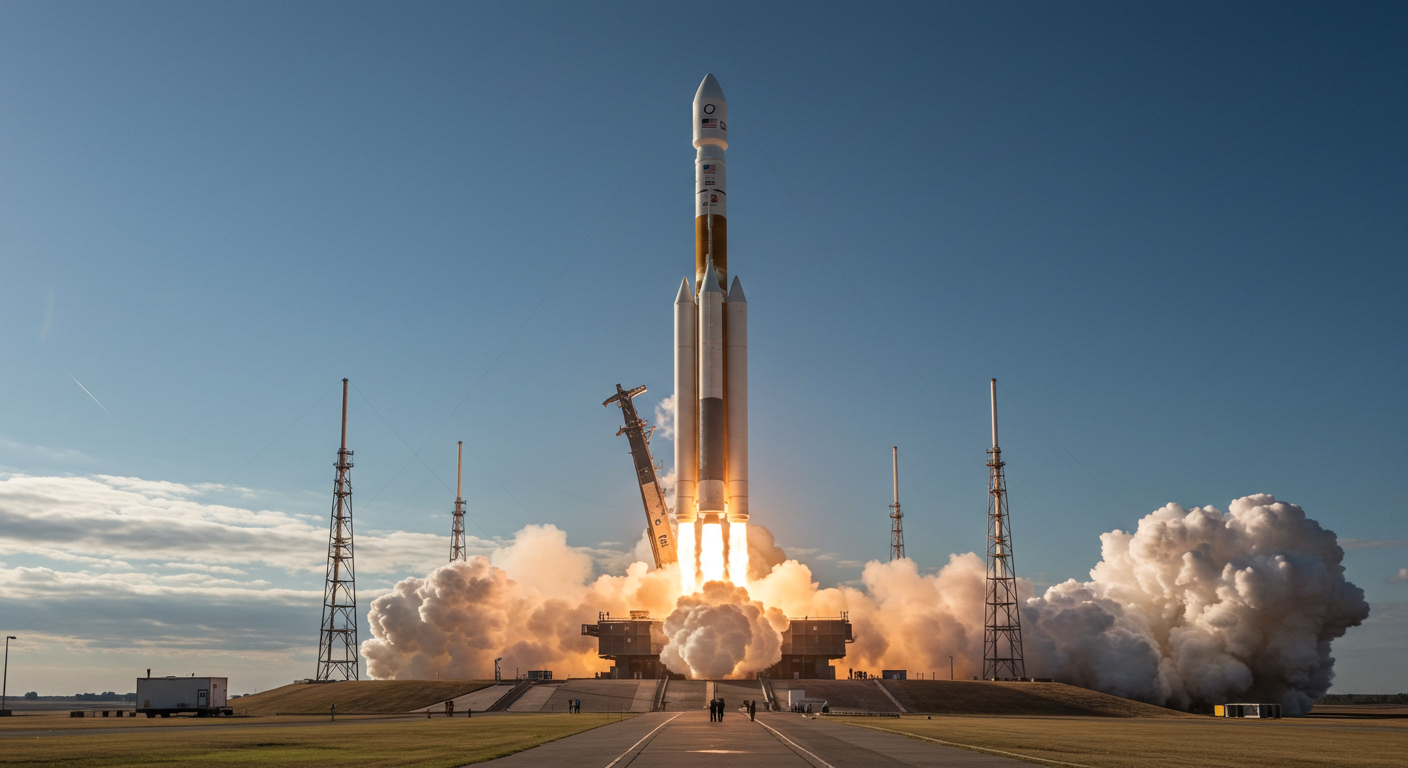
Reports of an incident involving Blue Origin’s New Glenn launch infrastructure are drawing close attention because even a ground-test setback could affect Amazon’s Project Kuiper deployment schedule. The key question is what actually happened: whether the event was a pad explosion, a static-fire anomaly, or another test-related failure will determine how serious the disruption may be for upcoming launches.
As early reporting continues to develop, the most important details are still being clarified by Blue Origin and independent space-industry outlets. Those details include when the incident occurred, whether the rocket was fueled or in active testing, whether anyone was injured, and how much damage was done to the pad or support equipment. Those distinctions matter because a limited test anomaly might cause only a modest delay, while major pad damage or loss of a vehicle could trigger a much longer stand-down.
Why New Glenn matters for Project Kuiper
Blue Origin is one of several launch providers expected to help deploy Amazon’s Project Kuiper broadband constellation. That means New Glenn is not Amazon’s only option, but it is still an important part of the company’s long-term launch strategy. If New Glenn faces a prolonged grounding, Amazon could lose flexibility at a moment when launch cadence matters more than ever.
That does not mean a single incident would automatically derail Kuiper’s timetable. Much depends on how many Kuiper missions were expected to fly on New Glenn in the near term, how quickly Blue Origin can return to flight, and whether Amazon can move payloads to other providers without creating new bottlenecks.
The July 30 milestone and the FCC requirement
The broader concern comes from the Federal Communications Commission licensing framework tied to Project Kuiper. Under widely cited FCC deployment terms, Amazon is expected to place 1,618 satellites in orbit by July 30, 2026, representing half of its authorized 3,236-satellite constellation. That benchmark has become a central measure of whether Kuiper is on schedule.
If Amazon misses that target, the result would not necessarily be an immediate collapse of the program. In practice, a missed milestone could lead to requests for relief, waiver filings, revised deployment negotiations, or other regulatory steps, depending on how the Federal Communications Commission evaluates Amazon’s progress and explanation.
How much damage a delay could do
The practical impact of any New Glenn disruption depends largely on how long it lasts. A pause measured in weeks would be far less serious than a stand-down lasting months. The severity also depends on whether the issue is limited to a test article or launch-pad system, or whether it points to a deeper rocket problem that requires design changes, hardware replacement, or an extended investigation.
For Kuiper, the key issue is not simply whether one launch slips. It is whether a New Glenn interruption reduces the total number of launch opportunities available across Amazon’s full mix of providers. If other rockets remain on schedule, Amazon may still retain enough deployment capacity to keep the pressure manageable. If multiple providers run into congestion or technical delays at the same time, the risk to the 2026 milestone rises significantly.
Amazon’s fallback options
Amazon has tried to reduce exactly this kind of risk by spreading Kuiper launches across multiple providers. That diversification gives the company some ability to reshuffle missions if one rocket family suffers a setback. Even so, launch contracts do not guarantee instant flexibility. Different vehicles have different payload capacities, fairing dimensions, integration schedules, and manifest constraints.
In other words, alternative rockets can soften the impact of a Blue Origin delay, but they may not be able to absorb every affected Kuiper mission on short notice. Launch availability across the industry remains tight, and satellite deployment campaigns work best when hardware production, launch readiness, and regulatory timing all line up.
What to watch next
The next meaningful updates will likely come from Blue Origin’s formal description of the event and any timeline for investigation or return to operations. Beyond that, Amazon’s comments on Kuiper scheduling will be especially important, since the company is best positioned to say whether launch assignments are being adjusted.
It will also be worth watching for any Federal Communications Commission filings if deployment pressure increases, along with follow-up reporting from major commercial-space outlets such as SpaceNews, Ars Technica, and Reuters. Until the exact nature of the New Glenn incident is confirmed, the clearest conclusion is still a narrow one: any serious delay to Blue Origin’s heavy-lift launcher would add pressure to Amazon’s already demanding Kuiper schedule, but the scale of that threat depends on facts that are still emerging.