Refrigeration Hackers Hit 115 Supermarkets, Then Reach France's Blood Supply
Refrigeration Hackers Hit 115 Supermarkets, Then Reach France's Blood Supply
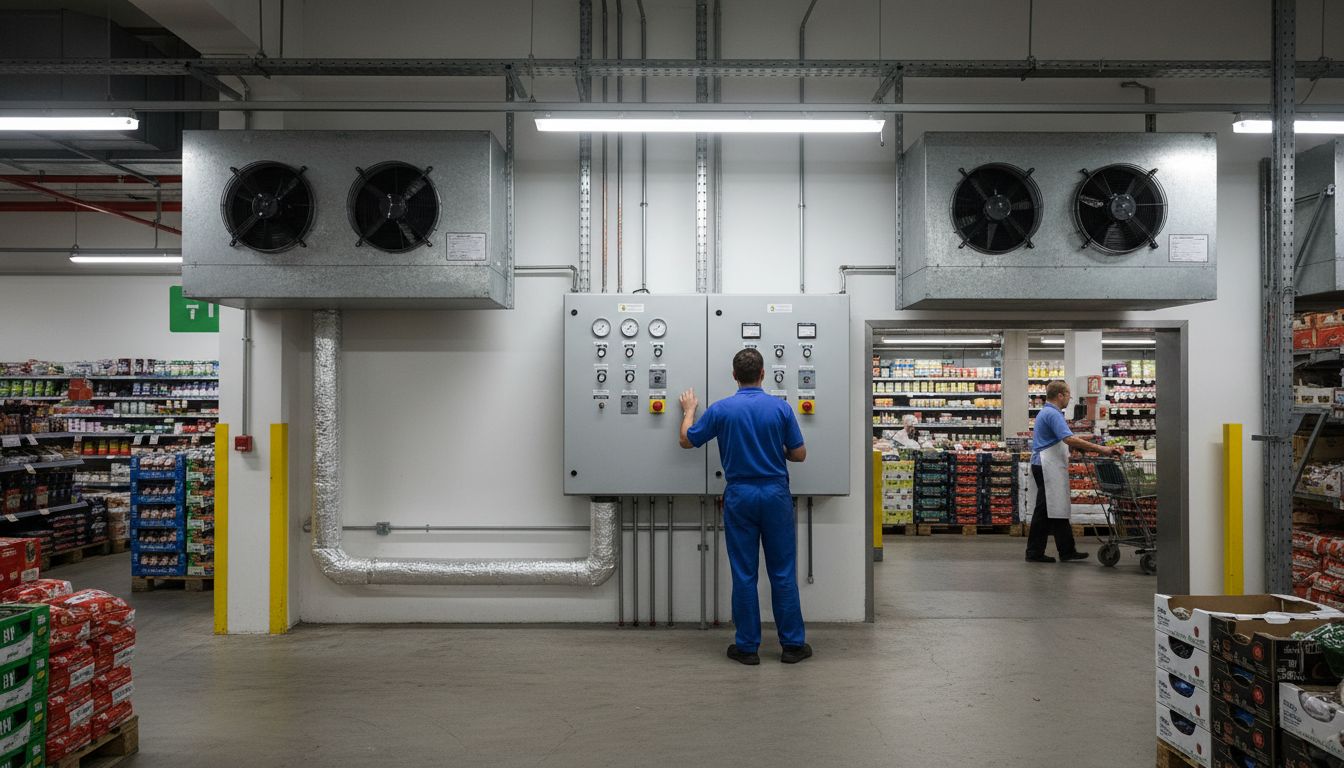
A pattern is emerging around cold-chain infrastructure in Europe. In recent weeks, attackers remotely manipulated refrigeration systems at more than 115 supermarkets and stores across six countries. Not long after, France's national blood service confirmed a related incident affecting its refrigeration supplier. Taken together, these events suggest a recurring exploitation method rather than two unrelated incidents — though attribution and the full scope of the campaign remain unconfirmed.
Inside the Supermarket Attacks: 115+ Stores, Six Countries
Stores across Belgium, the Netherlands, Sweden, Luxembourg, Ireland, and Estonia were affected, with approximate per-chain counts including roughly 40 Ahold Delhaize locations, 15 Carrefour stores, and 13 SuperValu locations. The attack mechanism reportedly involved remotely activating defrost cycles and altering temperature settings; at one ICA store, a unit was reportedly pushed to around 50°C. Refrigeration vendor Sabcobel has been linked to several of the affected locations. Coverage has drawn an explicit comparison to a prior supermarket incident in France, framing this as a possible recurring exploitation pattern rather than an isolated event.
Escalation: France's Blood Service Targeted Through Its Supplier
France's Établissement Français du Sang, the national blood service, confirmed a cyberattack affecting its refrigeration equipment supplier, Coolworld Rentals. The incident, which occurred on November 2, reportedly disrupted temperature and defrost settings at three blood storage facilities. The EFS has stated that no health impact or loss of blood products occurred. A recurring concern raised in coverage is that this marks critical healthcare infrastructure being affected through a third-party vendor relationship — a notable escalation from retail refrigeration to a facility handling medical supplies.
The Technical Thread: Danfoss and Copeland/Dixell Controllers
Both sets of incidents have been connected in reporting to refrigeration controllers made by Danfoss and Copeland/Dixell. Two vulnerabilities affecting Danfoss AK-SM 8xxA controllers, tracked as CVE-2025-41450 and CVE-2025-41451, were disclosed in 2025. It has not been confirmed that these specific vulnerabilities were the ones exploited in either the supermarket attacks or the incident linked to the EFS. Danfoss has indicated that remediation may require physical hardware changes rather than a software patch alone, suggesting the underlying exposure may not be fully resolved through remote updates.
What Remains Unknown
Several important questions remain open. The identity of the attacker or attackers has not been established. Whether the supermarket incidents across six countries were coordinated, opportunistic, or coincidental is still unclear. Some unverified claims have circulated, including suggestions of additional affected countries and speculation about attacker identity; these have not been corroborated and should be treated with caution. It is worth distinguishing between what affected organizations and vendors have directly confirmed — such as the EFS's statement on the November 2 incident — and technical root-cause questions, including whether the known Danfoss vulnerabilities were actually exploited, which remain unconfirmed.
Why This Matters for Critical Infrastructure Security
A recurring concern among security observers is that refrigeration and other industrial control systems, often managed through remote monitoring software provided by third-party vendors, represent a supply-chain exposure that extends well beyond retail. The movement from supermarket cold storage to a national blood service's facilities illustrates how a vulnerability in shared vendor infrastructure can ripple across very different sectors with very different stakes. Operators of similar cold-chain and industrial control systems may want to treat this as a signal to examine vendor remote-access arrangements, request hardware-level remediation where software patches are insufficient, and monitor for further disclosures tied to the same control system vendors.