Open-Architecture Chips and the Future of AI Hardware
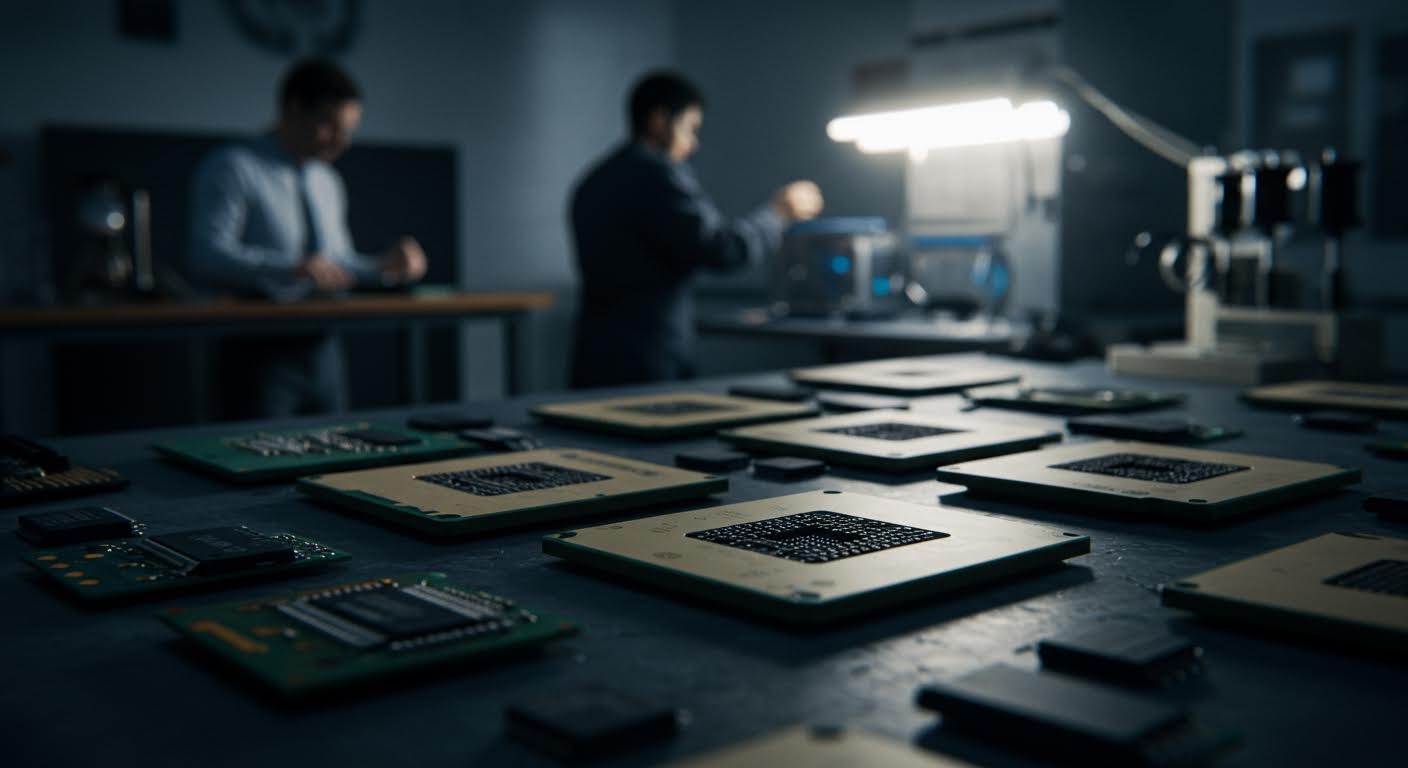
The semiconductor industry stands at the brink of a fundamental transformation. Open-architecture chip designs are emerging as a powerful alternative to traditional proprietary processors, promising to democratize AI hardware development and reshape the competitive landscape of artificial intelligence computing.
The Open-Architecture Revolution: Breaking Down Chip Design Barriers
Open-architecture chip designs represent a radical departure from the closed, proprietary models that have dominated the semiconductor industry for decades. At their core, these designs provide publicly available instruction set architectures (ISAs) that anyone can use, modify, and implement without licensing fees or restrictions.
RISC-V has emerged as the flagship example of this open approach. Unlike Intel's x86 architecture or ARM's proprietary designs, RISC-V International offers a free and open ISA that enables companies, researchers, and developers to create custom processors tailored to specific applications. This openness eliminates the traditional barriers to entry in chip design, where licensing costs and restrictions have historically limited innovation to well-funded corporations.
The fundamental difference lies in accessibility and flexibility. While proprietary architectures require companies to work within predetermined constraints and pay substantial licensing fees, open architectures provide a foundation for unlimited customization. This democratization effect is particularly significant for AI applications, where specialized processing requirements often demand unique architectural solutions.
Tailoring Silicon for AI: The Customization Advantage
Artificial intelligence workloads present unique computational challenges that general-purpose processors struggle to handle efficiently. AI applications typically involve massive parallel processing, specialized mathematical operations, and data movement patterns that differ significantly from traditional computing tasks.
Open-architecture designs excel in this environment because they allow engineers to optimize processors specifically for machine learning operations. Custom AI accelerators built on open architectures can incorporate specialized instruction sets for matrix operations, implement unique memory hierarchies optimized for neural network data flows, and include purpose-built functional units for AI-specific computations.
Several companies have already demonstrated the performance advantages of this approach. According to industry analysis from Semiconductor Engineering, custom AI chips based on open architectures have shown significant improvements in energy efficiency and processing speed for specific machine learning tasks compared to general-purpose alternatives. These purpose-built processors can achieve better performance per watt ratios and reduced latency for inference operations.
Industry Adoption: From Startups to Tech Giants
The adoption of open-architecture designs for AI applications is gaining momentum across the industry. Major technology companies are increasingly exploring RISC-V implementations for their AI infrastructure, recognizing the potential for cost reduction and performance optimization.
Startups have been particularly aggressive in embracing open architectures, using the freedom from licensing constraints to develop innovative AI accelerator designs. These companies can focus their resources on architectural innovation rather than licensing fees, enabling more rapid development cycles and specialized solutions.
The ecosystem supporting open-architecture AI development has expanded significantly. Development tools, software stacks, and optimization frameworks specifically designed for RISC-V AI applications continue to mature, making it easier for companies to adopt these architectures for production systems.
Investment patterns reflect this growing confidence in open architectures. Venture capital funding for RISC-V and open-architecture chip companies has increased substantially, indicating strong market belief in the commercial viability of these approaches.
Challenges and Growing Pains
Despite the promising potential, open-architecture chips face significant challenges in competing with established proprietary alternatives. The ecosystem maturity gap remains substantial, with proprietary architectures benefiting from decades of software optimization, toolchain development, and industry standardization.
Software support represents a critical limitation. While open architectures offer hardware flexibility, the software tools, compilers, and optimization frameworks needed to fully exploit this flexibility are still catching up to the sophistication available for established architectures. This gap particularly affects complex AI workloads that require advanced compiler optimizations and runtime systems.
Performance optimization for cutting-edge AI applications remains challenging. According to EE Times analysis, achieving optimal performance requires deep expertise in both hardware design and AI workload characteristics. The learning curve for companies transitioning from established architectures can be steep.
Industry standardization presents another hurdle. The flexibility that makes open architectures attractive can also lead to fragmentation, where different implementations become incompatible. Establishing standards while preserving the benefits of openness requires careful coordination across the industry.
Future Horizons: Beyond Traditional Computing
The long-term potential of open-architecture chips extends far beyond current AI applications. Neuromorphic computing, which mimics the structure and function of biological neural networks, could benefit significantly from the customization capabilities that open architectures provide.
Edge AI applications present particularly compelling opportunities for open-architecture designs. The constraints of edge computing—limited power, specific performance requirements, and cost sensitivity—align well with the customization advantages of open architectures. Custom edge AI processors could achieve optimal trade-offs between performance, power consumption, and cost for specific applications.
IEEE Spectrum research highlights the emergence of quantum-classical hybrid computing systems as another frontier where open architectures could prove valuable. The interfaces between quantum and classical processing elements may require specialized architectures that benefit from the flexibility of open designs.
These developments could fundamentally alter the structure of the semiconductor industry, shifting power from a few dominant architecture licensors to a more distributed ecosystem of specialized designers and manufacturers.
Market Impact and Strategic Implications
The broader adoption of open-architecture chips could significantly reshape power dynamics in the semiconductor industry. The current model, where a few companies control the fundamental architectures underlying most processors, could give way to a more distributed landscape where innovation comes from many sources.
This shift would reduce the industry's dependency on traditional semiconductor giants, potentially accelerating innovation and reducing costs across the ecosystem. Companies would have greater control over their hardware destiny, enabling more strategic differentiation through custom silicon.
The geographic distribution of innovation and manufacturing capabilities could also change. Open architectures lower barriers to entry, potentially enabling more countries and regions to participate meaningfully in advanced semiconductor development.
The timeline for mainstream adoption remains uncertain, but current trends suggest that open-architecture chips will capture increasing market share over the next decade. AnandTech analysis indicates the combination of cost advantages, performance benefits for specialized applications, and the growing maturity of supporting ecosystems creates a compelling case for broader adoption.
As AI continues to drive demand for specialized computing capabilities, open-architecture chips are positioned to play an increasingly important role in enabling the next generation of artificial intelligence applications. The companies and organizations that successfully navigate this transition may find themselves at the forefront of a transformed semiconductor landscape.