Nuclear Fusion vs Nuclear Fission: Which Powers the Future?
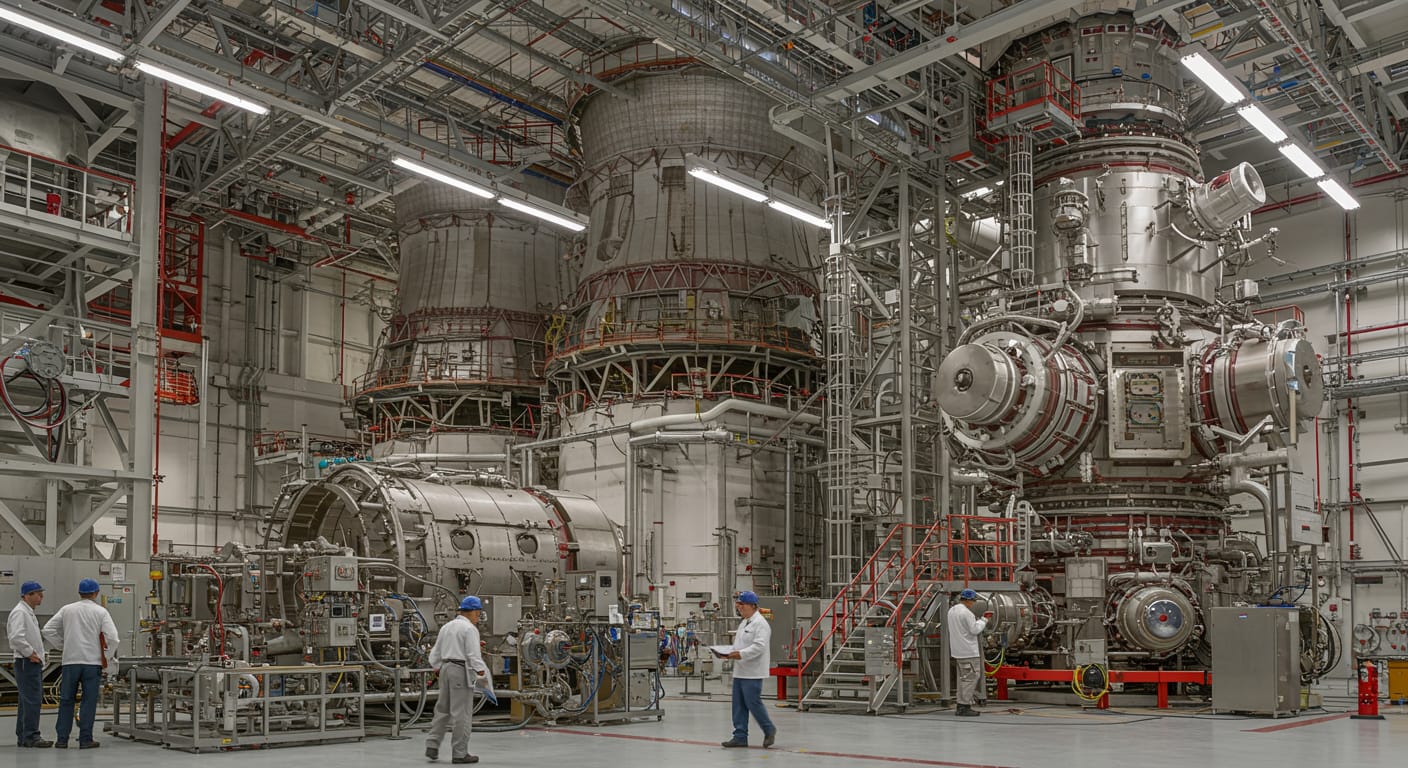
As the world grapples with climate change and surging energy demands, nuclear power has emerged as a cornerstone of the clean energy transition. Two distinct nuclear technologies—fusion and fission—offer radically different pathways toward a carbon-free energy future, each with unique advantages, challenges, and deployment timelines.
The Nuclear Energy Landscape: Two Paths Forward
Nuclear energy currently provides about 10% of global electricity generation, making it one of the largest sources of low-carbon power. As nations commit to ambitious net-zero emissions targets, nuclear technologies are experiencing a renaissance as reliable alternatives to fossil fuels that deliver consistent baseload power regardless of weather conditions.
The nuclear sector presents two fundamentally different approaches: nuclear fission, which splits heavy atomic nuclei to release energy, and nuclear fusion, which combines light nuclei. While fission powers today's nuclear plants, fusion represents the holy grail of nuclear technology, promising even cleaner and safer energy production.
Nuclear Fission: The Proven Powerhouse
Nuclear fission operates by splitting uranium-235 or plutonium-239 nuclei when struck by neutrons, unleashing tremendous energy along with additional neutrons that sustain the chain reaction. This process has been harnessed commercially for over six decades, with approximately 440 operational reactors worldwide generating reliable electricity around the clock.
Fission's greatest strength lies in its maturity and proven track record. Modern nuclear plants can operate for 60-80 years, delivering consistent baseload power with capacity factors exceeding 90%. The technology has demonstrated remarkable scalability, with countries like France generating over 70% of their electricity from nuclear fission.
However, fission faces formidable challenges that have hindered its broader adoption. High-level radioactive waste requires secure storage for thousands of years, while the risk of accidents—though statistically minimal—carries catastrophic consequences. Public perception remains challenging following incidents at Chernobyl and Fukushima, and construction costs for new plants have skyrocketed in many markets.
Nuclear Fusion: The Holy Grail of Clean Energy
Nuclear fusion recreates the process that powers the sun, combining light hydrogen isotopes (deuterium and tritium) at extremely high temperatures and pressures to form helium and release energy. This reaction demands temperatures exceeding 100 million degrees Celsius, creating extraordinary engineering challenges but also significant safety advantages.
Unlike fission, fusion reactions cannot trigger meltdowns—if containment is compromised, the reaction simply stops. The process produces no long-lived radioactive waste, generating only harmless helium as a byproduct. The fuel sources are virtually limitless, with deuterium extracted from seawater and tritium bred from abundant lithium.
Recent breakthroughs have electrified the fusion community. In December 2022, researchers at the National Ignition Facility achieved fusion ignition, producing more energy from fusion reactions than was directly input by lasers—a historic milestone. The ITER project, a $20 billion international collaboration, aims to demonstrate sustained fusion reactions by the 2030s, while private companies pursue alternative approaches with aggressive commercial timelines.
Head-to-Head Comparison: Key Differentiators
The energy potential of both technologies is staggering, but their profiles differ dramatically. Fusion reactions release about four times more energy per unit mass than fission, theoretically offering superior efficiency. However, the extreme conditions required for fusion have proven far more challenging to achieve and maintain than fission's relatively straightforward nuclear reactions.
Safety considerations overwhelmingly favor fusion. While modern fission reactors incorporate multiple safety systems, they still house large inventories of radioactive materials and require active cooling systems. Fusion reactors would be inherently safe, with zero risk of runaway reactions or long-term contamination.
Environmental impact assessments show both technologies vastly outperform fossil fuels, but fusion holds a clear advantage with minimal radioactive waste production. Fission generates high-level waste requiring geological storage for millennia, while fusion's main radioactive concern involves activated reactor materials with much shorter half-lives.
Economically, fission currently holds the advantage of commercial viability, though costs vary dramatically by region and regulatory environment. Fusion's economic prospects remain uncertain, with estimates for commercial fusion power ranging from competitive to expensive depending on technological breakthroughs and deployment scale.
Timeline to Commercial Viability
Nuclear fission continues advancing through next-generation reactor designs including small modular reactors (SMRs) and Generation IV technologies that promise enhanced safety and efficiency. Several SMR designs are approaching commercial deployment in the mid-2020s, while advanced reactors utilizing different fuel cycles could reach market by the 2030s.
Fusion faces a longer commercial timeline despite recent progress. ITER aims to demonstrate sustained fusion by 2035, but commercial fusion power plants likely won't arrive until the 2040s or later. Private fusion companies claim more aggressive schedules, with some targeting commercial operations in the 2030s, though these timelines remain highly optimistic given the monumental technical challenges involved.
Technical hurdles persist for both technologies. Fission must overcome waste management challenges, cost competitiveness, and public acceptance, while fusion must solve complex materials science problems, achieve reliable plasma control, and develop tritium breeding capabilities. Investment trends reveal surging private sector interest in both advanced fission and fusion technologies.
The Verdict: Complementary Rather Than Competitive
Rather than viewing fusion and fission as competing technologies, energy experts increasingly recognize them as complementary solutions for different phases of the clean energy transition. Fission can contribute immediately to decarbonization goals while fusion develops toward commercial viability.
Regional factors will heavily influence deployment strategies. Countries with existing nuclear expertise and infrastructure may prioritize advanced fission reactors, while nations seeking to establish new nuclear capabilities might wait for fusion technologies. Energy security considerations, resource availability, and public acceptance will shape these critical decisions.
Policy support proves essential for both technologies. Government funding drives fusion research and development, while regulatory frameworks and financing mechanisms determine fission's commercial success. Many experts advocate for sustained investment in both pathways to maximize the likelihood of achieving ambitious clean energy goals.
The nuclear energy future likely encompasses both fusion and fission technologies, each serving distinct roles in a diversified clean energy portfolio. While fusion promises the ultimate solution to humanity's energy needs, fission remains indispensable for near-term decarbonization efforts. Success in addressing climate change may well depend on advancing both nuclear technologies simultaneously rather than choosing between them.