Nuclear Fusion vs Nuclear Fission: Which Powers the Future?
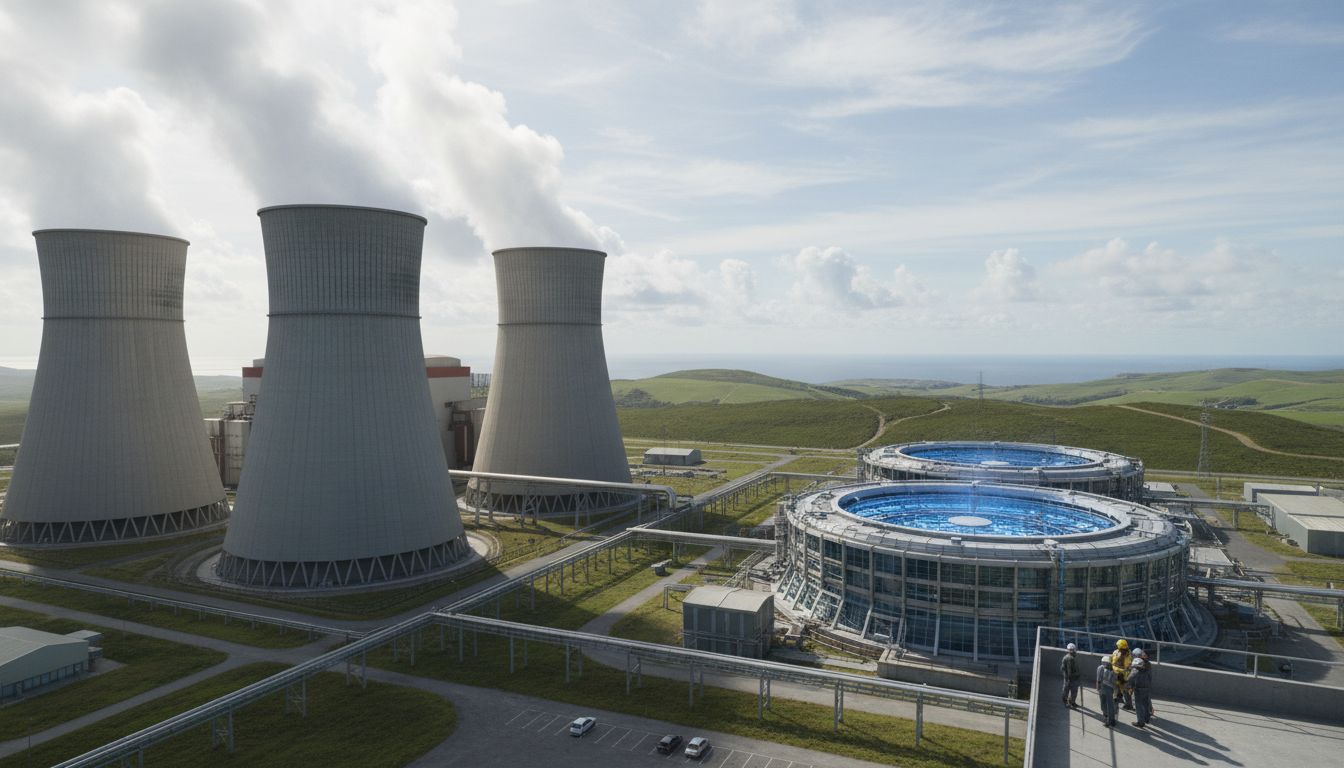
Nuclear Fusion vs Nuclear Fission: Which Powers the Future?
As the world searches for reliable, low-carbon sources of electricity, two forms of nuclear energy are drawing renewed attention: fission and fusion. Fission has quietly supplied a significant share of the world's low-carbon power for decades, while fusion, long considered a distant dream, has recently captured headlines following notable laboratory milestones. The central question driving investment, policy, and public curiosity alike is which of these technologies will ultimately shape the future of energy production, and over what timeframe.
Fission is an established, commercially mature technology with a well-understood safety and regulatory framework. Fusion, by contrast, promises abundant fuel and minimal long-lived waste, but remains in the experimental and demonstration phase. Growing investor interest, driven in part by climate goals and recent ignition experiments, has intensified the comparison between a technology already deployed at scale and one still working to prove commercial feasibility.
The Physics: How Fission and Fusion Differ
Fission works by splitting heavy atomic nuclei, typically uranium-235, into smaller fragments, releasing energy in the process. This reaction powers today's commercial nuclear plants. Fusion operates on the opposite principle: it combines light hydrogen isotopes, usually deuterium and tritium, into heavier nuclei, releasing energy in a process similar to the one that powers the sun.
This core scientific distinction explains why the two technologies face such different engineering paths. Fission reactions are relatively straightforward to initiate and sustain, which is part of why fission reactors have operated commercially for decades. Fusion, however, requires extreme temperatures and pressures to force nuclei together, conditions that are difficult to create and even harder to sustain in a controlled, continuous way.
Fission Today: A Mature, Deployed Technology
The World Nuclear Association reports that fission reactors currently operate in dozens of countries, forming a substantial part of the global low-carbon electricity mix. This global footprint reflects decades of accumulated operational experience, established supply chains, and well-developed commercial infrastructure.
Fission also benefits from mature safety and regulatory frameworks that have evolved over more than half a century of civilian nuclear power use. These frameworks address reactor design standards, operational oversight, and the long-term management of radioactive waste, an area that continues to require careful planning given the long-lived nature of certain byproducts.
Fusion's Promise and Technical Hurdles
Fusion's theoretical appeal is considerable. Its fuel sources, including deuterium derived from water, are abundant, and the process produces comparatively little long-lived radioactive waste compared to fission. However, the International Atomic Energy Agency and ITER both note that achieving a sustained, net-positive fusion reaction remains an extraordinary technical challenge.
Key hurdles include maintaining stable plasma confinement at temperatures far hotter than the sun's core, reaching a point where the energy produced exceeds the energy required to sustain the reaction, and developing materials capable of withstanding the intense conditions inside a fusion reactor over long periods. ITER, an international collaborative project, was established specifically to test whether fusion can be achieved at a scale relevant to future power generation, serving as a critical proving ground for the technology.
Recent Momentum: Fusion Research Milestones and Investment
In recent years, fusion research has moved from purely theoretical work toward notable experimental milestones. Ignition experiments reported in Nature have demonstrated that controlled fusion reactions can, under specific laboratory conditions, produce more energy than they consume, a long-sought benchmark in the field.
These developments have coincided with a marked increase in both public and private investment. Ongoing coverage from Reuters reflects a broader shift in tone: fusion is increasingly discussed not merely as a scientific curiosity but as a technology moving, however gradually, toward demonstration-scale ambitions. Still, researchers and industry observers generally caution that commercial fusion power remains years, if not decades, away.
Comparing Safety, Cost, and Deployment Timelines
Safety considerations differ meaningfully between the two technologies. Fission reactors are designed with multiple layers of safety systems and benefit from decades of regulatory refinement, though they do require long-term management of radioactive waste. Fusion reactions, by their physical nature, cannot sustain uncontrolled chain reactions in the way fission can, and they produce less long-lived waste, though the technology's largely experimental status means fewer large-scale, real-world safety precedents currently exist.
Cost and regulatory factors also diverge. Fission benefits from established construction practices and regulatory pathways, even as new projects often face high upfront capital costs. Fusion, still in development, carries significant research and infrastructure costs with no fully commercial deployment yet to benchmark against. Most experts in the field suggest fission will continue to play a significant near-term role in low-carbon energy strategies, while fusion's commercial viability, if achieved, is more realistically framed as a longer-term prospect, potentially spanning multiple decades.
Conclusion: Which Technology Shapes the Future?
Fission offers proven reliability, existing infrastructure, and a track record of supplying substantial low-carbon electricity today. Fusion offers a compelling long-term vision of abundant, lower-waste energy, but one that still depends on overcoming significant scientific and engineering challenges. Rather than a single technology emerging as the clear winner, many in the energy and research communities see a future in which both play complementary roles: fission meeting near-term demand while fusion research continues toward eventual commercialization.
In the coming years, key milestones worth watching include further net-energy gain experiments, continued progress at ITER, and whether private fusion ventures can translate laboratory results into scalable, cost-effective power plants. How these developments unfold will shape not just which technology leads, but how the two may ultimately coexist within the broader energy landscape.