Nuclear Fusion vs Nuclear Fission: Which Powers the Future?
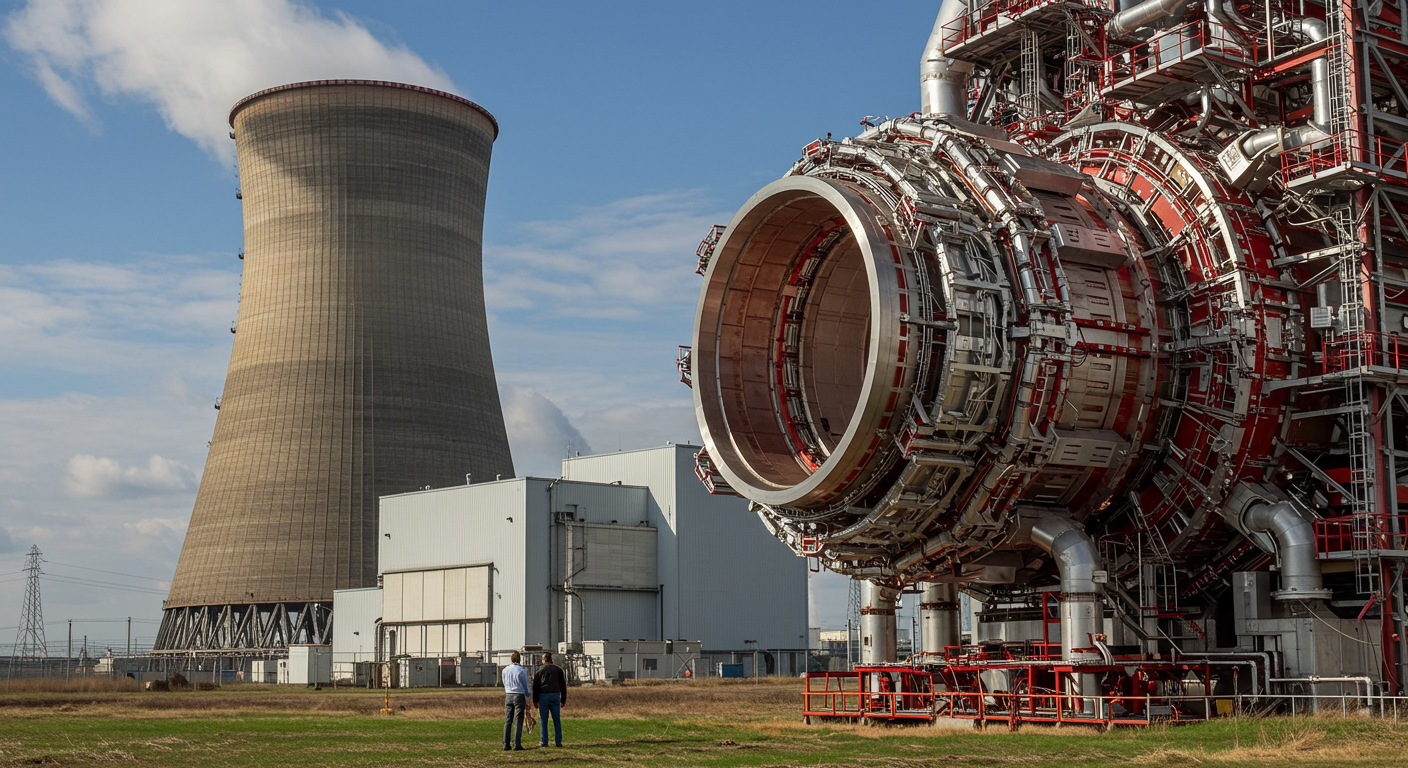
Nuclear fission and nuclear fusion are often discussed as possible answers to the world’s energy and climate challenges. Both can produce large amounts of electricity without the direct carbon emissions that come from burning fossil fuels. But they are not equally ready for real-world use.
The simplest way to frame the comparison is this: fission powers electric grids today, while fusion remains a promising future technology. So the real question is not which idea sounds better in theory, but which one can deliver practical energy at scale, and when.
Why This Comparison Matters Now
Interest in nuclear power has grown as countries search for reliable low-carbon energy sources that can run around the clock. In that discussion, fission and fusion are sometimes grouped together as if they belong to the same generation of technology, even though they are at very different stages of development.
Fission is already a commercial technology with decades of operating history. Fusion, by contrast, is still experimental or in the demonstration stage. The International Atomic Energy Agency and the U.S. Department of Energy both describe fusion as an active area of research rather than an established source of grid electricity.
That distinction matters. If the question is what can help expand nuclear power in the near term, the answer is fission. If the question is what might transform energy over the longer term, fusion is the more speculative but potentially revolutionary candidate.
What Nuclear Fission Is
Nuclear fission releases energy by splitting heavy atoms, usually isotopes of uranium. When one of these atomic nuclei splits, it releases heat along with additional neutrons that can trigger more fission events. Inside a reactor, that process is carefully controlled.
The heat from fission warms water, creates steam, and spins turbines that generate electricity. In that sense, fission plants work much like other thermal power stations, except the heat comes from a nuclear reaction rather than coal or gas combustion.
Fission is a mature technology. Commercial reactors have operated for decades and already supply substantial amounts of electricity in multiple countries. However people may debate cost, safety, or waste, fission is clearly proven as a grid-scale power source.
What Nuclear Fusion Is
Nuclear fusion releases energy by combining light nuclei, typically forms of hydrogen such as deuterium and tritium. This is the same basic process that powers the sun and stars, where extreme heat and pressure allow nuclei to overcome their natural repulsion and fuse.
Recreating those conditions on Earth is extraordinarily difficult. According to ITER and the International Atomic Energy Agency, fusion requires extremely high temperatures that turn fuel into plasma, along with advanced systems that can confine and control that plasma long enough for useful reactions to occur.
That is why fusion, despite decades of research and several notable milestones, is not yet a commercial source of electricity. It remains a scientific and engineering frontier rather than an established energy industry.
How the Two Technologies Differ in Practice
The most obvious difference is fuel. Fission uses heavy elements such as uranium. Fusion relies on light isotopes, often drawn from hydrogen-related fuel cycles. The underlying reactions are fundamentally different, even if both fall under the broad label of nuclear energy.
Fission reactors depend on a controlled chain reaction. Engineers manage the rate at which atoms split so the system produces steady heat. Fusion systems do not work that way. Instead, they must create and maintain extreme conditions in which plasma stays hot and stable enough for nuclei to fuse.
That makes fusion much harder in practice than its elegant concept may suggest. Splitting atoms in a controlled reactor is already complex. Forcing light nuclei to fuse in a sustained, economically useful way is even more demanding, which is why fusion remains in development while fission is already deployed.
Safety and Waste: Where the Debate Gets Sharpest
Much of the public debate centers on safety and radioactive waste. Fission produces long-lived radioactive waste and requires strict safety systems, careful spent fuel management, and strong safeguards around sensitive nuclear materials. Those are among the main reasons fission plants face intense regulation and public scrutiny.
Fusion is often seen as safer by comparison. One reason, as the U.S. Department of Energy explains, is that it does not rely on the same kind of self-sustaining chain reaction used in fission reactors. If the conditions required for fusion are disrupted, the reaction stops rather than continuing in the same way.
That said, fusion is not waste-free. The World Nuclear Association notes that fusion systems are still expected to create radioactive materials, especially as reactor components are exposed to intense neutron bombardment. Even so, fusion is generally expected to produce less long-lived high-level waste than conventional fission systems, which helps explain its long-term appeal.
Commercial Reality: Which One Can Power the Future Soonest?
If the question is what can power the future soonest, fission is the clear answer. It is already generating electricity on power grids around the world, and new reactor designs are being pursued as countries look for more low-carbon generation.
Fusion has not yet reached routine commercial deployment. While laboratories and major international projects have achieved important scientific progress, the International Atomic Energy Agency and ITER both make clear that fusion still faces major technical and economic hurdles before it can become a dependable commercial power source.
That means the near-term path for expanding nuclear electricity runs through fission, not fusion. Fusion may eventually join that mix, but it is not positioned to replace existing power systems in the next few years.
Fusion's Promise and Its Biggest Obstacles
The appeal of fusion is easy to understand. It offers the possibility of abundant fuel sources, a favorable safety profile compared with fission, and a lower burden of long-lived high-level waste. If those advantages can be realized at scale, fusion could become one of the most attractive forms of low-carbon energy ever developed.
But the obstacles remain formidable. Fusion researchers must sustain extraordinary temperatures, confine unstable plasma, produce enough energy for practical power generation, and ultimately design plants that can be built and operated at a reasonable cost.
That is why fusion announcements deserve careful reading. Scientific milestones matter, but they do not automatically translate into commercially viable power stations. The gap between a successful experiment and a functioning energy industry can be enormous.
So Which Powers the Future?
The most balanced answer is that fission is powering the present and is likely to power the near-term future of nuclear electricity. It is available now, proven at scale, and capable of contributing to low-carbon energy systems today.
Fusion remains a longer-term possibility with enormous upside. If its engineering and economic challenges are solved, it could become a major complement to existing energy sources and potentially reshape how the world thinks about abundant clean power.
So this is not really a winner-take-all contest. The evidence points to fission now and fusion potentially later. One is a working tool for today’s grid; the other is a high-potential technology still trying to earn its place in tomorrow’s energy system.