Nuclear Fusion vs Nuclear Fission: Which Powers the Future?
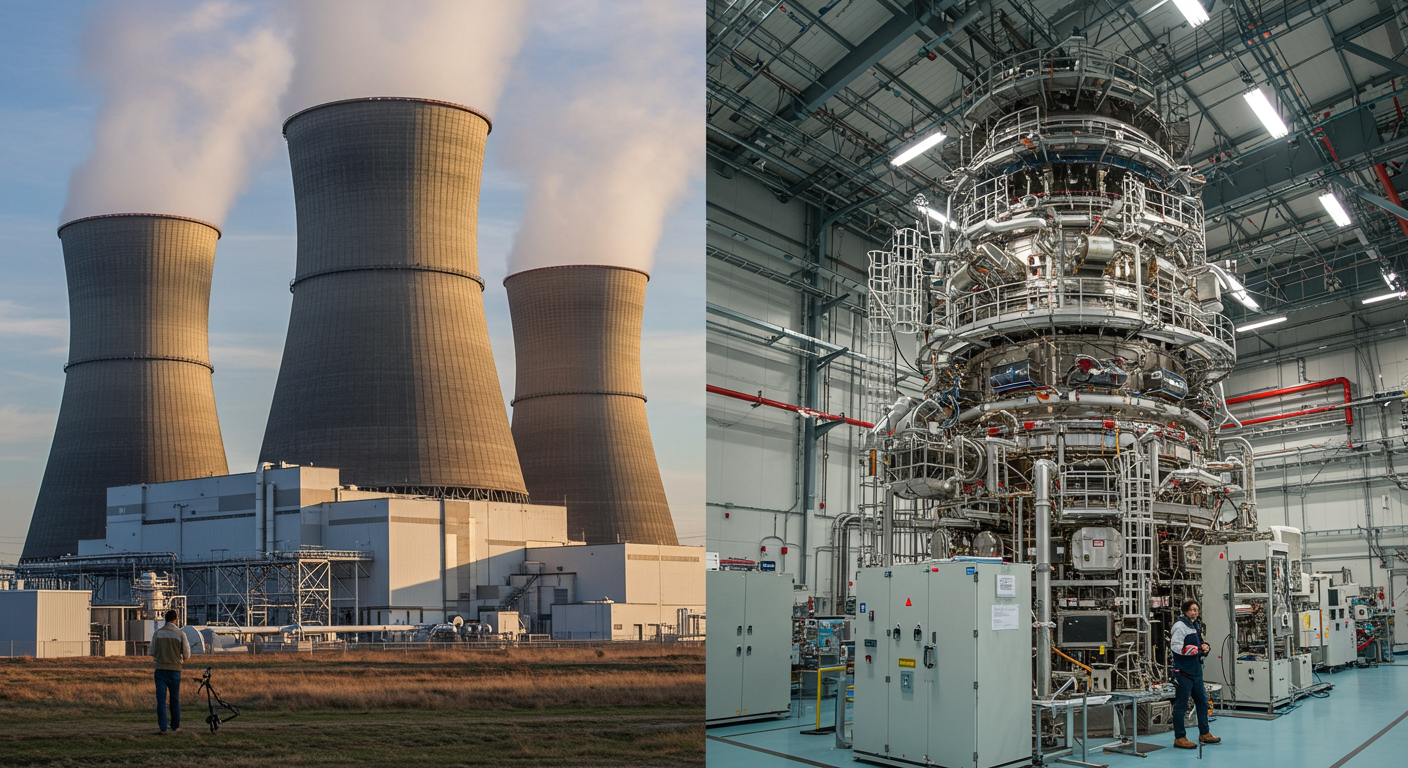
As the world grapples with climate change and energy security, nuclear technologies stand at the forefront of clean energy solutions. Two distinct nuclear processes—fusion and fission—offer fundamentally different approaches to harnessing the power of the atom. While fission has powered electrical grids for decades, fusion represents the tantalizing possibility of virtually limitless clean energy. Understanding their differences is crucial for navigating our energy future.
The Fundamental Physics: How Each Technology Works
Nuclear fission and fusion operate on opposite principles, yet both derive their immense power from Einstein's famous equation E=mc². In nuclear fission, heavy atomic nuclei such as uranium-235 or plutonium-239 split apart, releasing energy along with neutrons that trigger additional fission reactions in a controlled chain reaction. This process powers every nuclear reactor currently operating worldwide.
Nuclear fusion takes the opposite approach, combining light atomic nuclei—typically isotopes of hydrogen like deuterium and tritium—under extreme conditions of temperature and pressure. When these nuclei overcome their natural electromagnetic repulsion and fuse together, they release tremendous amounts of energy while forming heavier elements like helium.
The energy release from fusion reactions is several times greater per unit mass than fission reactions. However, achieving fusion requires recreating conditions similar to those found in the core of stars: temperatures exceeding 100 million degrees Celsius and immense pressures. These extreme requirements explain why fusion has remained elusive for practical energy generation, while fission reactors have operated reliably since the 1950s.
Safety and Environmental Profiles
The safety and environmental characteristics of fusion and fission differ dramatically, with fusion holding significant theoretical advantages. Fusion reactions cannot run away or melt down—if the delicate conditions required for fusion are disrupted, the reaction simply stops. There's no possibility of a catastrophic release of energy or radioactive materials, as the fuel quantities involved are minimal and the reaction requires constant external energy input to maintain.
Fission reactors, while generally safe when properly designed and operated, face inherent challenges related to the large quantities of radioactive fuel they contain. Modern reactor designs incorporate multiple safety systems and passive safety features, but the potential for accidents—though rare—remains a public concern. The nuclear accidents at Three Mile Island, Chernobyl, and Fukushima highlight the importance of robust safety systems and emergency preparedness.
Perhaps the most significant environmental difference lies in radioactive waste production. Fusion reactions produce primarily helium—an inert, non-radioactive gas—along with some neutron activation of reactor materials that remains radioactive for decades rather than millennia. Fission reactors generate high-level radioactive waste that remains hazardous for thousands of years, requiring long-term storage solutions that remain politically and technically challenging.
Both technologies share the crucial advantage of producing no greenhouse gas emissions during operation, making them valuable tools for combating climate change compared to fossil fuel alternatives.
Current Status and Recent Breakthroughs
Nuclear fission enjoys a proven track record, with over 400 commercial reactors worldwide providing approximately 10% of global electricity. Modern reactor designs incorporate decades of operational experience and safety improvements, with some countries like France deriving the majority of their electricity from nuclear fission.
Fusion energy reached a historic milestone in December 2022 when researchers at the National Ignition Facility achieved fusion ignition—producing more energy from a fusion reaction than was directly deposited into the fuel. This breakthrough demonstrated the fundamental feasibility of net energy gain from fusion, though significant engineering challenges remain before commercial viability.
The international ITER project in France represents the largest fusion research effort, aimed at demonstrating sustained fusion reactions at power plant scales. Meanwhile, private fusion companies are pursuing alternative approaches with promises of commercial fusion power within the next two decades, though these timelines remain optimistic given the technical hurdles involved.
Advanced fission reactor designs, including small modular reactors and next-generation technologies, continue evolving to address safety, waste, and economic concerns while maintaining the reliability that has made fission a baseload power source.
Technical and Economic Challenges
Fusion faces formidable engineering challenges that extend far beyond achieving ignition. Containing plasma at stellar temperatures requires sophisticated magnetic confinement systems or powerful laser arrays. The extreme conditions degrade reactor materials, necessitating advances in materials science to develop components that can withstand intense neutron bombardment and heat.
Converting fusion energy into electricity efficiently remains another hurdle, as does scaling from laboratory demonstrations to commercially viable power plants. The economic case for fusion depends on overcoming these technical barriers while achieving costs competitive with other energy sources.
Fission technology, while mature, confronts different challenges. Long-term radioactive waste storage remains unresolved in many countries, with political opposition complicating permanent disposal solutions. Public acceptance varies significantly by region, influenced by safety concerns and historical accidents. Regulatory complexity can extend construction timelines and increase costs, though this reflects the rigorous safety standards applied to nuclear facilities.
Economic competitiveness of new fission plants faces pressure from low natural gas prices and declining renewable energy costs, though fission provides the reliability and baseload capacity that variable renewable sources currently cannot match.
The Path Forward: Complementary or Competing?
Rather than viewing fusion and fission as competing technologies, they may serve complementary roles in humanity's energy future. Fission offers immediate benefits for reducing carbon emissions while fusion technology matures. Existing and new fission plants can provide reliable clean electricity for decades, buying time for fusion development while supporting climate goals.
The ultimate success of fusion could revolutionize energy production, offering virtually unlimited clean power with minimal environmental impact. However, the timeline for commercial fusion deployment remains uncertain, with realistic estimates ranging from the 2040s to beyond mid-century.
Investment strategies increasingly recognize this complementary relationship. Governments and private investors support both advanced fission reactor development for near-term deployment and fusion research for long-term transformation of energy systems. Some scenarios envision fusion eventually replacing fission for new capacity while existing fission plants continue operating through their designed lifespans.
The choice between fusion and fission may ultimately depend on application-specific factors such as power output requirements, geographical constraints, and local acceptance. What remains certain is that both technologies will likely play important roles in transitioning away from fossil fuels toward a sustainable energy future.
As fusion research progresses and fission technology continues advancing, the nuclear renaissance may be powered by both splitting and combining atoms, each contributing unique advantages to humanity's clean energy portfolio.