Nuclear Fusion vs Nuclear Fission: Which Powers the Future?
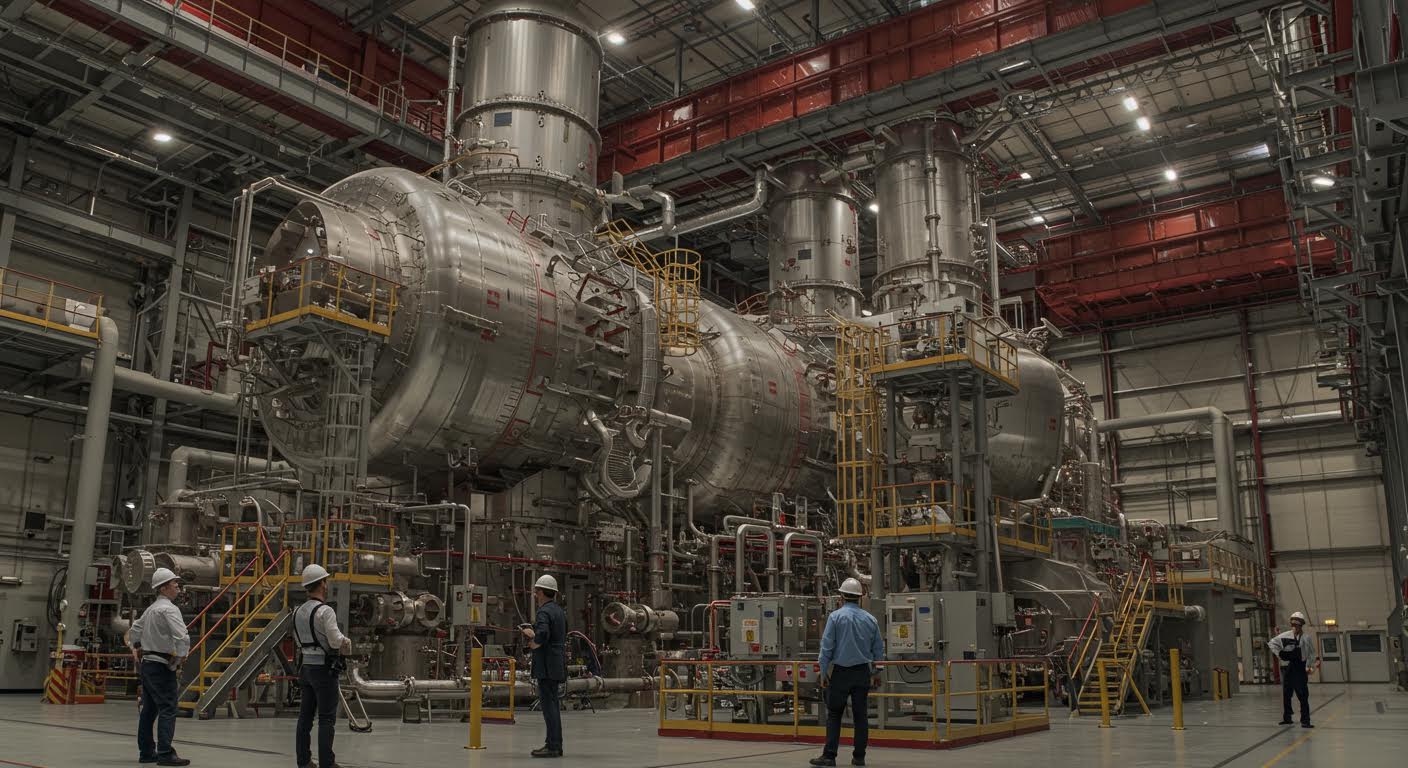
As the world grapples with climate change and energy security, nuclear technology stands at a crossroads between two fundamentally different approaches: the proven power of fission and the promising potential of fusion. While one has powered cities for decades, the other represents humanity's quest for unlimited clean energy.
The Nuclear Energy Landscape: Two Paths Forward
Nuclear energy currently provides approximately 10% of global electricity generation, representing a crucial low-carbon baseload power source. As nations seek to decarbonize their energy systems, nuclear technology offers two distinct pathways forward, each with unique characteristics and challenges.
Nuclear fission and fusion operate on opposite principles of atomic physics. Fission splits heavy atomic nuclei to release energy, while fusion combines light nuclei under extreme conditions. These fundamental differences create vastly different technical requirements, safety profiles, and commercial timelines that will shape the future energy landscape.
Nuclear Fission: The Proven Powerhouse
Nuclear fission harnesses energy by splitting heavy atomic nuclei, typically uranium-235 or plutonium-239, into smaller fragments. This process releases tremendous energy along with neutrons that can sustain a controlled chain reaction in nuclear reactors.
Currently, over 440 nuclear reactors operate worldwide, demonstrating fission's commercial viability and technological maturity. Decades of operation have established comprehensive supply chains, regulatory frameworks, and operational expertise that support the existing nuclear industry.
Modern fission plants boast impressive safety records, with multiple redundant safety systems designed to prevent accidents and contain radioactive materials. However, the technology faces ongoing challenges with long-term radioactive waste storage and public perception issues stemming from historical accidents and weapons proliferation concerns.
Nuclear Fusion: The Holy Grail of Clean Energy
Fusion recreates the process that powers the sun, combining light atomic nuclei such as hydrogen isotopes deuterium and tritium to form heavier elements. This reaction requires temperatures exceeding 100 million degrees Celsius and tremendous pressure to overcome the natural repulsion between positively charged nuclei.
Recent breakthroughs have demonstrated fusion's potential, with the National Ignition Facility achieving net energy gain from a fusion reaction in 2022. This milestone proved that fusion can produce more energy than directly input into the reaction, though significant engineering challenges remain for commercial power generation.
Fusion offers compelling advantages over fission, including minimal long-lived radioactive waste production, no risk of runaway chain reactions, and abundant fuel sources from seawater. However, the extreme technical requirements for maintaining fusion conditions represent unprecedented engineering challenges.
Technical Challenges: Engineering Reality Check
Fission technology faces well-understood but complex challenges centered on safety systems, waste management, and plant lifecycle management. Modern reactor designs incorporate passive safety features and improved waste handling, but long-term storage solutions for high-level radioactive waste remain contentious issues in many countries.
Fusion confronts fundamentally different technical hurdles, primarily plasma containment and materials science challenges. Magnetic confinement systems like tokamaks must maintain precise control over extremely hot plasma, while reactor materials must withstand intense neutron bombardment and thermal cycling.
Energy density comparisons favor both nuclear technologies over fossil fuels, but fusion's theoretical energy density exceeds fission by orders of magnitude. However, the infrastructure requirements for fusion plants may prove more complex and expensive than current fission facilities due to the exotic conditions required for sustained fusion reactions.
Economics and Timeline: When Will Each Technology Dominate?
Current nuclear fission faces economic pressures from declining costs of renewable energy and natural gas, though rising carbon pricing may improve nuclear competitiveness. New fission reactor designs promise improved economics through simplified construction and enhanced safety features, but capital costs remain substantial.
Fusion commercial viability remains decades away, with optimistic projections placing the first commercial fusion plants in the 2040s. Massive investment flows from both government programs and private ventures are accelerating fusion research, but fundamental engineering challenges must be solved before economic comparisons become meaningful.
Investment patterns reveal growing confidence in fusion's long-term potential, with billions of dollars flowing into fusion startups and government research programs. However, the scalability potential for meeting global energy needs remains unproven for both advanced fission designs and fusion concepts.
The Verdict: Complementary Technologies for Different Eras
Rather than competing directly, nuclear fission and fusion may serve complementary roles across different timeframes. Fission technology offers immediate potential for decarbonizing electricity systems throughout the 2020s and 2030s, providing essential baseload power while renewable energy infrastructure expands.
Fusion's role lies in the longer term, potentially providing abundant clean energy for the latter half of the 21st century and beyond. If technical challenges are overcome, fusion could enable energy abundance that transforms global economic and social systems.
The coexistence of both technologies seems more likely than the displacement of one by the other. Advanced fission reactors may continue serving specific applications even after fusion becomes commercially viable, while fusion plants handle large-scale baseload generation.
Policy implications suggest that energy transition planning should incorporate both nuclear technologies while recognizing their different timelines and capabilities. Supporting both fission deployment and fusion research maximizes options for achieving deep decarbonization goals across multiple decades.