Nuclear Energy in Space: Powering Missions Beyond Mars
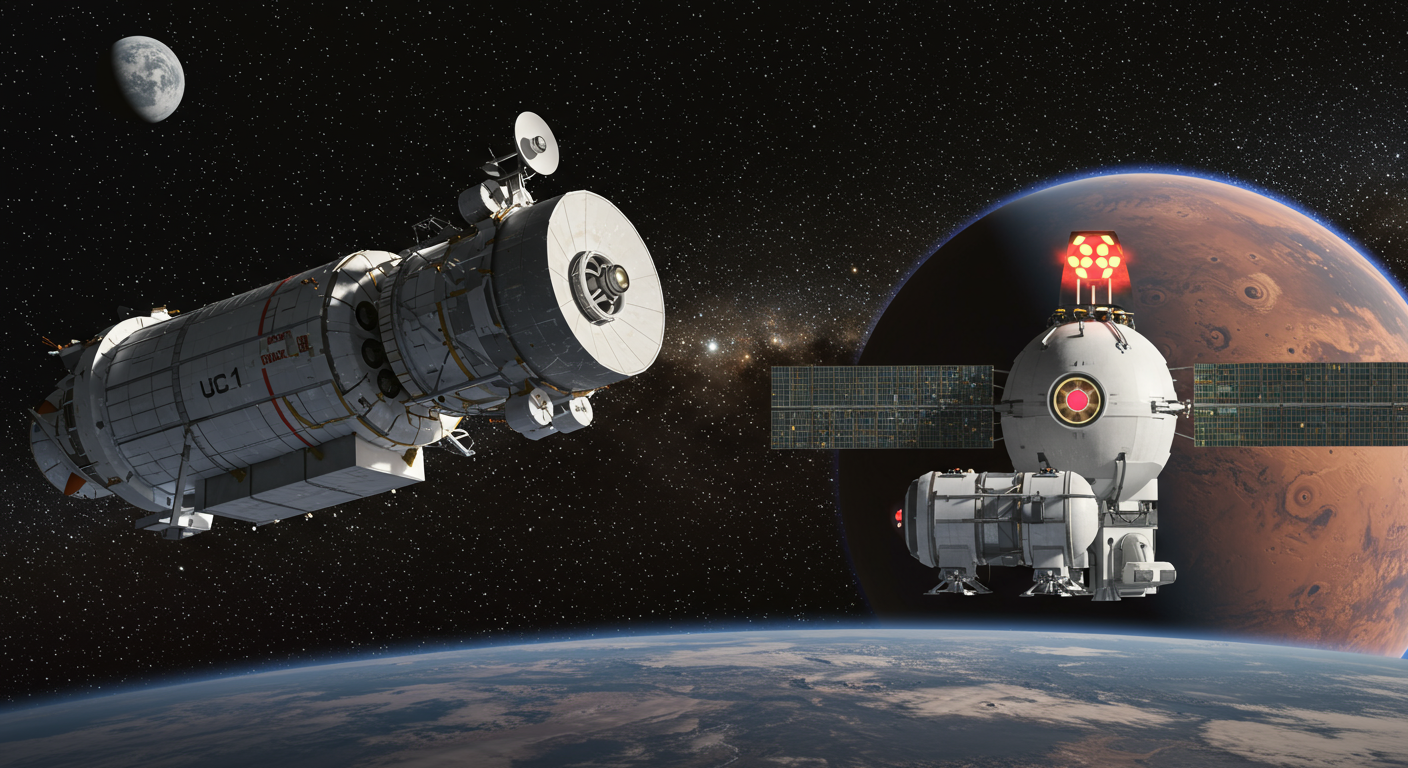
Solar power has enabled a wide range of spacecraft and planetary missions, but it becomes harder to rely on as exploration moves deeper into space. Sunlight weakens with distance from the Sun, so solar arrays generate less electricity the farther a mission travels. Even closer to home, solar power has limits in places with long nights, persistent dust, extreme cold, or terrain that leaves equipment in shadow for extended periods.
That is why nuclear energy continues to play such an important role in space planning. In environments where continuous power and heat matter more than peak output on a sunny day, nuclear systems can keep instruments running, protect hardware from freezing, and support missions that cannot afford long interruptions.
Why Space Missions Need More Than Solar Power Beyond Mars
Beyond Mars, the challenge is simple: sunlight is too weak to be the only answer for many mission profiles. Spacecraft operating far from the Sun need dependable electricity for communications, sensors, navigation, onboard computing, and thermal control. If that energy source drops too much with distance, mission design becomes more constrained and risk increases.
Harsh local conditions can create the same problem even when a destination is not especially far away. The Moon has nights that last about two Earth weeks in many regions. Mars adds dust accumulation and seasonal atmospheric effects that can reduce solar performance. Permanently shadowed craters, polar environments, and frigid surfaces make survival harder for systems that depend only on intermittent sunlight.
In those settings, nuclear power is not just an alternative to solar panels. It can be the practical foundation that allows a mission to operate continuously and predictably.
Two Different Space Nuclear Systems Matter Most
When people talk about nuclear energy in space, they are often referring to two very different technologies with distinct roles.
The first is the radioisotope power system, commonly used on robotic missions. These systems generate electricity and heat from the natural decay of radioisotopes. Their strength is not high power output, but steady, long-duration reliability without any need for sunlight and, in some designs, without moving parts.
The second is fission surface power. This refers to compact nuclear reactors designed to produce far more electricity than radioisotope systems, especially for operations on the Moon or Mars. According to NASA and the U.S. Department of Energy, these systems are being studied as a way to support habitats, equipment, science outposts, and resource processing for future sustained exploration.
It is also important to separate nuclear power generation from nuclear propulsion. Both belong to the broader field of space nuclear technology, but power systems supply electricity and heat for spacecraft or surface assets, while propulsion systems are intended to move spacecraft more efficiently through space.
Radioisotope Power Systems: The Proven Option for Deep-Space Robotics
Radioisotope power systems are the most established form of nuclear energy used in space. They have supported missions in places where dependable, maintenance-free energy was essential and where solar power was impractical or insufficient. Their long operating lives make them especially valuable for probes traveling to the outer solar system or for landers and rovers expected to survive harsh planetary conditions.
These systems have a long track record in exploration. Deep-space probes and planetary rovers have used radioisotope power to keep science instruments working, maintain communications, and provide crucial onboard heat. As the International Atomic Energy Agency and NASA have noted, that flight history matters because it shows nuclear power in space is not just a future concept. In some mission categories, it is already proven hardware.
For robotic exploration, the appeal is straightforward. A radioisotope system can provide steady electrical output over many years while also helping protect internal components from severe cold. That combination supports longer mission lifetimes, more flexible operations, and access to destinations that would otherwise be difficult to explore effectively.
Fission Surface Power Could Change Lunar and Martian Operations
While radioisotope systems are well suited to robotic missions with modest power needs, future human exploration will likely require much more energy. That is where fission surface power enters the picture. NASA and the U.S. Department of Energy have been advancing work in this area as part of planning for longer-lasting operations on the Moon and, eventually, Mars.
The promise of fission surface power is scale. A reactor system could potentially support habitats, rovers, science stations, communications networks, and industrial-style equipment that would be difficult to run on solar power alone in challenging environments. NASA has described fission power as a way to provide continuous energy independent of sunlight, a major advantage for lunar night operations or dust-affected Martian conditions.
This shifts the discussion from short missions to durable presence. Instead of designing every activity around daylight windows and battery limits, mission planners could think in terms of sustained work cycles, permanent infrastructure, and larger operational footprints.
What Nuclear Power Would Enable on Worlds Hostile to Solar
Continuous baseload power changes what is possible on another world. Reliable energy can support life support systems, thermal management, drilling equipment, scientific laboratories, computing loads, and communications systems that need to stay active around the clock.
It also matters for in-situ resource utilization, the idea that explorers should use local materials instead of bringing everything from Earth. Extracting water ice, producing oxygen, making propellant, processing regolith, and storing critical resources all require dependable energy. Intermittent power can limit these activities or force oversized backup systems. Stable nuclear power could make such operations more practical and efficient.
In that sense, nuclear systems are more than a substitute for solar arrays. They are mission enablers. They expand where missions can go, how long they can last, and what kind of infrastructure they can support once they arrive.
The Tradeoffs: Safety, Shielding, Mass, and Public Acceptance
The case for nuclear power in space is strong, but it comes with serious tradeoffs. Launch safety and containment are central concerns for any mission carrying nuclear material. The International Atomic Energy Agency and U.S. agencies involved in space nuclear work emphasize extensive safety analysis, along with system designs that account for accident scenarios, handling procedures, and environmental protection.
There are also major engineering challenges. Nuclear systems can add mass and complexity, and higher-power reactor concepts raise additional issues such as shielding, heat rejection, reliability, and integration with surface systems. Designing compact reactors that can survive launch, transit, deployment, and long-term operation is not a trivial task.
Public acceptance matters too. Even when a mission is technically sound, political support and public confidence can influence whether a program moves forward quickly, slowly, or not at all. In practice, timelines for space nuclear systems are shaped by policy and perception as much as by engineering readiness.
What Happens Next for Nuclear Energy in Space
The next major developments will likely come from NASA and the Department of Energy, which remain the key institutions to watch in U.S. space nuclear work. Radioisotope systems are expected to continue serving robotic exploration, especially where long-lived, low-maintenance power is essential. At the same time, fission surface power is emerging as a serious option for future lunar and Martian operations.
If those efforts mature, nuclear energy could become core infrastructure for exploration rather than a specialized tool reserved for rare missions. That would mark a significant change in how space agencies think about power: not just as a subsystem, but as the foundation for staying active in places where sunlight alone is not enough.
For missions beyond Mars, that shift may prove decisive. The farther humanity and its machines go into the solar system, the more valuable steady, durable, and independent power becomes. Nuclear energy may not power every spacecraft, but it is increasingly clear that some of the most ambitious missions will depend on it.