Nuclear Energy in Space: Powering Missions Beyond Mars
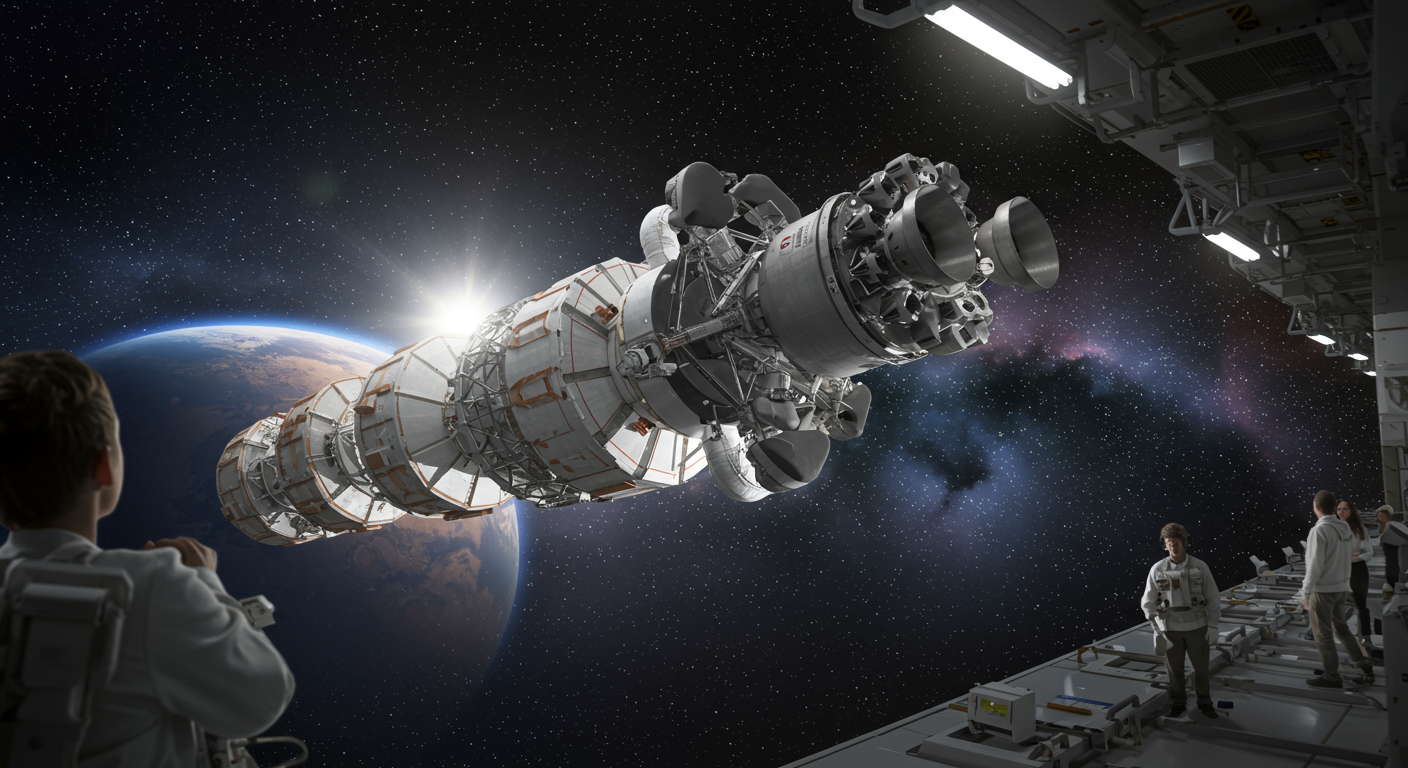
The vast distances of space present a fundamental energy challenge for missions venturing beyond Mars. While solar panels have powered countless near-Earth missions, the physics of our solar system make nuclear energy essential for deep space exploration. As humanity sets its sights on the outer planets and interstellar space, nuclear power systems are becoming the backbone of ambitious missions that would be impossible with conventional energy sources.
The Physics Problem: Why Solar Power Fails in Deep Space
The inverse square law governs solar radiation intensity throughout our solar system, creating a harsh reality for spacecraft designers. At Jupiter's distance from the sun, solar radiation drops to just 1% of what Earth receives. This dramatic reduction makes solar panels increasingly impractical for missions to the outer solar system.
Even Mars missions push solar technology to its limits. The Red Planet receives only 43% of Earth's solar energy, and factors like seasonal dust storms and atmospheric particles further reduce power generation. NASA's Perseverance rover, equipped with advanced solar arrays, still faces significant power constraints that limit its operational capabilities during Martian winter and dust events.
Deep space missions require substantial energy for critical systems including life support for crewed missions, high-power communications across billions of miles, and sophisticated scientific instruments. The power demands of these systems far exceed what solar panels can provide in the outer solar system, making nuclear energy the only viable solution.
Nuclear Thermal Propulsion: The Speed Solution
Nuclear thermal propulsion represents a revolutionary approach to space travel, using a nuclear reactor to heat propellant to extremely high temperatures before expelling it through a nozzle. This process generates significantly higher specific impulse than chemical rockets, enabling faster transit times and larger payload capacities.
NASA's Nuclear Thermal Propulsion program, including the DRACO (Demonstration Rocket for Agile Cislunar Operations) project, aims to develop flight-ready systems by the late 2020s. These systems could reduce Mars transit times from the current 9 months using chemical propulsion to just 3-4 months with nuclear thermal rockets.
The performance advantages extend beyond speed. Nuclear thermal systems can carry more payload mass while using less propellant, opening possibilities for larger habitats, more scientific equipment, and enhanced mission redundancy. However, significant technical challenges remain in reactor design, particularly in developing fuel elements that can withstand the extreme temperatures and radiation environment of repeated thermal cycles.
Safety systems and launch protocols for nuclear-powered spacecraft require extensive development. Engineers must design robust containment systems and establish procedures that protect both ground personnel and the space environment while ensuring reliable operation throughout multi-year missions.
Radioisotope Power: The Proven Deep Space Solution
Radioisotope Thermoelectric Generators (RTGs) represent the most mature nuclear space technology, with a proven track record spanning decades of successful missions. These systems convert the decay heat from plutonium-238 into electricity using thermoelectric converters, providing steady power output regardless of distance from the sun.
The heritage of RTG technology is impressive, powering missions from the Voyager probes launched in 1977 to the recent Perseverance rover on Mars. Voyager 1 and 2 continue transmitting data after more than 45 years in space, demonstrating the longevity and reliability of nuclear power systems.
Modern Multi-Mission Radioisotope Thermoelectric Generators (MMRTG) provide approximately 110 watts of power at mission start, with gradual degradation over time as the plutonium-238 decays. This predictable power curve allows mission planners to design long-duration missions with confidence in available energy throughout the operational timeline.
The primary challenge facing RTG technology is the plutonium-238 supply chain. Production ceased in the 1980s, and existing stockpiles are limited. Recent efforts to restart production at Oak Ridge National Laboratory are crucial for future deep space missions, but the process is complex and expensive, requiring specialized facilities and expertise.
Nuclear Electric Propulsion: Efficiency for Long Journeys
Nuclear electric propulsion combines the steady power output of nuclear reactors with the high efficiency of electric thrusters, creating systems ideally suited for long-duration missions to the outer planets. These systems achieve specific impulse values several times higher than chemical rockets, though with lower thrust levels.
Reactor-powered ion drives and plasma thrusters can operate continuously for years, gradually accelerating spacecraft to high velocities. This capability is particularly valuable for missions to Jupiter's moons or Saturn's system, where the ability to enter and exit multiple orbits efficiently enables comprehensive scientific surveys.
Both the European Space Agency and NASA are developing nuclear electric propulsion systems for future missions. The trade-offs between thrust levels and fuel efficiency make these systems optimal for cargo missions, scientific probes, and potentially crewed missions where transit time is less critical than payload capacity.
Mission profiles for nuclear electric systems often involve spiral trajectories and gravity assists, taking advantage of the continuous thrust capability to optimize fuel usage over extended flight times. This approach enables missions that would be impossible with conventional propulsion systems.
Engineering Challenges and Safety Protocols
Adapting nuclear technology for space applications requires solving unique engineering challenges. Reactor miniaturization demands innovative designs that maintain criticality control and heat transfer efficiency in compact packages while withstanding launch stresses and space radiation.
Radiation shielding presents complex design trade-offs. Crew protection requires substantial shielding mass, while sensitive electronics need protection from both reactor radiation and cosmic rays. Engineers must optimize shielding designs to provide necessary protection while minimizing weight penalties.
Heat rejection in the vacuum of space relies entirely on radiative cooling, requiring large radiator systems to dissipate waste heat from nuclear reactors. These systems must operate reliably for years while maintaining structural integrity and thermal performance.
International space law and nuclear safety regulations add layers of complexity to nuclear space missions. Launch approval processes involve extensive safety reviews and coordination between space agencies and nuclear regulatory bodies. Ground testing limitations mean that many nuclear space systems cannot be fully tested under operational conditions before launch.
Future Missions Enabled by Nuclear Power
Nuclear power systems are enabling a new generation of ambitious space missions previously considered impossible. Missions to Europa, Titan, and Enceladus require the high power levels and longevity that only nuclear systems can provide in the outer solar system.
Interstellar probe concepts building on Voyager's success would use advanced nuclear systems to maintain communications and scientific operations over decades-long journeys to nearby star systems. These missions represent humanity's first steps toward true interstellar exploration.
Crewed Mars missions benefit significantly from nuclear thermal or electric propulsion, reducing transit times and radiation exposure while enabling larger crew habitats and more comprehensive mission capabilities. The higher power availability also supports more robust life support systems and scientific equipment.
Asteroid mining and deep space infrastructure development concepts rely heavily on nuclear power for processing operations and station-keeping in challenging gravitational environments. As space commerce expands beyond Earth orbit, nuclear energy will likely become essential infrastructure.
Current timelines suggest that next-generation nuclear space systems will begin deployment in the late 2020s and 2030s, with more advanced systems following as technology matures and regulatory frameworks evolve. These developments will fundamentally transform humanity's ability to explore and utilize the resources of our solar system and beyond.