New Cooling Technologies for Overheating AI Servers
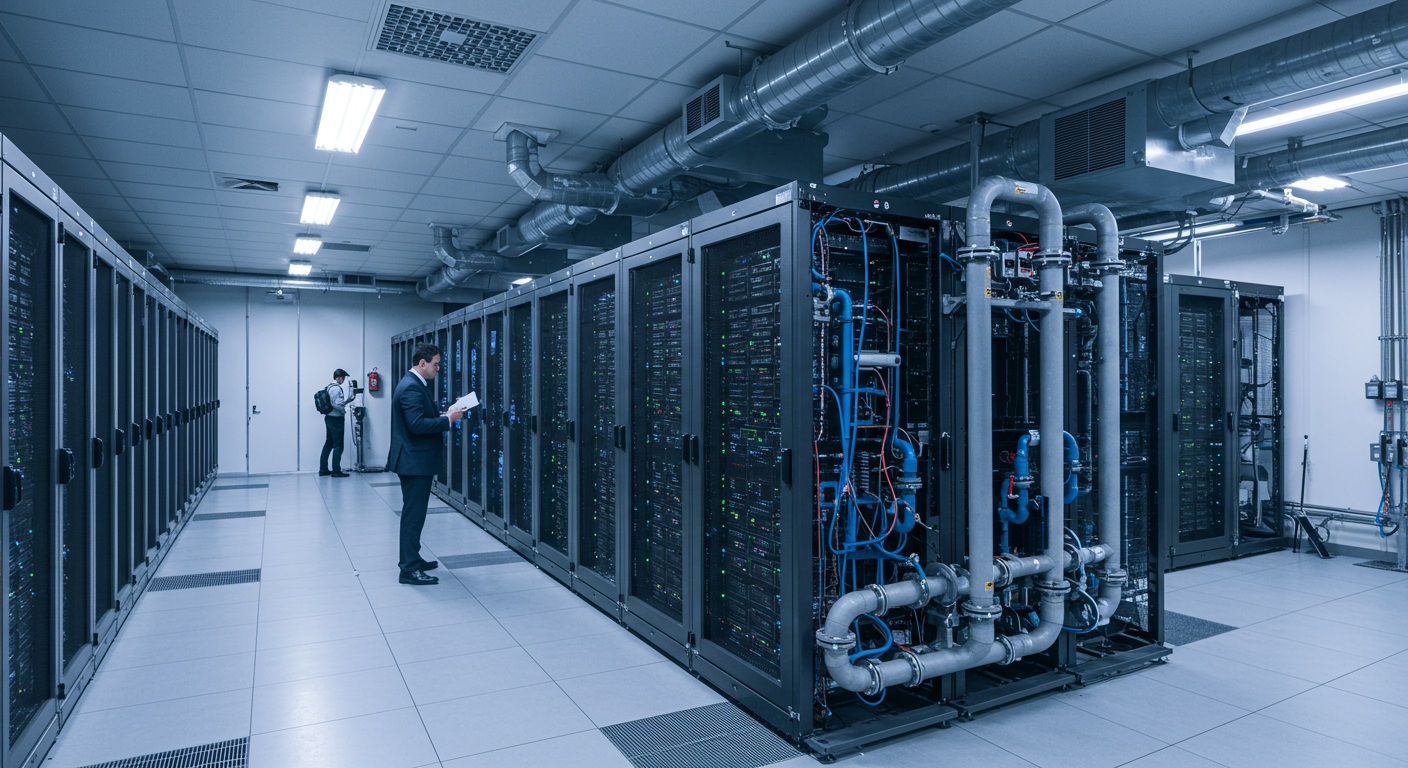
Artificial intelligence infrastructure is forcing a rethink of one of the least glamorous but most important parts of computing: cooling. The challenge is no longer just that chips run hot. Modern AI deployments often pack large numbers of power-hungry GPUs into dense racks, keep them heavily utilized for long periods, and require tight thermal control to sustain performance. That combination is turning cooling into a core constraint on how quickly and where new AI capacity can be built.
Why AI servers are creating a cooling problem traditional designs struggle to handle
Many enterprise data centers were designed for workloads that spread compute demand across more modest servers and lower rack power densities. AI systems change that equation. Training and inference clusters can concentrate enormous compute power into relatively small footprints, with GPUs, high-speed networking, and supporting components all contributing to sustained heat output.
The result is not simply a hotter processor. It is a broader systems problem involving denser racks, faster interconnects, more aggressive power delivery, and narrower operating tolerances. In practical terms, operators may have enough floor space for more AI hardware but still be limited by how much heat they can remove from that space safely and efficiently.
That is why cooling is increasingly tied to business decisions about expansion. A company may be able to buy more AI servers, but without the right thermal design, power distribution, and facility support, those systems may not run at their intended performance or may be impractical to deploy at scale.
Why air cooling is still important, but under growing pressure
Air cooling remains the foundation of many data centers, and it is far from obsolete. Better airflow management, hot-aisle and cold-aisle containment, improved fans, and smarter rack layouts can still support a wide range of compute deployments. For lower-density AI installations or retrofit environments, refined air cooling can remain a practical and cost-effective option.
But as rack densities rise, air alone becomes harder to scale. Moving enough air through a rack full of high-power accelerators can require more fan energy, tighter airflow control, and more space planning than many older facilities were designed to provide. At some point, the physical limits of air as a heat-transfer medium start to show.
That does not mean air cooling disappears. More often, it means air cooling stops being a universal answer for top-end AI clusters. It continues to play an important role, especially in mixed environments, but its effectiveness depends heavily on deployment density and the design of the surrounding room.
How direct-to-chip liquid cooling is becoming a leading response
One of the most prominent responses to AI heat loads is direct-to-chip liquid cooling. In this approach, liquid loops carry heat away from the components under the most thermal stress, especially CPUs and GPUs, before that heat spreads into the surrounding air. Because liquid transfers heat more efficiently than air, this method is well suited to dense compute environments.
For operators building high-performance AI clusters, direct-to-chip systems can offer several advantages. They can support higher rack densities, reduce the burden on room-level air systems, and in some cases improve overall energy efficiency by moving heat more directly to facility cooling infrastructure. That makes the approach especially attractive where space is limited or where operators want to scale AI capacity without dramatically expanding white-space footprints.
The tradeoffs are operational as much as technical. Liquid cooling introduces plumbing, connectors, monitoring requirements, and service procedures that many IT teams have not traditionally managed inside the rack. Facilities teams also need to think about coolant distribution, leak detection, maintenance workflows, and how server hardware integrates with building systems. In other words, direct-to-chip cooling can solve major thermal problems, but it also demands closer coordination between IT and facilities.
Where rear-door heat exchangers and hybrid approaches fit
Not every organization can redesign its data center around liquid-cooled AI racks from the ground up. That is one reason rear-door heat exchangers and hybrid cooling architectures are receiving attention. Rear-door systems capture and remove heat at the rack level, often allowing operators to increase density without fully replacing existing server designs or room-cooling setups.
These approaches can be especially useful in retrofit scenarios. A facility with legacy air-cooling infrastructure may be able to extend its useful life by adding rack-level heat removal rather than launching an immediate full-scale rebuild. Hybrid designs that combine air and liquid cooling can also help organizations phase in more advanced thermal strategies over time instead of making a single disruptive shift.
In that sense, rear-door and hybrid systems represent a middle path. They may not always deliver the same density potential as more aggressive liquid-cooling designs, but they can offer meaningful gains while fitting more comfortably into existing operational models and budgets.
Why immersion cooling is drawing attention, even if adoption is still emerging
Immersion cooling takes a more radical approach by placing hardware in specially engineered dielectric fluid that absorbs and transfers heat. This concept has attracted interest because it can support very high-density deployments and efficient heat transfer while reducing reliance on large-volume airflow around equipment.
For some AI use cases, the appeal is obvious. Immersion designs can enable compact layouts and may help operators manage extreme thermal loads that are difficult to handle with conventional air systems. They also fit into a broader search for data-center architectures that can cope with continued increases in chip power.
Still, adoption remains emerging rather than universal. The ecosystem is less mature than for air or direct-to-chip systems, and organizations may face questions about hardware compatibility, service practices, supply chains, technician training, and deployment complexity. Immersion cooling may prove highly effective in specific scenarios, but for many operators it is still a specialized choice rather than the default next step.
The bigger shift: AI is changing data-center design, not just server cooling
The rise of AI infrastructure is pushing cooling decisions beyond the rack and into the design of entire facilities. Water availability, power distribution, redundancy planning, floor layout, and even local climate can shape which cooling strategies are realistic. In some cases, the limiting factor is not the server technology itself but whether the site can support the thermal and electrical demands of dense AI clusters.
This broader view matters because cooling is deeply connected to efficiency and resilience. Heat-reuse opportunities, chiller design, coolant loops, and backup planning all become more important as AI capacity grows. Operators are increasingly evaluating thermal strategy as part of larger decisions about where to build, how to expand, and what kinds of workloads each site should host.
That shift suggests the real story is not just about replacing fans with liquid. AI is encouraging a redesign of data-center assumptions, from physical layouts to capacity-planning models. Cooling has moved from a support function to a strategic part of infrastructure planning.
How operators are choosing among cooling options
No single cooling method is best for every AI deployment. Operators typically have to balance rack-density goals, retrofit feasibility, reliability requirements, maintenance complexity, water access, and total cost of ownership. A hyperscale operator building a new AI-focused facility may make very different choices from an enterprise trying to add GPU capacity to an existing data center.
That is why broad claims about one technology replacing all others should be treated cautiously. Air cooling still matters, especially in lower-density and mixed-use environments. Direct-to-chip liquid cooling is gaining momentum for dense AI clusters. Rear-door exchangers and hybrid systems can bridge the gap for retrofits. Immersion remains promising, particularly for high-density specialized use cases, but it is still developing operationally.
For most organizations, the practical question is less about which cooling approach sounds most advanced and more about which one fits the workload, the building, and the operating model. As AI server power continues to rise, the winners are likely to be the organizations that treat cooling as an integrated infrastructure decision rather than an afterthought.