NASA Repurposes Shelved Gateway Hardware for Moon Base Survival Demos
NASA Repurposes Shelved Gateway Hardware for Moon Base Survival Demos
NASA has halted development of the Gateway lunar space station and redirected its strategy toward building a permanent base at the Moon's South Pole. Agency and contractor officials are framing the pivot as a smart reuse of hardware that was already, in their words, nearly ready to fly. That framing sits alongside a documented history of cost growth, schedule slips, and technical problems that reportedly contributed to Gateway's cancellation.
NASA Pivots From Gateway to a Lunar Surface Base
The shift from an orbiting way station to surface infrastructure marks a significant change in NASA's lunar exploration approach. Officials have publicly emphasized continuity, saying components built for Gateway will not go to waste. Many observers note, however, that this framing raises an obvious question: whether the pivot reflects a deliberate strategic evolution or a response to a program that had run into serious trouble.
From HALO to LID: Repurposing Gateway Hardware
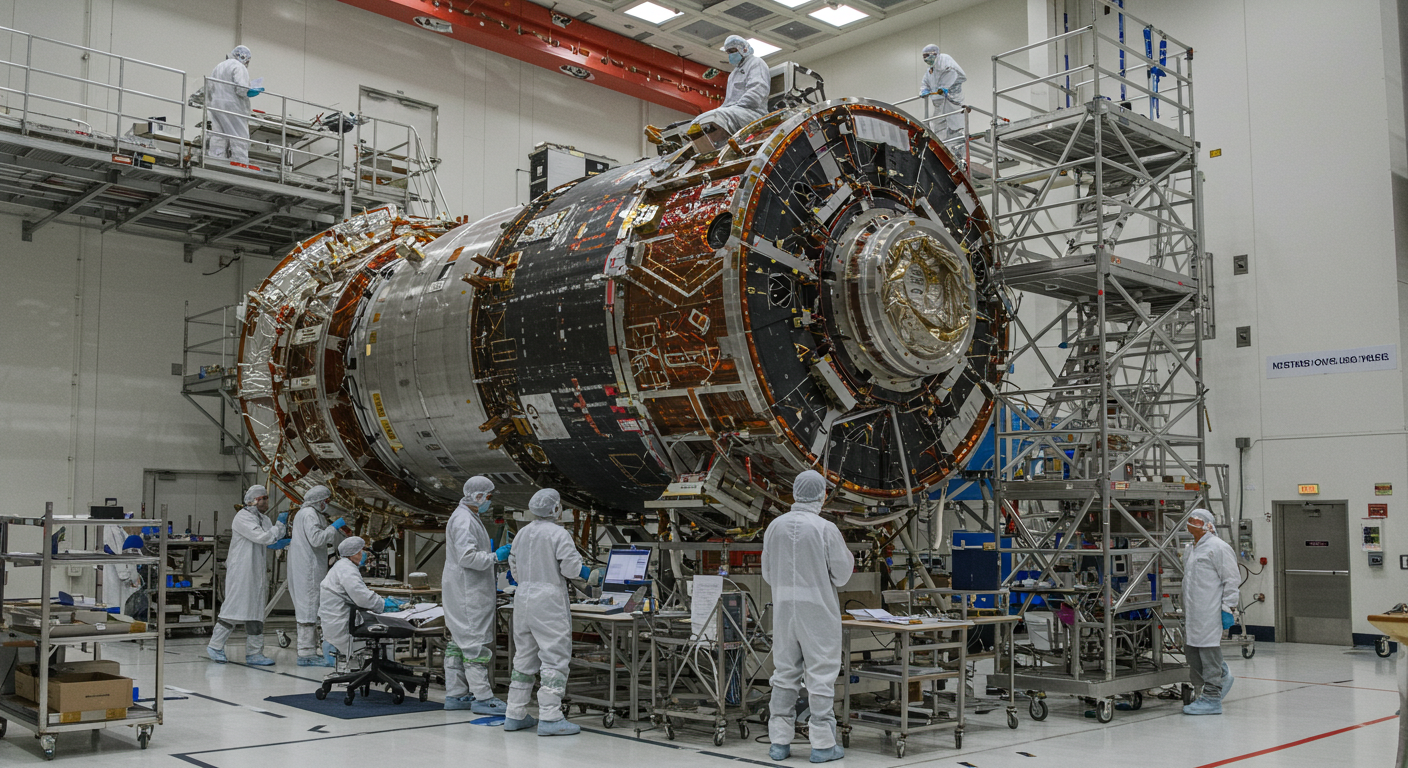
At the center of the effort is the HALO module, originally designed as a habitation and logistics outpost for Gateway. Northrop Grumman announced it will convert HALO-derived technology into three Lunar Infrastructure Demo missions, referred to as LID-1, LID-2, and LID-3. NASA has confirmed it is working with the company on three technology demonstration payloads tied to this effort.
The stated goal of these missions is to test hardware and systems capable of surviving the lunar night, a roughly two-week stretch without sunlight that poses a major engineering challenge for any long-term surface base. Neither NASA nor Northrop Grumman has disclosed launch dates, mission costs, or detailed technical specifications for the LID missions. A recurring industry concern is that announcements of this kind often precede the release of firmer technical or financial details, and it remains to be seen how quickly that information will follow.
Why Gateway Was Cancelled: Cost, Schedule, and Corrosion
Gateway's cancellation followed years of reported difficulty. According to an interim memo from NASA's Office of Inspector General, the HALO contract grew substantially over time, from an initial value of $187 million to approximately $1.9 billion. NASA reportedly issued a stop-work order to Northrop Grumman in April 2026, and a Standing Review Board is said to have found effectively no likelihood of meeting the program's then-current launch readiness date.
Separately, HALO's manufacturer, Thales Alenia Space, discovered corrosion throughout the module's primary structure, a technical issue that had been flagged in prior reporting even before the broader cancellation decision. The inspector general's memo reportedly projected that HALO would not be delivered before July 2031, with Gateway not becoming operational until at least 2032 had the program continued as planned.
NASA's public response has characterized these findings as validating the decision to pivot toward a lunar base strategy rather than as evidence of program failure. That said, many observers note the timeline suggests these structural and financial problems were known well before the cancellation was announced, based on earlier reporting from the Government Accountability Office and the inspector general on Gateway's cost and schedule performance.
Canadarm3 and the Canadian Space Agency's Parallel Pivot
NASA is not the only party adjusting course. The Canadian Space Agency and MDA Space are similarly redirecting work on Canadarm3, a robotic arm system originally intended for Gateway, toward lunar surface and low Earth orbit applications. MDA Space holds a prime contract for Canadarm3 valued at approximately CA$1 billion, or roughly $717 million.
As with the LID missions, technical details on how Canadarm3 will be adapted for its new applications remain largely unspecified. Executives from both organizations have expressed optimism about the transition, though trade press coverage has noted the announcements are light on concrete engineering or contractual specifics.
What's Still Unknown
Several important questions remain open. Neither NASA nor Northrop Grumman has released timelines, budgets, or funding mechanisms for the LID missions. Industry reporting has explicitly flagged this absence of detail rather than assuming it away, and further disclosures may follow as the program matures.
It is also worth noting that Gateway's cost and schedule troubles were documented in government oversight reports well before the 2026 cancellation, suggesting the underlying issues were not sudden discoveries but longer-running concerns that ultimately factored into NASA's decision to change direction. Whether the repurposed hardware approach delivers a more sustainable path toward a lunar base remains an open question that will likely depend on details not yet made public.