Microsoft’s Majorana 1 chip points to a million-qubit future, but physicists want stronger proof
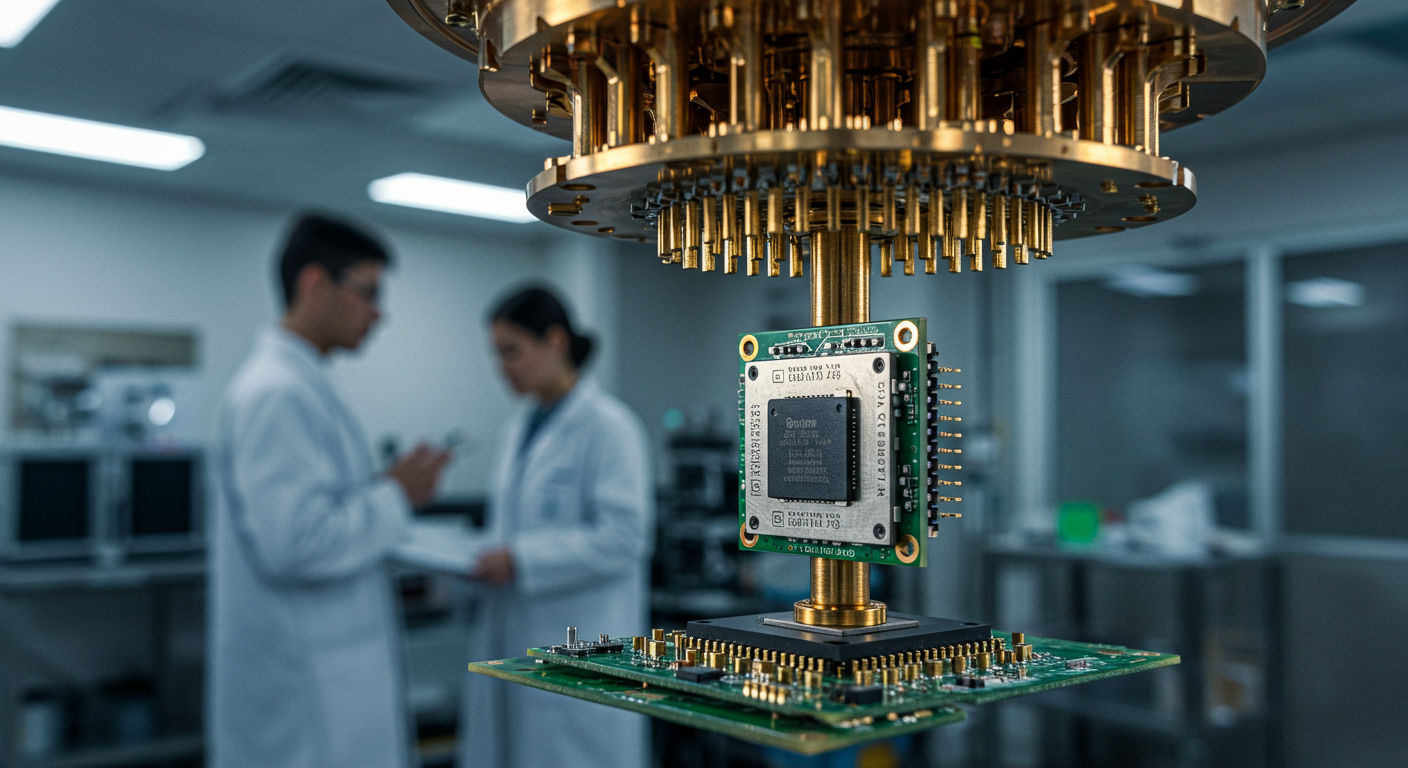
Microsoft has unveiled Majorana 1, a quantum chip it says could open a path toward topological quantum computing and, over time, systems with as many as a million qubits. The claim drew immediate attention because a machine at that scale would far exceed what today’s quantum hardware can do.
But Microsoft is not claiming it has built a million-qubit device today. The company is presenting Majorana 1 as an early hardware milestone on a long-term roadmap. That is where the tension begins: Microsoft frames the chip as a major step forward, while many physicists say the public evidence so far does not justify the strongest conclusions being drawn from the announcement.
Microsoft’s big quantum claim, in plain English
At the center of the announcement is Microsoft’s long-running bet on topological qubits, a more exotic approach to quantum computing than the superconducting and trapped-ion systems used by many rivals. In simple terms, Microsoft argues that if it can build qubits around Majorana-related topological states, those qubits could be more resistant to noise and easier to scale.
That matters because quantum computing’s biggest practical problem is not just making qubits. It is keeping them stable long enough, and correcting enough errors, to do useful work. Microsoft’s message is that Majorana 1 represents progress toward a hardware platform that could eventually make very large quantum systems more realistic.
The promise is significant. So is the gap between a promising platform idea and a demonstrated, scalable topological quantum computer.
What Microsoft says Majorana 1 actually achieves
According to Microsoft, Majorana 1 is built around a new chip architecture designed for its topological-qubit program. The company describes the work as an engineering and materials breakthrough aimed at creating devices that can host the physics needed for topological quantum computation.
Microsoft’s broader argument is that this route could offer a cleaner path to fault-tolerant quantum computing than approaches that require very large overhead for error correction. If the underlying states behave as hoped, topological qubits could, in theory, store quantum information in a way that is naturally better protected from some forms of noise.
Still, there is an important distinction between what Microsoft says it has built and what it says this could enable in the future. The current announcement is about a chip and an architectural direction. The million-qubit figure is a roadmap claim about eventual scaling, not a description of present-day capability.
Why topological qubits matter so much
A qubit is the basic unit of quantum information, but qubits are notoriously fragile. Small disturbances from their environment can introduce errors, which means useful quantum computers typically need extensive error correction. That overhead is one reason large-scale, practical quantum computing has remained so difficult.
Topological qubits are appealing because they aim to solve part of that problem at the physics level. In theory, they could encode information in ways that are less sensitive to local disturbances, reducing error rates and making fault-tolerant machines easier to build.
That theoretical appeal is exactly why the field gets so much attention. It is also why claims of progress are examined so closely. If topological qubits work as intended, they could change the economics and engineering of quantum computing. If they do not, the argument for easy scaling weakens considerably.
Why physicists are skeptical
The main concern from outside researchers is not that topological quantum computing is impossible in principle. It is that Microsoft has not yet convinced the broader community that it has definitively demonstrated the specific topological states or qubit behavior needed to support its biggest claims.
That skepticism is better understood as caution, not a dismissal of the entire research program. Independent experts have long viewed Majorana-based devices as scientifically interesting. The question is whether the available evidence shows a validated topological qubit architecture, or a promising experimental platform that still has critical scientific hurdles to clear.
In other words, many physicists are not disputing that Microsoft may have made meaningful progress in device design and fabrication. They are questioning whether the results disclosed so far warrant the leap from hardware progress to confidence about topological protection and eventual massive scale.
What the published evidence does — and does not — show
As with many frontier-tech announcements, the marketing headline and the underlying science are not the same thing. The chip launch communicates Microsoft’s vision and roadmap. The harder question is what the supporting technical evidence establishes today.
Commentary from APS Physics, along with reporting from Nature, Science, and Ars Technica, has focused on that gap. The available material suggests Microsoft has developed new device structures and observed behavior it sees as encouraging for its topological approach. What remains debated is whether those observations are enough to count as a clear demonstration of the topological phenomena that would support stronger claims about protected qubits and scalable fault tolerance.
That distinction is crucial. A chip can be real, sophisticated, and scientifically interesting while the most ambitious interpretation of its importance remains unsettled. In this case, the core dispute is not whether Microsoft built hardware. It is whether the underlying physics has been validated to the level implied by the public excitement.
The shadow of Microsoft’s earlier topological-quantum controversy
Microsoft’s new announcement is also being judged against history. The company’s topological-quantum effort has previously faced intense scrutiny, including controversy tied to earlier research claims in the field. That background does not prove the new work is wrong, but it does explain why many researchers are demanding especially clear evidence before embracing another major milestone announcement.
In cutting-edge physics, contested past results tend to raise the bar for later claims rather than lower it. That appears to be part of the story here. Researchers want a stronger demonstration not simply because Microsoft is a large company, but because topological quantum computing has been a difficult and disputed area for years.
What would count as convincing proof
For many physicists, convincing proof would require more than a corporate announcement or a broad architectural description. It would mean detailed, peer-reviewed evidence showing that the devices are producing the required topological states in a way that is robust, reproducible, and clearly distinguishable from more conventional explanations.
It would also help to see demonstrations of qubit operations that directly support the topological-computing case, along with results that other experts can inspect, test, and eventually replicate. In frontier science, extraordinary platform claims usually require multiple layers of validation before the field treats them as settled.
That is why the current disagreement is really about scientific standards. Microsoft is asking observers to see Majorana 1 as the start of a credible path to scalable quantum computing. Skeptics are asking for the kind of evidence that would make that path broadly accepted rather than merely plausible.
What to watch next
The next phase will matter more than the launch itself. If Microsoft can publish stronger data, show clearer qubit behavior, demonstrate progress toward fault tolerance, and win broader support from independent physicists, Majorana 1 could end up looking like a genuine turning point.
If those benchmarks are not met, the million-qubit vision will remain speculative, no matter how compelling the roadmap sounds. For now, the most balanced reading is that Microsoft has made an important announcement in a field where genuine progress is hard to judge quickly.
Majorana 1 is worth watching because the upside is enormous. But the case for a true breakthrough is not yet settled, and the physics community appears to be waiting for more proof before accepting the biggest promise.