Meta's Petal Cable Aims to Double Transatlantic Internet Capacity by 2029
Meta's Petal Cable Aims to Double Transatlantic Internet Capacity by 2029
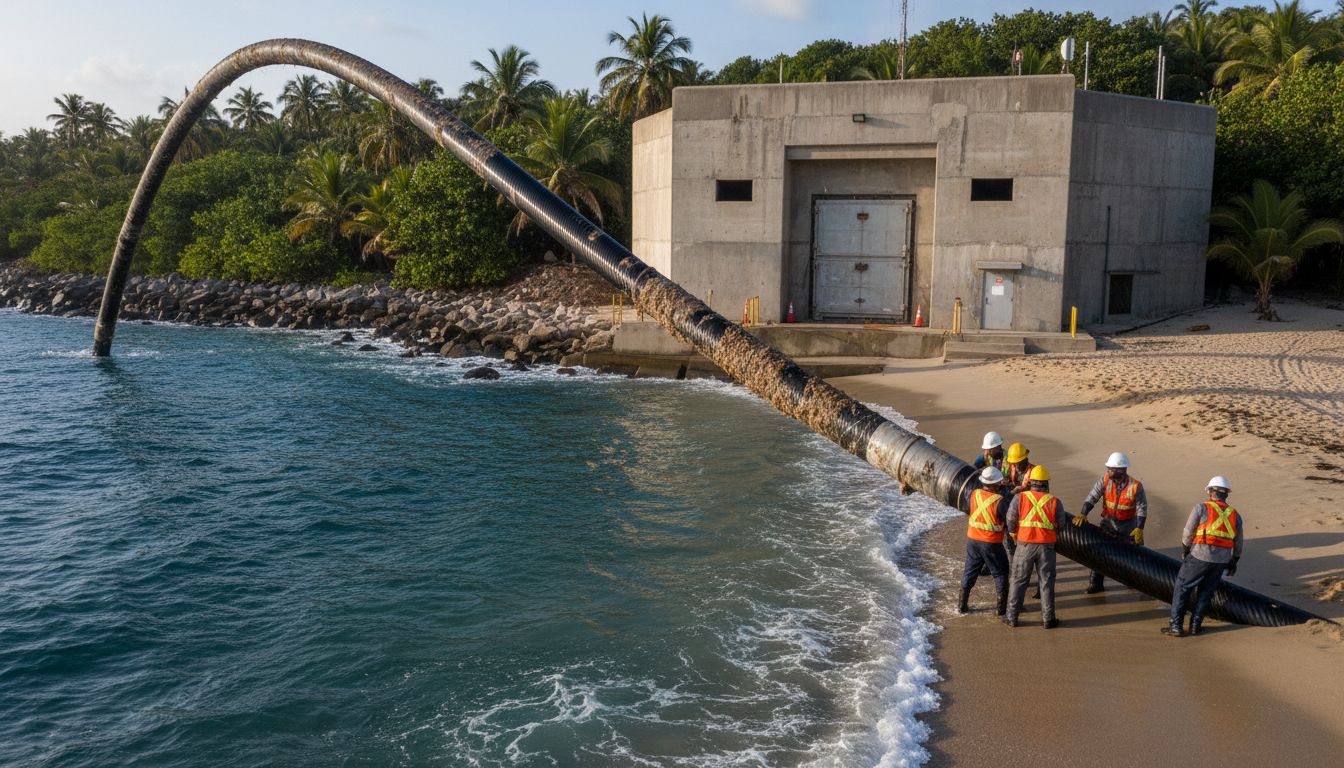
Meta has unveiled plans for Petal, a new transoceanic subsea cable system that would connect the United States and France across roughly 7,000 kilometers of ocean floor. The company describes Petal as the first commercial petabit-class optical submarine cable system to operate at transoceanic distance, a claim that, if realized, would mark a significant jump in capacity over existing transatlantic infrastructure.
It's worth noting upfront that Petal is not a live system. Meta and its partners are targeting 2029 for entry into service, meaning the headline figures being circulated — including the petabit-per-second capacity claim — describe a planned outcome rather than demonstrated performance. The announcement comes from Meta's own press materials, alongside statements from its named partners, so many observers treat the superlative language ('first-of-its-kind,' 'industry-leading') as promotional framing pending independent confirmation closer to launch.
What Makes Petal Different: Two-Core Fiber Technology
The technical centerpiece of Petal is multi-core fiber, specifically a two-core design, which differs from the single-core fiber strands used in most existing subsea cables. Rather than sending signals through one light-carrying core per strand, two-core fiber allows more parallel data paths within roughly the same physical footprint.
Meta, NEC, and Sumitomo Electric say Petal will carry 48 core-pairs, compared to the 24 fiber-pairs found in prior-generation systems. The companies describe this as the first large-scale transoceanic deployment of two-core fiber technology. A practical detail worth highlighting: Petal is said to remain compatible with existing power feeding equipment, operating within limits of up to 18 kV, which would make the technology easier to integrate into established subsea cable infrastructure and operations.
The Numbers: 1 Petabit per Second in Context
Meta's stated target for Petal is 1 petabit per second of capacity — double the roughly 0.5 Pbps attributed to Anjana, previously cited as the leading transatlantic cable system. In practical terms, a petabit is a unit of data transmission so large that illustrative comparisons (such as hypothetical streaming-population equivalents) are typically used to convey scale, though these comparisons originate from Meta's own promotional materials and should be read as illustrative rather than precise.
Framing these numbers requires some context: subsea cables are already responsible for carrying an estimated 99% of intercontinental internet traffic, a statistic that underscores why incremental gains in per-cable capacity carry outsized importance for global connectivity, cloud services, and the growing data demands associated with AI workloads.
Who's Building It: The Partnership Behind Petal
Petal is structured as a multi-party collaboration. NEC is responsible for overall system design and construction, Sumitomo Electric Industries is supplying the two-core fiber technology, and Orange is serving as a landing and connectivity partner in France. Meta is funding and will operate the cable once complete.
This project is reportedly part of a broader pattern for Meta, which the company says has invested in more than 20 subsea cable projects globally. As with any announcement involving commercial partners, the quotes and claims attributed to NEC, Sumitomo, and Orange in public statements reflect companies with a direct commercial stake in the project's perceived success, and are best read with that context in mind.
Industry Context: Is Multi-Core Fiber the Next Standard?
Petal is not occurring in isolation. Other industry players, including NTT, have also publicized work on multi-core fiber technology for submarine cable applications, and adjacent commentary from Google Cloud's infrastructure team has discussed similar technical approaches. This suggests a broader industry trend toward multi-core fiber as a response to rising bandwidth demand, rather than a Meta-exclusive innovation.
That said, a distinction is worth drawing: the general direction toward multi-core fiber technology appears to have some independent corroboration across the industry, while specific superlative claims — such as being the definitive "world's first" petabit-class transoceanic system — remain assertions made primarily by Meta and its named partners, without independent verification at this stage.
What to Watch Before 2029
Several open questions remain between now and Petal's targeted 2029 service date. Multi-year subsea infrastructure projects commonly face delays tied to manufacturing, marine installation logistics, regulatory approval across multiple countries, and unforeseen technical hurdles. A recurring consideration among industry watchers is that announced capacity figures and timelines for large infrastructure projects often shift before completion.
For Petal to deliver on its stated claims, the two-core fiber technology will need to perform at scale across the full transoceanic span, the consortium will need to execute installation and testing on schedule, and the system will need to demonstrate the claimed capacity gains once operational — none of which can be confirmed until the cable is actually built and tested. Still, Petal's announcement is being watched as a potential bellwether for the next generation of subsea internet infrastructure, particularly as global data demand driven by cloud computing and AI continues to grow.