Meta's 6.6 Gigawatt Nuclear Bet Still Falls Short of AI's Power Hunger
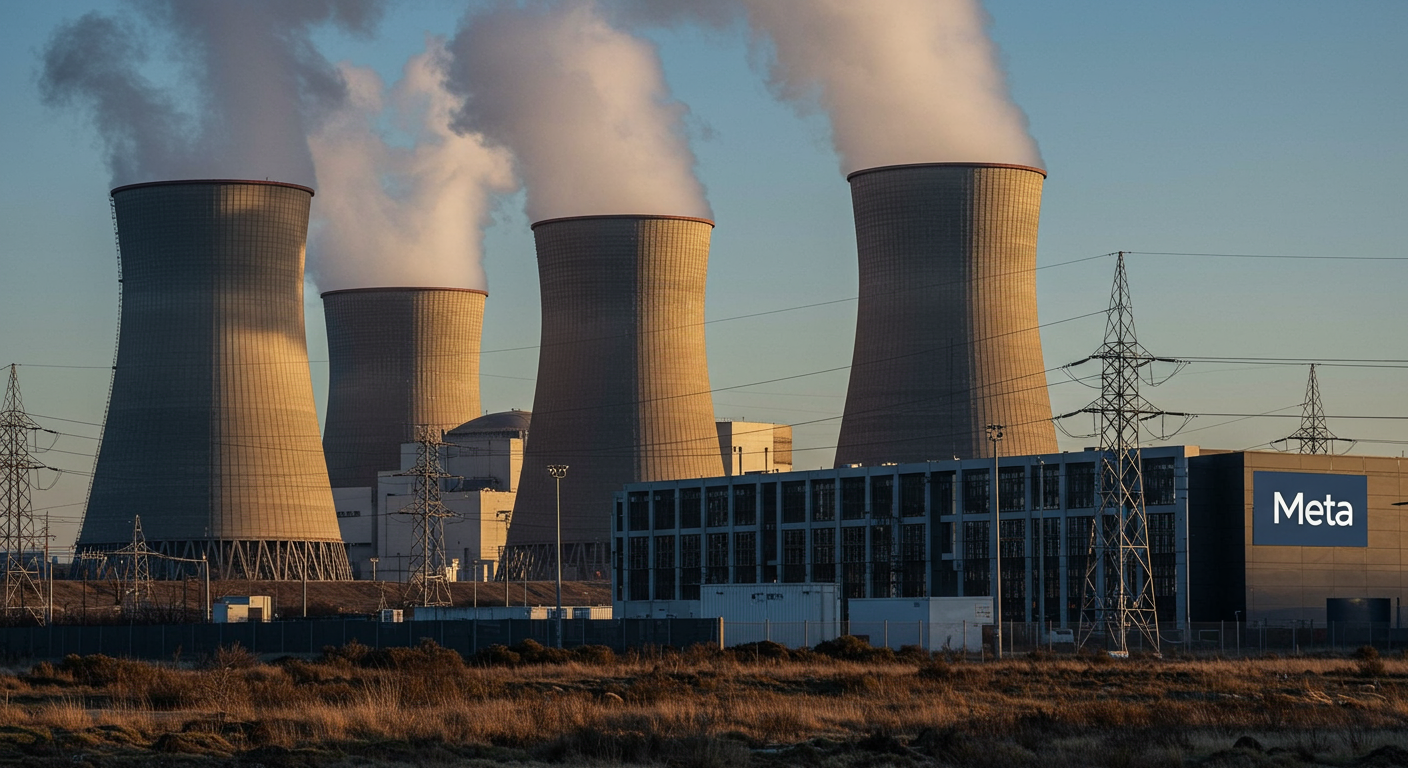
Meta's announcement of 6.6 gigawatts in nuclear energy deals marks one of the largest corporate clean energy commitments in history, yet the social media giant admits it still won't be enough to meet its artificial intelligence ambitions. The revelation underscores a fundamental challenge facing the tech industry: AI's exponential power demands are outpacing even the most aggressive clean energy investments.
Meta's Nuclear Power Play: 6.6 Gigawatts and Still Not Enough
The 6.6 gigawatt commitment represents enough capacity to power approximately 5 million homes simultaneously—a scale that dwarfs most utility-scale energy projects. Meta's nuclear deals span multiple next-generation reactor projects expected to come online between 2028 and 2035, positioning the company as a major catalyst for America's nuclear renaissance.
However, the timeline reveals the urgent nature of the energy crisis. With AI training runs already consuming hundreds of megawatts for single models, and Meta's AI infrastructure expanding rapidly, the company faces a growing gap between current capacity and future needs. Industry analysts estimate that advanced AI systems could require 10-100 times more energy than traditional computing workloads.
The AI Energy Crisis: Why Big Tech Can't Keep Up
Meta's current data center operations consume approximately 8-10 terawatt hours annually, but AI workloads are transforming these requirements dramatically. Training large language models and running inference at scale demands continuous, high-density computing that traditional data centers weren't designed to handle.
The company's AI training clusters already operate at power densities exceeding 100 kilowatts per rack—far above the 10-15 kilowatt standard for conventional data centers. As Meta develops more sophisticated AI models and deploys them across billions of users, these power requirements multiply exponentially.
Even with 6.6 gigawatts of new nuclear capacity, Meta's energy team projects the company will need additional sources to meet projected demand through the 2030s. The shortfall highlights how AI development has fundamentally altered the economics and logistics of tech infrastructure.
Nuclear's Big Tech Renaissance
Meta joins Google, Microsoft, and Amazon in turning to nuclear power as the preferred solution for AI's energy challenges. Unlike solar and wind, nuclear reactors provide consistent baseload power that matches the 24/7 operational requirements of data centers running AI workloads.
Google recently signed agreements for 500 megawatts of small modular reactor capacity, while Microsoft has committed to reviving the Three Mile Island nuclear plant. Amazon's cloud division has announced similar nuclear investments, creating unprecedented corporate demand for atomic energy.
This nuclear pivot reflects the limitations of renewable alternatives for AI infrastructure. While tech companies continue investing heavily in solar and wind, the intermittent nature of these sources requires expensive battery storage or backup systems that become cost-prohibitive at the scale AI demands.
The Infrastructure Reality Check
Despite the ambitious commitments, significant obstacles remain between nuclear contracts and operational power plants. New reactor designs face lengthy regulatory approval processes, with even expedited timelines extending 5-7 years before initial operations.
Grid infrastructure presents another bottleneck. Many proposed reactor sites lack the transmission capacity to deliver power to major data center regions, requiring billions in additional utility investments. The competition for prime locations near existing grid infrastructure has intensified as tech companies compete for the same limited sites.
Construction challenges also loom large. The U.S. nuclear industry faces shortages of specialized workers and components after decades of limited new builds. Meeting the combined commitments from Meta, Google, Microsoft, and Amazon will require scaling manufacturing and workforce capacity significantly.
What This Means for the AI Arms Race
Energy constraints are already influencing AI development strategies across the industry. Companies are exploring more efficient model architectures and specialized chips to reduce power consumption per operation. Some are considering distributed computing approaches that could leverage smaller energy sources across multiple locations.
Data center location decisions increasingly prioritize power availability over traditional factors like fiber connectivity or real estate costs. This shift could reshape the geographic distribution of AI infrastructure, potentially favoring regions with abundant clean energy resources over established tech hubs.
The broader implications extend beyond individual companies to the pace of AI advancement itself. If energy supply becomes the limiting factor for AI development, it could slow the deployment of new capabilities and alter competitive dynamics among tech giants.
Meta's nuclear bet represents both the scale of ambition driving the AI revolution and the fundamental infrastructure challenges that could constrain it. As the company's 6.6 gigawatt commitment demonstrates, even massive investments in clean energy may struggle to keep pace with artificial intelligence's insatiable appetite for power.