Meta-Samsung $6.5 Billion 2nm Chip Order: What's Actually Confirmed So Far
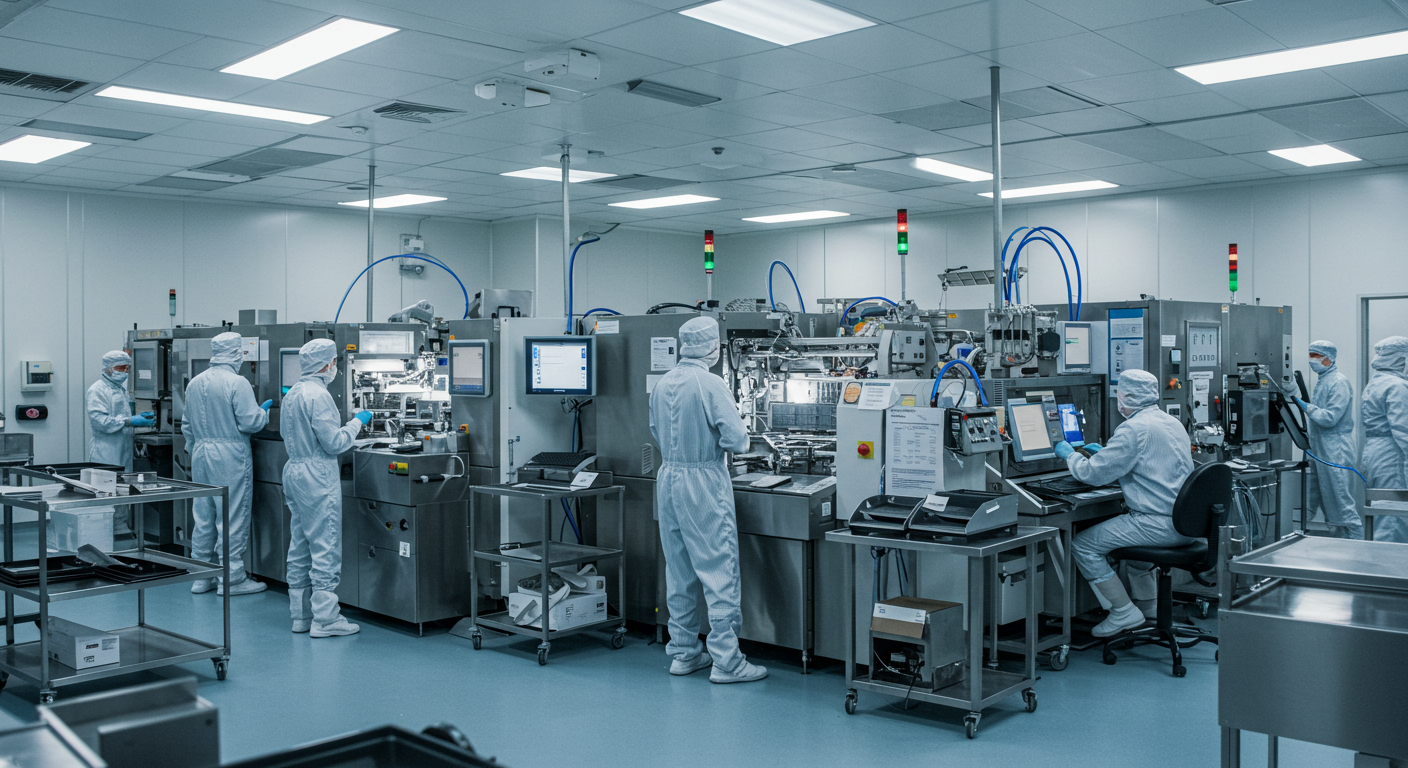
Unverified Claim: What's Being Reported
A claim is circulating that Meta has placed a $6.5 billion order with Samsung for chips built on a 2nm process, framed as a significant shift away from TSMC's longstanding dominance in advanced-node manufacturing. As of this writing, the claim has not been independently verified with article-level sourcing. There is no confirmed publish date attached to the figure, no official press release identified, and no named source cited for the dollar amount or the technical details.
Given the absence of primary confirmation, this piece treats the claim as an unverified report and instead examines its plausibility, the industry context that would make it significant if true, and what would need to happen for it to be confirmed.
Why This Claim Would Matter If Confirmed
TSMC currently holds a dominant position in leading-edge foundry production, particularly at 2nm and sub-3nm nodes, where it manufactures chips for major AI and mobile customers. Its scale, yield performance, and customer relationships have made it the default choice for companies designing advanced AI accelerators and GPUs.
Samsung Foundry has spent recent years trying to close that gap, positioning itself as a viable alternative for large customers seeking advanced-node capacity. Public reporting has repeatedly framed Samsung as eager to win marquee clients away from TSMC to validate its foundry roadmap.
If a hyperscaler the size of Meta placed a multi-billion-dollar order for 2nm silicon with Samsung, it would be a meaningful signal for the AI chip supply chain. It would suggest that customers are willing to diversify away from TSMC despite its technical lead, and that Samsung's advanced-node process may be maturing enough to support demanding AI workloads.
What Would Need to Be True to Verify This
Confirming a deal of this scale and specificity would typically require one or more primary sources: an official release from Samsung, a disclosure from Meta to investors, or a relevant filing with securities regulators. Deals of this magnitude involving major public companies are generally expected to surface through wire reporting from outlets such as Reuters or Bloomberg, given the financial materiality and industry interest involved.
It's worth noting that generic homepage-level coverage from outlets like Reuters, Bloomberg, or Samsung's own newsroom does not, by itself, substantiate specific financial or technical claims. Broad topic coverage confirms that an outlet reports on this industry in general; it does not confirm that a specific article about a specific $6.5 billion order exists. Verification requires a dated, bylined article or official statement directly addressing the claim.
Context: Meta's AI Chip Strategy
Meta has publicly discussed its growing investment in AI infrastructure, including custom silicon development. The company has previously detailed work on in-house accelerators, such as its Meta Training and Inference Accelerator (MTIA) program, aimed at reducing dependency on third-party chip suppliers for certain workloads.
Meta has also signaled interest in diversifying its supplier base for AI hardware more broadly, a strategy consistent with broader industry trends. Many large technology companies have sought to avoid over-reliance on a single foundry or chip vendor, both for supply security and negotiating leverage. A move toward working with multiple foundries, including Samsung, would fit this pattern, though the specific $6.5 billion figure tied to a 2nm order remains unconfirmed.
Context: Samsung's 2nm Foundry Ambitions
Samsung has publicly discussed its SF2 (2nm-class) process node as part of its foundry roadmap, alongside ongoing efforts to improve yields at advanced nodes. Reporting over the past several years has described Samsung's push to attract large customers for cutting-edge process technology as central to its foundry business strategy.
Samsung Foundry and TSMC compete directly for AI and GPU-class chip orders, where performance, power efficiency, and yield at advanced nodes are critical. Winning a large customer for 2nm production would be viewed as validation of Samsung's process maturity, which is part of why a claim like this, if confirmed, would attract significant industry attention.
What to Watch For
Concrete signals that would confirm or refute this claim include an official statement from Samsung or Meta, a relevant regulatory filing, or a bylined report from established wire services such as Reuters or Bloomberg with named sources and specific details about the order's terms.
Until such confirmation appears, the $6.5 billion figure and the 2nm process node details described in this claim should be treated as unverified. This article will be revisited and updated if primary sourcing or official confirmation becomes available.