Isar Aerospace Reaches Orbit on Second Spectrum Launch, a First for Continental Europe
Isar Aerospace Reaches Orbit on Second Spectrum Launch, a First for Continental Europe
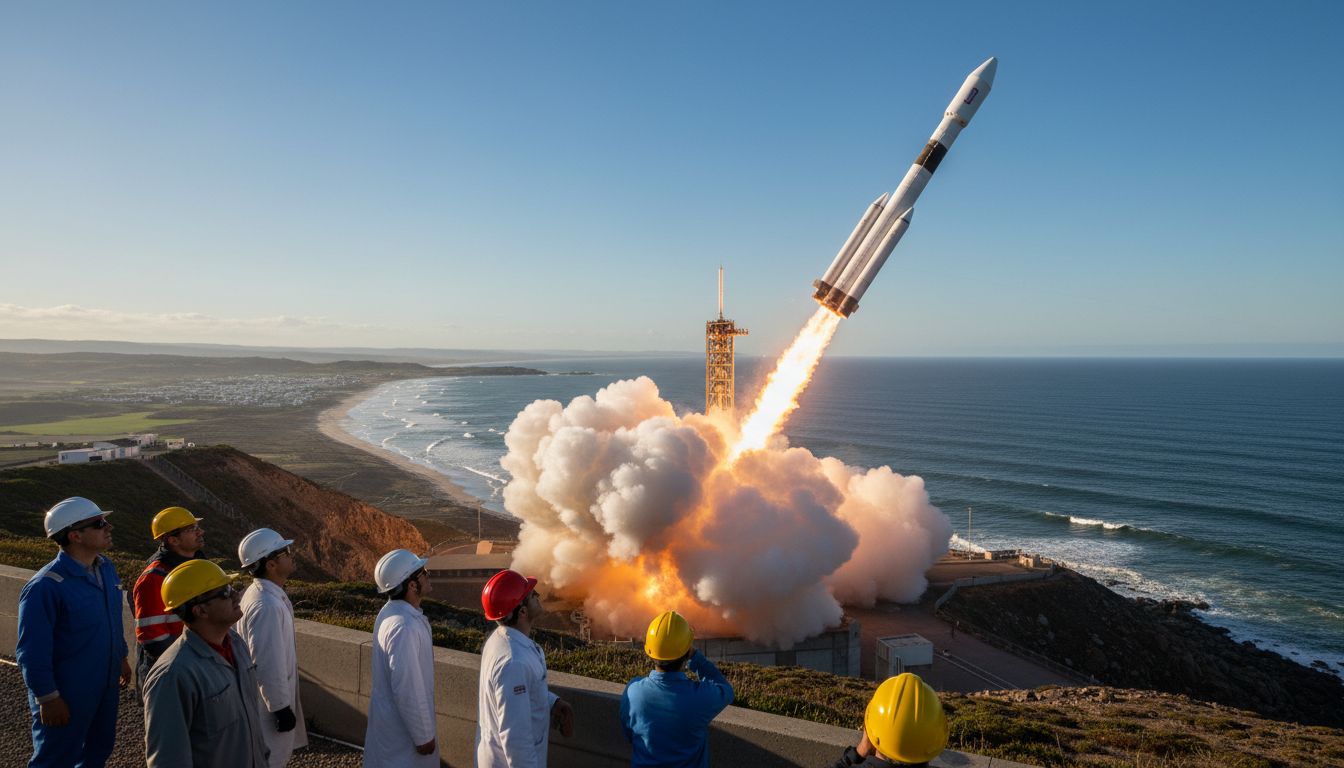
On September 5, 2026, German launch company Isar Aerospace sent its Spectrum rocket into orbit from Andøya Spaceport in Norway. It was the vehicle's second flight attempt, and it is widely being reported as the first orbital launch to take place from continental European soil. Observers note that the milestone arrives at a pivotal moment for Europe's ambitions to build independent commercial spaceflight capability, following years of relying on non-European or partner-operated launch systems.
What Happened on the 'Onward and Upward' Mission
The mission, named 'Onward and Upward,' deployed several small satellites into orbit. Reporting varies slightly on the exact count, with some accounts citing five CubeSats and others six, alongside one non-deployable experiment. The rocket reportedly reached an elliptical orbit with a perigee of approximately 112 miles (180 km) and an apogee of approximately 311 miles (500 km). The flight was supported in part by the European Space Agency's Boost! program, which backs the development of independent European launch services.
From Failure to Success: The Road to Orbit
This successful flight followed a first Spectrum launch attempt in March 2025 that ended shortly after liftoff. According to available reporting, the failure was traced to an unintended vent valve opening that led to a loss of attitude control. A recurring theme in coverage of the second launch is a comeback narrative, with company representatives and trade press framing the September 2026 flight as validation of engineering fixes made after the earlier setback.
Inside the Spectrum Rocket
Spectrum stands roughly 28 meters tall and 2 meters in diameter, powered by ten engines. It is designed to carry payloads of up to approximately 1,000 kg (2,200 lbs) to low Earth orbit. Isar Aerospace has stated that its manufacturing facility near Munich is capable of producing more than 30 rockets per year, though this figure reflects company projections about future manufacturing capacity rather than a verified production track record.
Why This Launch Matters for Europe
The flight satisfies an early milestone under the European Space Agency's European Launcher Challenge, a program that required participating companies to reach orbit by 2027. Isar Aerospace had previously won the first Microlauncher Competition run by the German Space Agency, known as DLR. The European Space Agency and European Commission frame the launch as a meaningful step toward European space sovereignty and more autonomous access to orbit, reducing reliance on non-European launch providers. A recurring point among industry observers is that this positions Isar Aerospace as a leading contender in Europe's emerging microlauncher and small-launch market, alongside other companies pursuing similar goals. Some of the broader commercial claims, including future launch cadence and market positioning, remain projections rather than demonstrated outcomes, and will likely be tested by subsequent flights.